
What to Wear for Surf Fishing: Clothing and Layering Tips
Learn what to wear for surf fishing with layering tips, clothing materials, and waterproof gear advice to stay comfortable and protected.
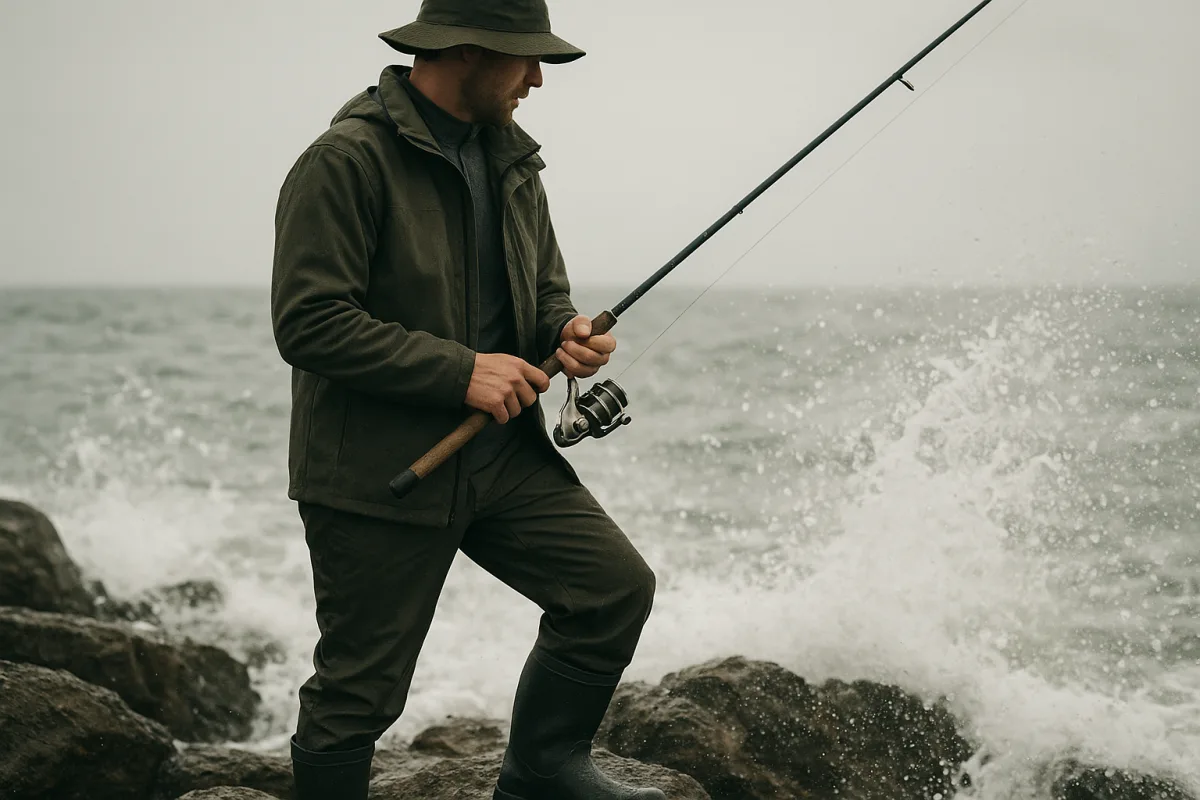
Dress for the water you will meet, not the temperature in the car park
The useful system for surf fishing is not a list of fashionable garments. It is a way of managing heat and moisture while you stand in wind, cast repeatedly, walk soft sand, and occasionally take water over the top of your boots.
A beach forecast can look mild and still produce a cold session. The reason is simple: wind strips warmth, wet clothing conducts heat away, and surf anglers are often less active than they assume once rods are set.
Start with the forecast, then read the beach. Air temperature matters while walking and casting, water temperature matters when wading or being splashed, and wind determines how quickly a damp outer layer becomes a cold one.
Tide belongs in that assessment, but not in the way many anglers use it. Tide tells you where you can stand, whether a bar or gutter will flood, and how likely you are to get wet. It does not determine insulation thickness.
That distinction matters on a productive late-afternoon falling tide. The fish may be using the outer gutter, but if the water is 15 C, clothing should be chosen for 15 C water, the wind, and expected exposure, not because low water arrives at sunset.
The three-layer system is a moisture-management system
Layering works because each layer has a different job. The base layer moves sweat from the skin, the middle layer traps warm air, and the shell slows wind and blocks outside water without turning the whole outfit into a damp plastic bag. [7][9]
The failure point is usually moisture, not simply cold. An angler who starts walking hard down the beach in a heavy jacket can sweat early, then cool down sharply after reaching a stationary fishing position.
A synthetic or merino-wool base layer is the foundation. Both are used because they handle moisture better than cotton, which absorbs water, dries slowly and becomes a poor insulator once damp. [7][9]
For a temperate early-fall session, that base can be a long-sleeve top and, if waders are involved, suitable lower-body layers. The point is close contact with skin, so moisture can move outward instead of staying trapped.
The middle layer should generally be fleece when surf exposure is expected. Fleece does not become useless the moment it gets damp, and it dries more readily than a heavy insulating layer after spray, drizzle or a wet wader exit. [7][9]
Down has a place in dry, cold conditions because it offers strong warmth for little weight. It is a poor bet beneath a leaky shell, during rain, or where repeated spray is expected, because wet down loses much of its insulating ability.
The shell finishes the system. It needs to resist rain and wind while allowing some internal moisture to escape. A shell that is completely waterproof but poorly breathable can leave the angler wet from perspiration rather than from the sea.
That is why taped seams, a properly adjustable hood, cuff closures and breathability are more than catalogue features. They determine whether the shell keeps wind-driven spray out while still letting the layers beneath function. [12][13][14][15]
The shell is where the budget changes the outcome
The research range for waterproof or water-resistant fishing outerwear is approximately $120 to $350. That figure applies to the outer garment itself, and does not include boots, waders, base layers, gloves, or any replacement clothing needed after a soaking. [12][13][14][15]
At the lower end, the priority is basic weather protection. A mesh-lined waterproof coat such as the Catchdry Lite Coat listed by Catchdry suits an angler who needs a light rain shell for mild conditions and expects to layer underneath. [12]
A heavier jacket changes the use case. The Onyx Men’s Hydrovore Waterproof Fishing Jacket listed by Sportsman’s Warehouse is the type of waterproof outer layer that suits a more exposed beach, where an adjustable hood and weather barrier matter beyond occasional showers. [14]
Bib outerwear is useful when the problem is not only rain from above. The AFTCO Hydronaut waterproof heavy-duty bib sold by Tackle Express suits surf fishing in persistent spray, wet sand and wind, where a jacket ending at the waist leaves a vulnerable gap. [13]
The WHITEWATER fishing outerwear offered through Sportsman’s Guide belongs in the same outerwear decision. It suits anglers building a weather layer for fishing rather than wearing a general-purpose casual jacket that may lack fishing-oriented coverage and adjustment. [15]
The STORMR Surf Top sold by Surfland Bait and Tackle is a more surf-specific outer option by category. It suits wading anglers who expect direct spray and need an outer layer chosen for the waterline rather than a dry beach chair. [11]
Those named products should not be treated as interchangeable bargains. The supplied research identifies a $120 to $350 outerwear range, but does not establish a current comparable sale price for each individual garment. [11][12][13][14][15]
That absence matters. A sticker price only becomes useful after checking whether it buys taped seams, useful cuff closures, an adjustable hood and enough breathability for walking a long beach before fishing begins.
Waders and boots solve different problems
Waders keep water off the lower body. Footwear keeps you upright. Treating those as the same decision is how anglers end up warm enough but sliding on a rock shelf, or stable enough until cold water fills an unsealed boot.
Bootfoot chest waders combine the waterproof leg and chest section with attached boots. The Calamus PVC bootfoot waders sold through Walmart are presented as waterproof waders with slip-resistant soles, a category suited to shallow wading where simple integrated protection is the goal. [2]
The TIDEWE 2-ply nylon/PVC bootfoot chest wader listed by National Wholesale Products is another integrated wader category. It suits anglers who need waterproof coverage from beach wash and shallow gutters, rather than a lightweight jacket for fishing entirely from dry sand. [4]
Neither source establishes a universal best wader. That is the honest answer because fit, boot sizing, terrain, water temperature and how far the angler walks all change whether a bootfoot or separate-boot arrangement makes sense. [1][3][5]
For rocky or mixed sand-and-rock beaches, waterproof boots with strong traction are the practical priority. Fishing Online’s footwear guidance supports choosing footwear by the fishing environment, rather than assuming one sole or one boot design suits every shoreline. [6]
Neoprene booties are mainly a warmth tool. They make sense inside appropriate footwear where cold water is expected, but they do not replace a protective, high-traction boot when the walk includes shell, rock, jetty slime or unstable sand. [6]
Read the approach before committing to waders. On a firm sandy beach with a shallow wash, their main value may be dryness. On uneven boulder ground, mobility, fit and traction may matter more than extending another few metres into the water.
Match wetsuit thickness to water temperature
A wetsuit is not another version of a rain shell. Neoprene works by trapping a thin layer of water against the body, which the body warms. Thickness controls how much insulation that system provides.
The important number is water temperature. Surfex’s wetsuit thickness guide places 5/4 mm or 6/5 mm suits below 12 C, or 54 F, where cold-water heat loss is the central problem. [16]
Between 12 C and 17 C, or 54 F to 63 F, the same guide identifies 4/3 mm or 5/4 mm thickness as the relevant range. The overlap reflects personal cold tolerance and the conditions surrounding the water. [16]
Wind and session length can push the choice toward the warmer end of a recommended range. So can repeated immersion, a long period standing still, or a wet walk back against a headwind after the bite has stopped.
Tide time still does not select the millimetres. A high tide may put you in deeper water and make a wetsuit more relevant, but it changes exposure, not the thermal requirement set by actual water temperature. [16]
For an angler fishing from dry sand in early fall, a layered clothing system often makes more sense than a wetsuit. For an angler wading outer bars or casting from wash-covered rocks, neoprene may become the safer thermal choice.
Sun protection stays in the system
Cool weather encourages a common mistake: treating sun protection as a tropical problem. In surf fishing, reflective water and pale sand add exposure, and a six-hour session can outlast the cloud cover that made the beach feel harmless.
UPF 50+ clothing is the useful benchmark because it blocks over 98 percent of UV radiation. Use it in a long-sleeve shirt, hooded layer, neck coverage or hat, according to the conditions and practical casting needs. [7][9]
In tropical conditions, the clothing system shifts toward lightweight, breathable, ventilated and light-colored fabrics. The objective is heat release and sun coverage, rather than building insulation under a weather shell. [10]
Temperate surf fishing reverses the priority. Layers, insulation and waterproof materials become more important, while darker colors can assist heat retention. That does not remove the need for UPF protection, particularly during long daylight sessions. [7][9][10]
The common errors are predictable: cotton against the skin, an unsealed jacket in driving rain, boots with little grip, no sun protection, and wearing every warm layer from the start. [7][9]
The correction is equally plain. Check water temperature, wind direction and duration before leaving. Then choose layers that can be removed, a shell that can actually block weather, and footwear that matches the ground you must cross to reach the fish.
Frequently Asked Questions
What layers should I wear for surf fishing?
A three-layer system works best: start with a moisture-wicking synthetic or merino wool base layer to move sweat away from the skin. Add a fleece mid-layer for insulation, especially since it retains warmth better when damp. Finish with a waterproof, breathable shell to block wind and rain while allowing moisture to escape.
How to dress for cold water surf fishing?
Choose wetsuit thickness based on water temperature rather than tide time. For water below 12°C (54°F), a 5/4 mm or 6/5 mm wetsuit is recommended. Layering with moisture-wicking base layers and fleece insulation beneath a waterproof shell also helps manage cold exposure and moisture.
What materials are best for surf fishing clothing?
Synthetic fabrics or merino wool are preferred for base layers because they handle moisture better than cotton. Fleece is recommended for mid-layers due to its ability to insulate even when damp. Waterproof shells should be breathable and have taped seams and adjustable features to keep out wind and spray.
How to stay warm and dry while surf fishing?
Use a moisture-management layering system: a base layer that moves sweat away, a fleece mid-layer for insulation, and a waterproof, breathable outer shell to block wind and water. Waterproof boots with good traction help keep feet dry and stable on slippery surfaces. Avoid cotton, which retains moisture and loses insulation when wet.
Is a waterproof shell necessary for surf fishing?
Yes, a waterproof and breathable shell is important to protect against wind-driven spray and rain while allowing internal moisture to escape. Features like taped seams, adjustable hoods, and cuff closures improve effectiveness. Without a breathable shell, moisture from perspiration can accumulate, making you feel wet and cold.
How we researched this
This article was assembled from 17 cited references.
Nothing here is based on hands-on testing. Where a figure or finding appears, it belongs to the source cited beside it, and the writing says so rather than implying otherwise. Every source is listed below so you can check it.
Sources
- The 6 Best Waders for Surf Fishing in 2026 - Buyers Guide
- Calamus Fishing Waders for Men & Women,100% Waterproof PVC Bootfoot Waders with Slip-Resistant Sole,Tear-Resistant Nylon-WaveWalker - Walmart.com
- Best Waders For Surf Fishing - 2026 Reviews - Bandit Fishing
- TIDEWE Bootfoot Chest Wader, 2-Ply Nylon/PVC Waterproof Fishing & Hunt – National Wholesale Products, LLC
- 10 Best Fishing Waders 2026 - Expert Tested & Reviewed
- Fishing, Wading, and Kayaking Footwear | Fishing Online
- What to Wear Fishing in Any Weather
- What to Wear to Deep Sea Fishing: Essential Gear and Tips - Angler Vibe
- What To Wear Fishing: A Complete Fishing Clothing Guide | Anaconda
- Which Clothing Styles Are Lighter and Breathable Sufficient for Saltwater Fishing in Tropical Climates?
- STORMR Surf Top – Surfland Bait and Tackle
- Catchdry Lite Coat - Mesh Lined Waterproof Fishing Coat
- Aftco Hydronaut Waterproof Heavy-Duty Black Bib Outerwear – Tackle Express - Saltwater and Freshwater Fishing Tackle Shop
- Onyx Men's Hydrovore Waterproof Fishing Jacket | Sportsman's Warehouse
- WHITEWATER Fishing Outerwear | Sportsman's Guide
- Wetsuit Thickness Guide: mm by Water Temperature (2026)
- Surf fishing
Related Articles
Dealing with Seaweed While Surf Fishing: Rigs and Tips
Learn how to deal with seaweed while surf fishing using the right rigs, gear, and timing to improve your catch and reduce tangles.
Surf Fishing in Murky Water: Tips for Catching Fish
Learn how to catch fish surf fishing in murky water with rigs, bait, and beach reading tips for low-visibility conditions.
How to Prepare for a Surf Fishing Tournament
Learn how to prepare for a surf fishing tournament with the right gear, rigs, rules, and beach reading strategies to improve your chances.
Best Surf Fishing Setup for Fall: Gear, Rigs & Tides Guide
Discover the best surf fishing setup for fall with gear, rigs, and tips on reading tides and beach structure for successful autumn fishing.