
How to Catch Fish During a Beach Bonfire: Tips and Safety
Learn how to catch fish during a beach bonfire with tips on tides, gear setup, safety, and legal regulations for a successful surf fishing night.
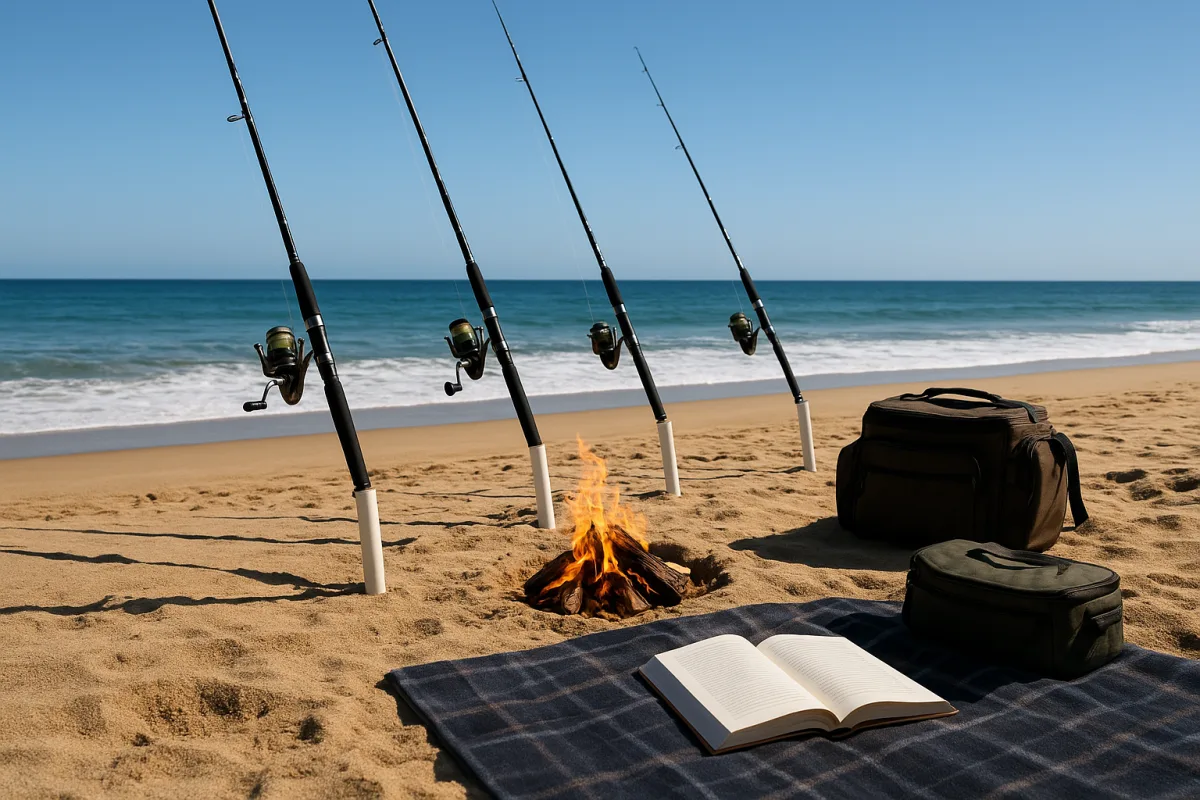
First problem: can you legally have both a fire and fishing gear there?
Check the beach rules before loading the truck, not after sunset. A beach that permits surf fishing may prohibit fires, require a permit, restrict vehicle access or close sections for nesting birds and other resource protections.[3][6]
The National Park Service notes that surf fishing rules at Assateague Island National Seashore include area-specific restrictions, so a valid fishing licence is not the only requirement to verify.[3] If the gathering involves a fire, check the park, county or municipal fire rules separately.
Dare County, North Carolina, requires permits for beach fires and sets conditions on where and how they are managed.[4] Golden Gate National Recreation Area in California likewise restricts recreational fires to designated circumstances and locations.[5] Those examples are not portable rules, they show why local regulations matter.
Many jurisdictions require a fire to remain attended and fully extinguished with water. A three-foot-diameter limit is common, but do not treat it as universal. Confirm the local limit, permit process, fuel rules and extinguishing requirement before buying wood.[4][5]
Set the fire well landward of the active fishing area, above the part of the beach the rising tide can reach. That is not merely for comfort. A shifting high tide can turn a neat social setup into a wet, crowded obstacle course around rods.
Keep a bucket or container dedicated to extinguishing the fire, rather than assuming somebody will carry water down later. Ash, hot coals, discarded line and bait scraps are a poor combination on a public beach, especially after dark.
Second problem: choosing a night worth attending
Read the tide chart before setting the bonfire time. Incoming and outgoing water are broadly productive surf-fishing periods, with the two hours before and after high tide commonly recommended as the most useful window.[9][11]
That timing gives the group a realistic schedule. Arrive while there is enough light to read the beach, set rods before the best water, eat and socialize through the high-water period, then decide whether the falling tide still has a fishable channel.
Dawn, dusk and night can be productive surf-fishing periods, but the useful detail is the tide stage, not the clock alone.[10][11] A midnight bonfire during dead-low slack water may be pleasant, but it is not automatically a good fishing session.
New and full moons generally produce stronger tidal movement, which can improve the conditions associated with moving water.[9][11] Still, moon phase does not override local weather, season or species presence. A hard onshore blow can make a theoretically good tide unpleasant and difficult to fish.
Regional timing matters as much as lunar timing. Outer Banks surf fishing changes with seasonal migrations and available bait, while Port Aransas anglers face a different mix of species and bait patterns on the Texas coast.[15][16] Check local reports for what is actually present.
Do not promise guests that the bonfire will attract fish. Research on artificial lighting shows that light can affect some marine and coastal organisms, and USGS work documents day-night differences in nearshore fish assemblages, but neither finding establishes that bonfire light changes surf-fishing success.[1][2]
That uncertainty is useful. It keeps the plan grounded in things an angler can assess: moving water, bait, depth, current and a safe place to cast. Treat the fire as the gathering point, not as a fishing tactic.
Third problem: finding water that can hold fish before darkness
Get to the beach before sunset and spend ten minutes looking rather than casting immediately. The first trough, often only 20 to 40 yards from shore, can hold fish, and it is frequently more important than maximum casting distance.[8][11]
Look for a darker, smoother strip between the beach and the outer breaking waves. That often marks deeper water. A cut through the sandbar may show as a gap in the line of breaking waves or as water pushing seaward through the surf.
Set the fire and chairs away from that cut, then cast across or alongside the deeper lane without sending lines through the gathering. A productive trough is useless if every person walking to the water has to step over a rod.
Avoid placing the group at the base of a steep, freshly eroded dune or directly below an unstable bank. Also avoid a spot where the high tide is already removing dry sand. The beach should have room for people, rods and a retreat route.
If the surf is featureless and the water is brown with heavy wave action, accept that the night may not produce much. The practical response is a heavier sinker and a shorter, controlled fishing session, not casting farther into the same poor water.
Fourth problem: setting tackle that survives surf and social traffic
For a general nighttime surf setup, use a 10- to 12-foot medium-heavy spinning rod, a saltwater spinning reel in the 5000 to 6000 size range, and 20- to 30-pound braided main line.[9][13] That is a workable middle ground for casting bait and controlling line in current.
Add a 30- to 40-pound mono or fluorocarbon shock leader for casting sinkers and handling abrasion near the beach.[9][13] Fluorocarbon is commonly preferred where abrasion resistance and lower visibility matter, though visibility is not a substitute for matching tackle to the fish and surf.[14]
Line strength should follow the likely target. Light species can call for 10- to 15-pound line, medium fish such as redfish or striped bass often fit 15- to 30-pound class tackle, and large sharks or tarpon require 30- to 50-pound line.[12]
Do not treat leader strength as a fixed formula. General guidance may suggest a leader 20 to 30 percent lighter than the main line, while fish-finder rig setups commonly use 20- to 40-pound leaders with 20- to 30-pound braid.[7][14] Target species and abrasion risk decide it.
Put rod holders in a line facing the water, with reels behind them and no chair legs, coolers or firewood between the rod butt and the angler. A hooked fish will not wait for someone to move a folding chair.
Use a headlamp with a red-light mode for knots, bait and landing fish, but turn it off when it is not needed. The goal is to preserve enough night vision to watch rods and moving water, not to flood the beach with light.
Fifth problem: choosing a rig without turning the group into a tangle
For larger predators, use a fish-finder rig, essentially a Carolina-style arrangement that lets the fish take bait with less sinker resistance. A 2- to 6-ounce pyramid or Sputnik sinker, a 24- to 36-inch leader and a 1/0 to 4/0 circle hook are established starting points.[7][8]
Choose the sinker by current and wave energy, not by habit. Begin as light as possible, then increase weight until the bait remains in the selected trough. A rolling sinker drags the bait out of the productive lane and invites crossed lines.
The fish-finder rig suits cut mullet, menhaden or bunker when striped bass, red drum and other larger bait-feeding fish are plausible targets.[8][9] Circle hooks are practical for bait fishing because they reduce the need for a hard hookset, which is useful when an angler is chatting near the fire.
For smaller fish such as pompano and croaker, use a double-dropper loop, often called a pompano rig.[8][9] It presents two small baits above the sinker and makes sense when the likely catch is feeding close to the bottom rather than hunting a single large bait.
The commonly suggested three- to four-foot leader is a sensible general range, but it is not a law.[10][14] In rocky water or heavy surf, leaders may need to run eight to 15 feet. The shorter 24- to 36-inch leader on a fish-finder rig serves a different rig design.[7][14]
Keep it simple during a gathering. One fish-finder rod and one smaller-species rod is easier to monitor than four elaborate rigs. More rods can mean more bites, but they can also mean more unattended lines and less room for people.
Sixth problem: bait, casting and keeping it fishable
Bring bait matched to the intended rig. Fresh-cut mullet and other oily cut baits suit larger predators, while live or fresh-dead shrimp work across a wider range of surf species.[8][9] Sand fleas, also called mole crabs, are especially associated with pompano fishing.[8]
Use fresh bait and change it when it has been washed clean, torn apart or soaked long enough to lose scent and texture. A bait check every 15 to 20 minutes is a practical social rhythm, giving somebody a reason to inspect the rods without constantly hovering.
Cast first to the near trough, roughly 20 to 40 yards out, before attempting the horizon.[8][11] Long casts are not inherently better. If the bait is beyond the first productive depression while fish are feeding close, distance simply puts it in the wrong water.
Assign one person to each active rod whenever possible. If nobody is willing to watch a rod while eating, tending the fire or walking the beach, reel it in. An unattended rod is not a relaxed setup, it is an avoidable safety and fish-welfare problem.
Keep bait, knife, pliers and a measuring device in one designated area away from food and blankets. Check local size, season and possession limits before the trip, since surf-fishing regulations can be species-specific as well as location-specific.[3][6]
When the tide turns, reassess rather than automatically staying put. If the channel has filled, the current has shifted or the sinker can no longer hold, move the rod position or end the fishing portion. The bonfire can continue, but the fishing conditions may be finished.
Frequently Asked Questions
Can you legally fish and have a bonfire on the beach at the same time?
You can only do both if local regulations allow it. Many beaches permit surf fishing but prohibit fires or require permits and specific conditions for bonfires. Always check beach rules, fire permits, and resource protections before planning to have a fire and fish simultaneously.
Does a beach bonfire improve surf fishing success?
There is no direct scientific evidence that a beach bonfire’s light, heat, or smoke affects fish behavior or bite rates near shore. Surf fishing success depends more on tides, bait presence, and fishing techniques than on the presence of a bonfire.
What are the best tides to fish during a beach bonfire?
The best fishing times are generally the two hours before and after high tide during incoming and outgoing tides. Dawn, dusk, and nighttime can also be productive, but the tide stage is more important than the time of day alone.
How should I set up fishing gear safely around a beach bonfire?
Set the bonfire well landward of the active fishing area, above the reach of the rising tide. Establish a clear casting lane and a fish-handling area to avoid lines crossing walking routes, firewood, and chairs. Keep water nearby to extinguish the fire safely.
What local regulations apply to beach fires and surf fishing?
Local regulations vary widely and may include fire permits, size limits (often around three feet in diameter), location restrictions, and requirements to attend and fully extinguish fires. Surf fishing rules may also include seasonal closures and protected areas. Check specific park, county, or municipal rules before your visit.
How we researched this
This article was assembled from 17 cited references.
Nothing here is based on hands-on testing. Where a figure or finding appears, it belongs to the source cited beside it, and the writing says so rather than implying otherwise. Every source is listed below so you can check it.
Sources
- Diel variation in near-shore great lakes fish assemblages and implications for assessment sampling and coastal management | U.S. Geological Survey
- Artificial Lighting | Explore Beaches
- Surf Fishing - Assateague Island National Seashore (U.S. National Park Service)
- Beach Bonfires | Dare County, NC
- Recreational Fire Regulations - Golden Gate National Recreation Area (U.S. National Park Service)
- N.J. Admin. Code § 7:2-16.3 - Surf fishing | State Regulations | US Law | LII / Legal Information Institute
- How to Rig for Surf Fishing - Rigging Tutorial | knots.fish
- Surf Fishing 101: Best Rigs, Baits & Beaches for Success
- Surf Fishing Guide: Rigs, Baits, Best Beaches & Techniques | One…
- Surf Fishing Guide: How to Catch Fish from the Beach — The Fishing Manual
- Surf Fishing for Beginners: Reading the Beach, Right Gear & Best Times | HookCast
- What Lb Test for Surf Fishing: Make Every Cast Count - CNY Fishing
- Surf Fishing Detailed Guide - Gear, Rods, Reels, and Setup
- What Leader Should I Use for Surf Fishing? – Fish From Beach
- Outer Banks Surf Fishing | Outer Banks, NC
- Surf Fishing Port Aransas: Rigs, Bait & Best Beaches (2026…
- 15 Florida Shore Fishing Mistakes That Cost You Fish
Related Articles
Best Times to Surf Fish at Night: Tide and Moon Insights
Discover the best times to surf fish at night using tides, moon phases, and seasonal tips for more productive night fishing sessions.
Surf Fishing in Murky Water: Tips for Catching Fish
Learn how to catch fish surf fishing in murky water with rigs, bait, and beach reading tips for low-visibility conditions.
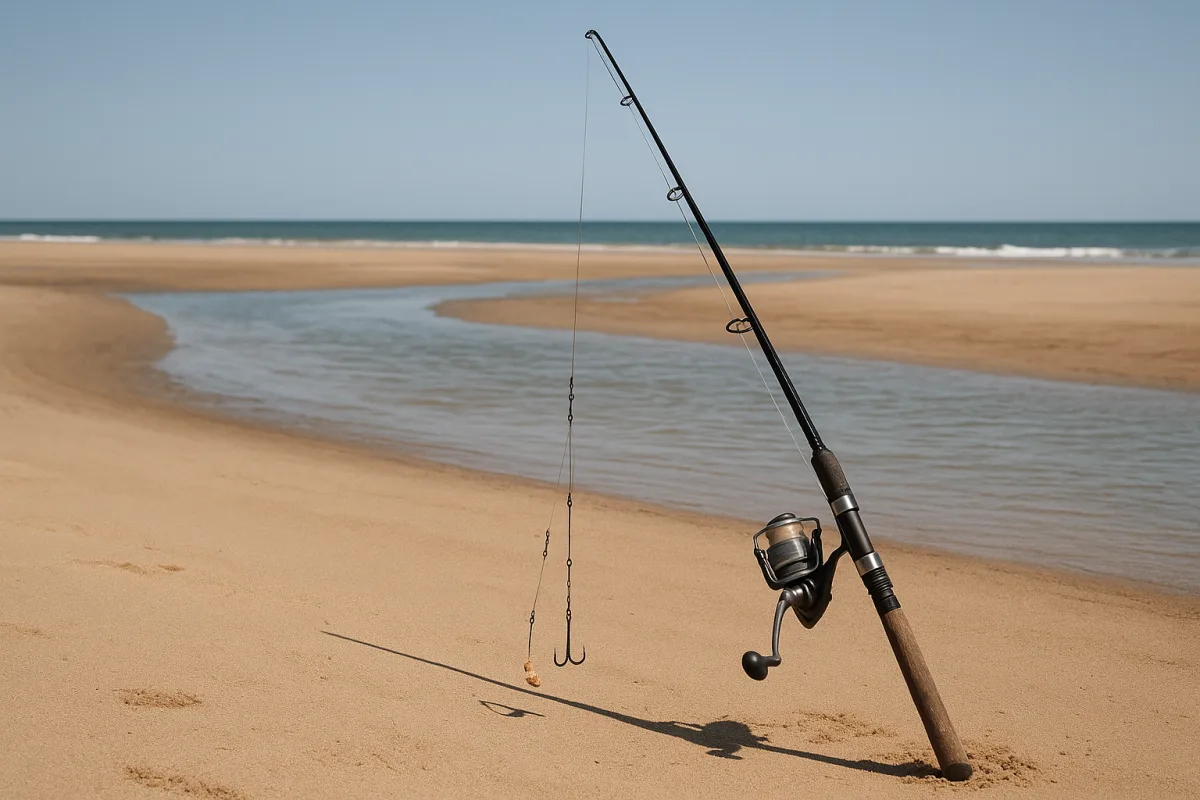
How to Fish During Low Tide
Learn how to fish during low tide with tips on finding fishable water, choosing rigs, casting distance, and reading the beach for surf fishing success.
Surf Fishing Techniques for Flounder: Rigs, Tides & Tips
Learn the best surf fishing techniques for flounder including rigs, tides, and how to read the beach for successful catches.