Best Times to Surf Fish at Night: Tide and Moon Insights
Discover the best times to surf fish at night using tides, moon phases, and seasonal tips for more productive night fishing sessions.
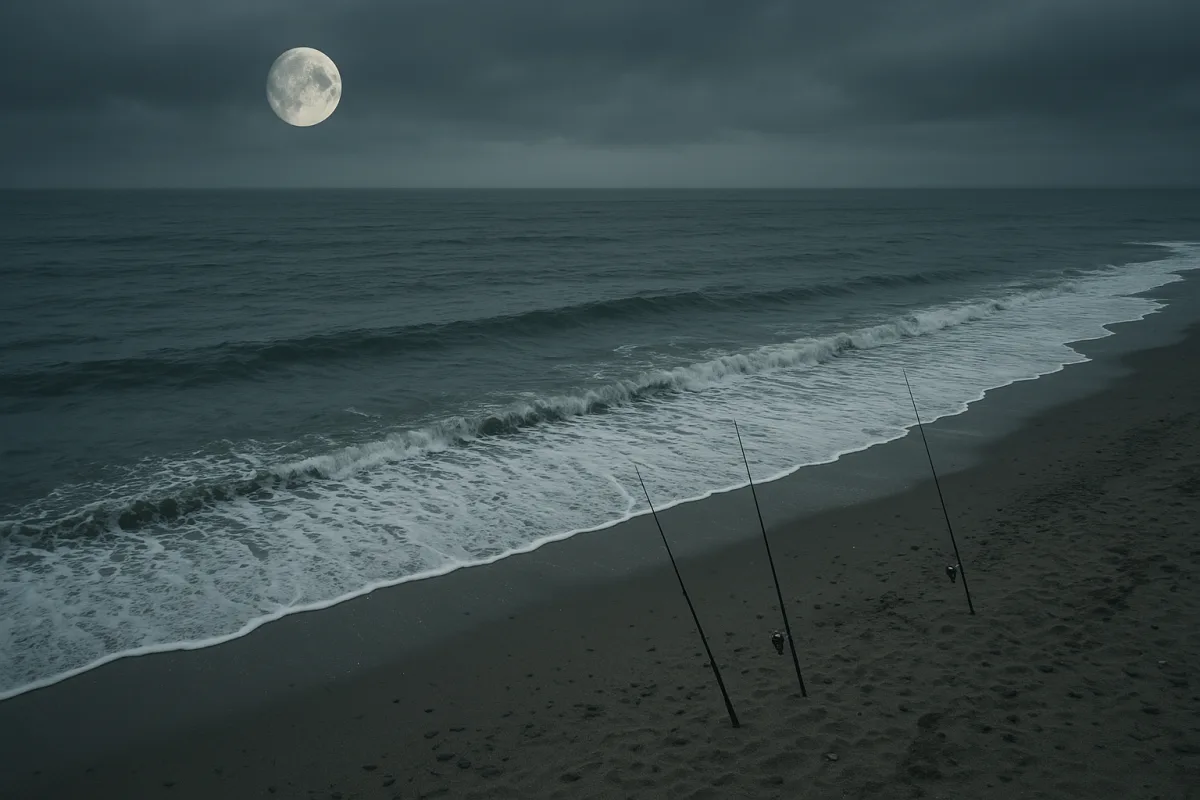
The shift: night fishing is becoming a timing problem, not a darkness problem
The useful shift in night surf fishing advice is plain: anglers are moving away from the old idea that any quiet, dark beach is automatically good after sunset. Better planning now starts with tide movement, season, target species and beach structure.
That change appears across otherwise independent fishing guides. Tide-focused sources repeatedly prioritize water movement near high tide, while night-fishing guides emphasize moon timing, bait presentation and low-light safety rather than simply staying out all night. [1][3][4][7][10]
The evidence is practical rather than statistical. There is no comprehensive body of catch-rate data that proves, for every coast and species, the exact best minute to fish at night. That limitation matters, because confident universal claims go beyond what the available research supports.
Still, several sources converge on the same working schedule. For spring and fall surf fishing, the strongest general window is roughly two hours before through two hours after high tide, when the beach has enough water and current to move forage through reachable structure. [1][3]
Summer shifts the emphasis slightly. High water remains useful, but early morning and late evening tides are repeatedly favored because they pair better feeding conditions with lower light and, often, more tolerable temperatures for fish and anglers. [1]
This is not a fashionable change in terminology. It reflects a better understanding of what happens on a beach after dark: fish do not respond to the clock because it is 10 p.m., they respond to accessible food, suitable water depth and current.
Why high-water movement usually wins
At low tide, a beach often exposes the very troughs and cuts that make it fishable. That is useful scouting time. It is not necessarily the best time to expect fish to hold within casting range once darkness arrives.
As the tide rises, water covers sandbars, fills troughs and opens routes along the beach. Bait can move across those lanes, and predators can use the deeper edges and current seams without having to travel far from secure water. [14]
The operative word is movement. A high tide that produces no meaningful exchange of water can be less useful than a lower stage with a defined sweep through a cut. Tide height creates access, but current often creates the feeding lane.
That is why a simple “fish high tide” rule needs refining. The better default is to arrive early enough to locate the nearshore trough, then fish the incoming tide and the period immediately around high water while water is still moving. [1][3]
This planning method also corrects another common mistake, casting farther simply because the rod will reach. Bowery Beach’s night-fishing guidance identifies excessive casting distance as a recurring error, and that fits how many productive night lanes sit inside the outer bar. [12]
A fish-finder rig or high-low rig does not fix a bait placed beyond the trough. The rig needs to hold bait where current carries scent and forage, not merely where the cast lands farthest from the sand. [4][10]
Winter is the important exception
The trend toward tide-led night fishing should not turn into a rigid rule. Winter is the main qualification, because colder water reduces general fish activity and feeding frequency, changing what a productive session can look like. [6]
Seasonal water ranges cited by the Environmental Literacy Council place spring around 50 to 65°F, summer around 65 to 75°F, fall around 60 to 70°F and winter around 50 to 60°F. Those are broad ranges, not species-specific targets. [6]
For winter bottom species such as fluke and tautog, Shore Guide’s tide guidance favors slack periods with minimal water movement. That directly conflicts with the broad advice to avoid slack tide, and anglers should acknowledge the species distinction rather than dismiss either rule.
In other words, slack water is usually a poor default for a night session aimed at active roaming predators. It can be a sensible deliberate choice for slower winter bottom fishing, where a bait must remain settled and the target is not chasing moving forage.
That difference is why the most efficient plan begins with a target fish. “Night surf fishing” is too broad a category to produce one reliable timetable. A striper, red drum, pompano, surf perch and tautog do not use the same beach in the same way.
Moon planning has become more cautious, and that is an improvement
Moon calendars are now commonly included in night-fishing planning, particularly moonrise, moonset and published major and minor solunar periods. ScienceInsights links these windows to lunar gravitational effects and heightened feeding opportunities. [7]
The sensible use of that information is to use lunar events as tie-breakers. If two nights offer similar high-tide windows, choose the one that overlaps moonrise, moonset or a listed major period, then record what happens on that particular beach.
What anglers should not do is assume a full moon always improves fishing or a new moon always produces the best bite. The Environmental Literacy Council notes that bright full-moon conditions can reduce feeding for light-sensitive fish while benefiting species including walleye and brown trout. [6]
That is not a minor caveat. It means moonlight can affect visibility, predator behavior and bait behavior differently depending on the species. Fishing Toolbox and The Fishing Manual also treat lunar influence as conditional rather than a universal switch. [5][8]
For surf anglers, the practical question is not “What is the best moon?” It is “Which moon phase overlaps the tide window for the fish I am targeting, on a beach where I have found holding water?”
The research does not provide detailed regional tables linking exact moonrise or moonset times to night surf catch rates by species. It also does not establish whether a particular glow-stick color, LED intensity or coastal light-pollution level improves fishing. Avoid invented precision.
Region still decides the rig and the clock
The developing consensus around tide windows does not erase regional differences. It makes local planning more important, because tides only help if they push the right fish and forage through the structure you can reach from that shoreline.
On the East Coast, regional guidance centers on striped bass and bluefish, with bunker chunks and metal jigs among the recommended offerings. A rising or high-water night window makes most sense where it floods a trough, point, inlet edge or bar cut used by those fish. [13]
For that work, a baited fish-finder rig suits anglers waiting on a strip of deeper water, while a metal jig suits a situation where fish are actively showing and a moving presentation is warranted. Neither presentation belongs everywhere or every tide.
Gulf Coast night planning often focuses more closely on incoming water near shore for red drum and pompano. Salter Path guidance points anglers toward cut mullet or live shrimp on fish-finder rigs, a logical arrangement for holding natural bait in the feeding lane. [16]
That does not mean an incoming Gulf tide automatically produces. It means the first choice should be a close feeding route, not a heroic cast over it. Check whether the tide actually reaches the trough and whether current allows the rig to hold naturally.
On the West Coast, surf perch are commonly targeted with lighter tackle and sand crabs or worms. The West Coast approach is a useful warning against importing heavy East Coast striper habits to a beach where smaller fish feed much closer and differently. [11]
A project planner should therefore build a local log, not collect generic “best time” claims. Record tide stage, direction of flow, moonrise or moonset, water temperature, bait, beach feature and the distance at which bites occur.
After several sessions, that log is more valuable than a moon-phase argument on its own. It reveals whether a particular cut produces only on the last half of the flood, whether fish move into a trough after dark, or whether an outgoing tide drains the spot too quickly.
Reading the beach before the sun goes down
Night fishing rewards daylight preparation because darkness conceals the information that matters most. Walk the intended water before sunset, identify troughs, sandbars, rips, cuts and safe paths back above the tide line. [14]
Look for a darker, smoother strip between the beach and outer bar, which can indicate deeper water. Also watch how foam travels, because a consistent line of moving foam can expose the current seam that carries scent and dislodged food.
Do not mistake every rip for a place to stand or cast blindly into. Strong moving water can be dangerous, particularly at night, and the most productive edge may be beside the main flow rather than in its fastest section.
Set rod positions, bait and tools before full dark. One Outdoors recommends headlamps with red-light modes plus glow sticks or LED tip lights, primarily to preserve night vision and make bite detection practical. [4]
Red light is a working convenience, not a demonstrated fish attractant. The available brief supports its value for preserving the angler’s vision, but does not establish that a given light color or intensity changes fish behavior.
The conditions that should make you stay home
The current trend toward more deliberate planning has a useful unsentimental side: some nights are not worth forcing. A favorable moon phase does not compensate for unsafe surf, blocked access, poor visibility or a tide that will strand you below a bluff.
Night-fishing safety sources stress drowning risk, hypothermia, disorientation, equipment failure and wildlife encounters. Recommended preparation includes layered waterproof clothing, communication equipment, a first-aid kit, GPS capability and, where appropriate, a personal flotation device. [4][6][19][20]
Cold weather deserves special attention. Winter water and air can make a minor equipment problem serious quickly, particularly when hands are wet and the return path is obscured. If you cannot manage knots, hooks and footing comfortably, conditions are already working against the session.
Local rules also belong in the planning phase. Fishing Factor identifies ignored regulations as a common night-fishing mistake, and access hours can differ from daytime expectations even where fishing itself is legal. [17]
The practical best time to surf fish at night is therefore usually not a single clock time. It is the period when a fishable tide, reachable structure, target species, workable temperature, legal access and safe exit route overlap.
For most spring, summer and fall plans, begin with the two-hour window before high tide and stay through the early part of the ebb if water is still moving. [1][3] For winter bottom fishing, test slack water intentionally rather than treating it as a universal dead zone.
That is the useful trend to follow: fewer all-night guesses, more short sessions built around a specific tide and a known piece of water. It will not make every planned night productive, but it removes several reasons a night was unlikely to produce in the first place.
Frequently Asked Questions
What are the best tide conditions for surf fishing at night?
The best tide conditions for night surf fishing are generally within two hours before to two hours after high tide during spring, summer, and fall. This period offers moving water that carries bait and creates feeding lanes near the shore. In winter, however, slack tides with minimal water movement are better for bottom species like fluke and tautog.
How do moon phases affect the best times to surf fish at night?
Moon phases influence feeding behavior differently depending on species and local conditions. Full and new moons can either increase or decrease feeding activity, so moonrise, moonset, and solunar periods should be used as timing cues rather than guarantees. It is important to consider the specific species targeted when factoring in moon phases.
When is the best time around high tide to surf fish at night?
The optimal time is to arrive early enough to locate nearshore troughs and fish during the incoming tide and the period immediately around high tide while water is still moving. This movement helps transport bait and attract predators close to shore, making it more productive than fishing exactly at slack high tide.
Are there seasonal differences in the best times to surf fish at night?
Yes, seasonal differences are significant. Spring and fall favor fishing within two hours before and after high tide. Summer also favors high tides but especially those occurring in early morning or late evening when temperatures and light conditions are better. Winter is an exception, favoring slack tides for bottom-feeding species due to reduced fish activity.
How should I plan night surf fishing sessions based on tides and moon?
Plan sessions around moving water near high tide in spring, summer, and fall, and around slack tides in winter for bottom species. Use moonrise, moonset, and solunar periods as guides but not strict rules, considering the species and local conditions. Also, select the beach and rig based on regional species and conditions, and avoid fishing when tides or weather make access or safety problematic.
How we researched this
This article was assembled from 20 cited references.
Nothing here is based on hands-on testing. Where a figure or finding appears, it belongs to the source cited beside it, and the writing says so rather than implying otherwise. Every source is listed below so you can check it.
Sources
- Best Tide for Fishing: High vs Low, Incoming vs Outgoing
- Night Surf Fishing: A Complete Guide to Catching Monsters After Dark
- Best Tide for Surf Fishing: Maximize Your Catch Today
- Surf Fishing Guide: Rigs, Baits, Best Beaches & Techniques | One…
- Moon Phase Fishing Guide: Does the Moon Really Affect the Bite? - Fishing Toolbox
- What is the best moon to fish at night? - The Environmental Literacy Council
- How the Moon Affects Fishing: Tides, Phases & Feeding - ScienceInsights
- Moon Phases and Fishing: Do They Affect the Bite? — The Fishing Manual
- Skate: Species Profile
- Night Fishing Tips — FishRadar
- Surf Fishing: Complete Beginner's Guide To Gear, Rigs & Catch More Fish
- Best Surf Fishing Setup for Night Fishing: Rods, Rigs & Gear
- East Coast Surf Fishing Guide — Stripers, Red Drum & Bluefish
- Surf Fishing for Beginners: Reading the Beach, Right Gear & Best Times | HookCast
- Surf Fishing the Emerald Coast: A Beginner's Guide (2026)
- Night Fishing Near Salter Path on the Crystal Coast | Salter Path, NC
- Can We Go Night Fishing? You Bet, But With Caveats - Fishingfactor
- CT Shore Anglers at Niantic, Bluff Point, and the Race Report the Night Tide Window Moves Fish Shallow in Ways That Break Daytime Location Logic. What LIS Surf Communities, ASMFC Slot Regulations, and DEEP Coastal Access Hours Reveal About After-Dark Striper Fishing on the CT Coast | Hooked Fisherman
- Night Fishing Tips: Gear, Techniques & Safety | WeBoating
- Night and Pre-Dawn Fishing: Gear and Safety Essentials | CastRigWild
Related Articles
Best Times to Surf Fish in Spring: Tide and Temperature Tips
Discover the best times to surf fish in spring based on tides, water temperature, and weather for more successful fishing trips.
Best Tides for Surf Fishing
Learn the best tides for surf fishing and why moving water around high and low tides boosts your catch success.
How to Catch Fish During a Beach Bonfire: Tips and Safety
Learn how to catch fish during a beach bonfire with tips on tides, gear setup, safety, and legal regulations for a successful surf fishing night.
Best Times to Surf Fish in Winter: A Practical Guide
Discover the best times to surf fish in winter, including tips on local conditions, species behavior, and optimal fishing strategies.