Best Times to Surf Fish in Spring: Tide and Temperature Tips
Discover the best times to surf fish in spring based on tides, water temperature, and weather for more successful fishing trips.
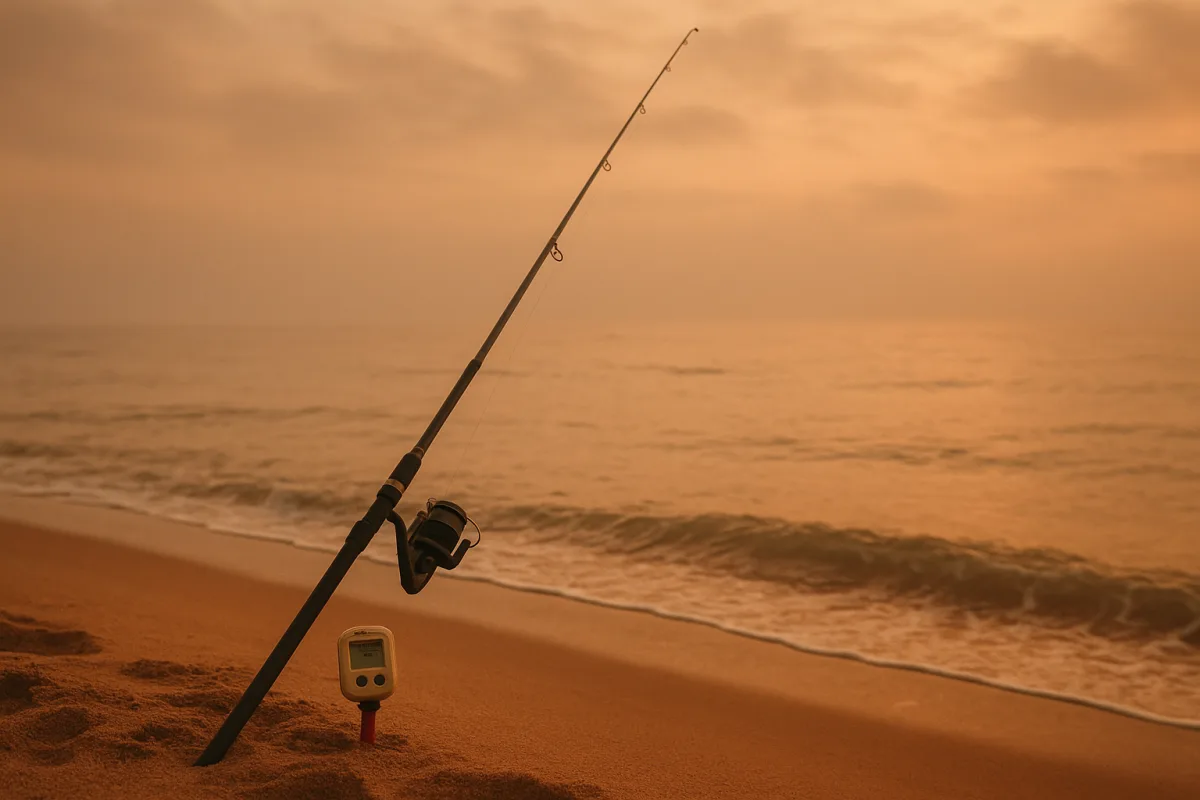
The shift: spring surf fishing is becoming a condition-window game
The useful shift in spring surf fishing advice is away from fixed rules such as “fish high tide at sunrise,” and toward combining tide stage, water temperature, weather trend and beach structure. That is a real change in emphasis, even if the available sources do not provide catch-rate data proving one universal schedule.
Take Me Fishing and HookCast both put moving water ahead of the clock. Your Fish Guide reaches a similar practical conclusion from another direction, separating early-spring midday opportunities from the early-morning and evening windows that become stronger later in the season.[1][2][3]
Temperature-focused sources reinforce that approach. AZKNS Fishing ties feeding activity to species-specific water ranges, while Fishing Fathom emphasizes several days of stable warming rather than a favorable date on the calendar.[4][5]
That convergence matters because spring is unstable. A beach can have the right moon, a convenient high tide and a traditional seasonal run, yet fish poorly if the water has just fallen several degrees or the bait has not reached the troughs.
The evidence is not strong enough to declare that anglers everywhere are abandoning dawn trips or high-water sessions. It does support a narrower, more useful conclusion: the best spring time is increasingly treated as a window created by conditions, not an appointment created by a tide chart alone.
Read the tide chart as a movement chart
High tide remains a sensible starting point, particularly where fish need extra depth to reach shallow bars, inside troughs and protected beach structure. Shore Guide notes that high water can give species including striped bass, weakfish and black drum access to shallower areas.[3]
A practical initial window is roughly two hours before high tide through two hours after it. Take Me Fishing identifies that period as productive because water is advancing across the beach and putting bait, crustaceans and other food within reach.[1]
But high tide itself is not the point. The point is current, access and available food. Slack water, when movement nearly stops, is generally a poor period because little bait is being displaced and fish have less reason to patrol predictable lanes.[1][2]
Outgoing water deserves equal attention in spring planning. HookCast and Take Me Fishing both identify falling water as productive, especially where a cut, rip channel or drain concentrates the flow and flushes bait from the shallows.[1][2]
That is the part many tide-chart plans miss. An outgoing tide over a clean, featureless beach may not give fish much of a feeding lane, while the same tide draining through a defined cut can put the entire beach’s moving water into one castable corridor.
There is no clear source-backed consensus that incoming water is categorically better than outgoing water in spring. The better choice depends on the fish, the beach and whether the falling tide actually has a channel, trough opening or rip to organize it.
For a short trip, arrive before the predicted tide window rather than at the printed high-water time. Spend the first few minutes locating the deepest color, the lowest section of bar, the active rip or the seam where cleaner and dirtier water meet.
Dawn is still important, but March changes the schedule
Low light still earns its reputation. Shore Guide identifies dawn and dusk as strong feeding periods during spring migration, when fish can move and feed more comfortably in the shallows.[3]
By late spring, that conventional schedule becomes more reliable. Your Fish Guide places May’s stronger windows around 5:30 a.m. to 9 a.m. and from 5 p.m. until sunset, associating them with post-spawn feeding activity.[3]
Early spring can be different because a cold beach is not a summer beach with fewer people. In March, Your Fish Guide identifies 10 a.m. to 4 p.m. as potentially productive because sunlight can raise water temperature enough to improve activity.[3]
That does not mean noon is automatically prime time. It means midday can beat predawn when the night has cooled the shallows, the ocean remains cold, and fish need the day’s warming trend before they feed with much purpose.
A forecast-first plan should therefore compare sunrise with water temperature, not simply treat sunrise as sacred. If several mild days have lifted the water, dawn may work. If a cold night follows a front, the afternoon may be the only period worth arranging around.
Water temperature explains why one beach turns on and another does not
AZKNS Fishing places meaningful spring feeding improvement in the broad 50 to 70°F range, while noting that fish are generally less active below 50°F. That makes temperature trend more useful than the month printed on the calendar.[4]
The species ranges show why a single spring timetable fails. Striped bass are listed at 55 to 68°F, bluefish at 58 to 72°F and flounder at 60 to 72°F, all temperatures that can occur at different points on the same coast.[4]
Warm-water targets shift the calculation further. Redfish are listed at 65 to 80°F, pompano at 68 to 75°F and snook at 72 to 84°F, so a morning that suits striped bass may still be too cold for a dependable pompano or snook bite.[4]
Use those ranges as planning guides, not promises. The research does not establish a precise temperature at which every fish feeds, nor does it show that a given bait or rig becomes superior at a specific temperature change.
What it does show is that stable warming matters. Fishing Fathom reports that several days of rising or steady warmth improve activity, while sudden cold fronts that reduce water temperature by 2 to 6°F can reduce feeding.[5]
That makes the forecast more valuable than a long-range seasonal prediction. Check recent air temperatures, wind direction and any cold front, then compare them with the sea temperature available for your beach before deciding whether an early alarm is justified.
Fronts create narrow opportunities and obvious no-go periods
The pre-front period is often worth prioritizing. The Environmental Literacy Council reports increased fish activity ahead of storms as barometric pressure falls and environmental conditions change, which can create a useful feeding window before weather deteriorates.[12]
That opportunity has limits. Fishing Weather describes front conditions as hazardous, with storms, shifting winds and lightning, and generally poor for fishing. A feeding window is not a reason to stand on an open beach under an advancing thunderstorm.[13]
After the front, expectations should drop. NC Fin & Feather Outfitters reports that rising pressure and colder water can reduce feeding and move fish deeper, particularly when a storm causes a sudden water-temperature fall.[14]
If fishing after a front is the only option, Fishing At Work recommends the warmest part of the day and warmer shorelines. This is where a protected, sun-warmed stretch may be a better use of time than an exposed beach at dawn.[15]
Water clarity also needs a realistic reading. The supplied research warns against ignoring it, but does not provide enough numbered, source-backed detail to prescribe a universal clarity threshold. Treat muddy runoff and rough, discolored surf as reasons to simplify expectations, not as automatic proof that fishing is impossible.
Match the window to the fish and the part of the beach
Timing works only when the bait is in front of fish. For April black drum, FishTalk Magazine recommends clam-flavored Fishbites paired with live sand fleas on a top-and-bottom rig using 4/0 to 8/0 hooks, fished in deeper water beyond the breakers.[6]
That recommendation fits a high-water or moving-water plan only if the selected spot contains accessible depth. A black drum rig dropped into repeatedly breaking whitewater is not made better by arriving at the correct point on the tide chart.
For pompano, One Outdoors recommends live sand fleas on a double-drop pompano rig with fluorescent floats. That is a logical choice for working the nearshore feeding zone, particularly when a rising tide is carrying water across shallow bars.[7]
For red drum, striped bass and bluefish, One Outdoors recommends fish finder rigs, paired respectively with cut mullet, live eels and cut bunker or mullet strips. A sliding-sinker arrangement suits fish taking bait while moving through troughs or channel edges.[7]
Flounder call for a different presentation. One Outdoors recommends live finger mullet on a Carolina rig, while whiting are matched with dead shrimp or bloodworms on an adapted pompano rig. These are species-and-presentation choices, not interchangeable spring defaults.[7]
Small sharks are another fish finder-rig target in One Outdoors’ guide, using whole bonito or bluefish. The important planning point is that a larger bait and shark-capable target do not turn a slack, lifeless tide into a good session.[7]
For striped bass and red drum leaders, the brief identifies seven feet as a common recommendation and points to RIO Products’ striped-bass leaders through Trident Fly Fishing. It does not provide a reliable pound-test specification, so choosing one by assertion would be guesswork.[11]
Regional calendars still matter, but they are only starting points
The East Coast gives the clearest seasonal markers in the research. Fishing Digital places the Northeast striped bass migration peak from Maine to New Jersey in May and June, while Shore Guide identifies April and May as the New Jersey peak.[8][3]
Bluefish timing is narrower in the New Jersey material, with Shore Guide placing their arrival in late April. That is useful for trip planning, but it does not replace checking whether local water has warmed into bluefish’s listed 58 to 72°F range.[3][4]
On Florida’s Emerald Coast, The Prepared Angler places the spring pompano run from mid-March through mid-April, peaking around mid-April. That favors a focused short-season plan built around warming water and productive moving tides.[10]
Alabama’s Gulf Shores and Orange Beach offer a broader calendar, with Gulf Shores describing May through fall as especially good for pompano, whiting and flounder. In that region, May timing can be more useful than forcing an early-March trip.[9]
There is no comparably detailed West Coast spring timing evidence in the supplied research. That gap is important. It would be irresponsible to transfer an East Coast striped-bass tide schedule or a Gulf Coast pompano calendar to Pacific beaches as if surf systems and species were interchangeable.
Build the trip around a decision sequence
Start with the species likely to be present locally, then check whether the water temperature fits that fish better than it fits another target. A March striped bass plan and an April Emerald Coast pompano plan should not begin with the same assumptions.[4][8][10]
Next, identify the best moving-water window, either around high tide or on an outgoing tide draining a visible cut. Do not schedule the whole outing for slack water merely because it is the most convenient time to park and walk.[1][2]
Then check the three-day weather pattern. Stable warming supports the plan. A fresh cold front means shorten expectations, look for warmer protected water, fish later in the day if conditions are safe, or postpone rather than forcing an unproductive session.[5][14][15]
Finally, read the beach after arrival. Find the trough before choosing a rod holder location, and do not assume the fish are beyond the farthest cast. Spring fish often use the closest depth, particularly where moving water has organized food against a bar or channel edge.
Frequently Asked Questions
What are the best tide conditions for surf fishing in spring?
The best tide conditions focus on moving water rather than a fixed tide time. A productive window is roughly two hours before through two hours after high tide, when water advances across the beach and brings bait within reach. Outgoing tides are also effective, especially near cuts or channels that concentrate flow and flush bait seaward. Slack tides with little water movement are generally unproductive.
How does water temperature affect surf fishing in spring?
Water temperature strongly influences fish feeding activity and varies by species. For example, striped bass feed best between 55 and 68°F, while pompano prefer 68 to 75°F. Fish are less active below 50°F, and feeding improves with consistent warming over several days. Sudden temperature drops from cold fronts can reduce feeding as fish move deeper.
Is dawn or afternoon better for surf fishing in early spring?
Dawn and dusk are generally prime feeding times, but in early spring (March), afternoons from about 10 a.m. to 4 p.m. can be productive on cold-water beaches where sunlight warms the water and stimulates feeding. Later in spring, prime times shift back to early morning and late afternoon.
How do cold fronts impact surf fishing times in spring?
Cold fronts often cause water temperatures to drop by 2–6°F, pushing fish deeper and reducing feeding activity near the surface. Before a cold front, fish may feed actively, but after the front passes, warmer afternoon periods tend to offer better fishing opportunities as fish adjust to the new conditions.
What time window around high tide is best for spring surf fishing?
A practical window is about two hours before high tide through two hours after it. This period features advancing water that brings bait and food sources closer to shore, increasing fish activity. The key factor is water movement and current rather than the exact high tide moment.
How we researched this
This article was assembled from 17 cited references.
Nothing here is based on hands-on testing. Where a figure or finding appears, it belongs to the source cited beside it, and the writing says so rather than implying otherwise. Every source is listed below so you can check it.
Sources
- Surf Fishing - Take Me Fishing
- Surf Fishing for Beginners: Reading the Beach, Right Gear & Best Times | HookCast
- The Ultimate Guide: Best Time to Go Fishing in 2025 (Science-Backed Tips) – Your Fish Guide
- How Water Temperature Affects Surf Fishing: Best Temps & Fish Behavior
- Spring Fishing Patterns by Water Temperature: a Complete Guide
- Spring Surf Fishing for Drum | FishTalk Magazine
- Surf Fishing Guide: Rigs, Baits, Best Beaches & Techniques | One…
- East Coast Surf Fishing Guide — Stripers, Red Drum & Bluefish
- Surf Fishing in Gulf Shores & Orange Beach
- Emerald Coast Surf Fishing Report Today | The Prepared Angler
- Rio Striped Bass Leader | Trident Fly Fishing
- How do fish react to storms? - The Environmental Literacy Council
- Weather fronts and fishing — Fishing Weather
- What Happens to Fish During a Cold Front? — NC Fin & Feather Outfitters
- Spring Fishing: Proven Tactics, Lures, and Species Strategies – Fishing At Work
- Weather | Northland Fishing Tackle
- Spring Bass Fishing Guide
Related Articles
Best Times to Surf Fish at Night: Tide and Moon Insights
Discover the best times to surf fish at night using tides, moon phases, and seasonal tips for more productive night fishing sessions.
How to Find Fish in the Surf: Reading the Beach & Tides
Learn how to find fish in the surf by reading tides, water features, and beach structure for better surf fishing success.
Best Times to Surf Fish in Winter: A Practical Guide
Discover the best times to surf fish in winter, including tips on local conditions, species behavior, and optimal fishing strategies.
Best Time of Day to Surf Fish: Optimize Your Catch
Discover the best time of day to surf fish and enhance your success with tips on tides, water temperature, and seasonal patterns.