
How to Store Bait for Surf Fishing
Learn how to store bait for surf fishing properly to keep it fresh and alive with tips on temperature, containers, and transport.
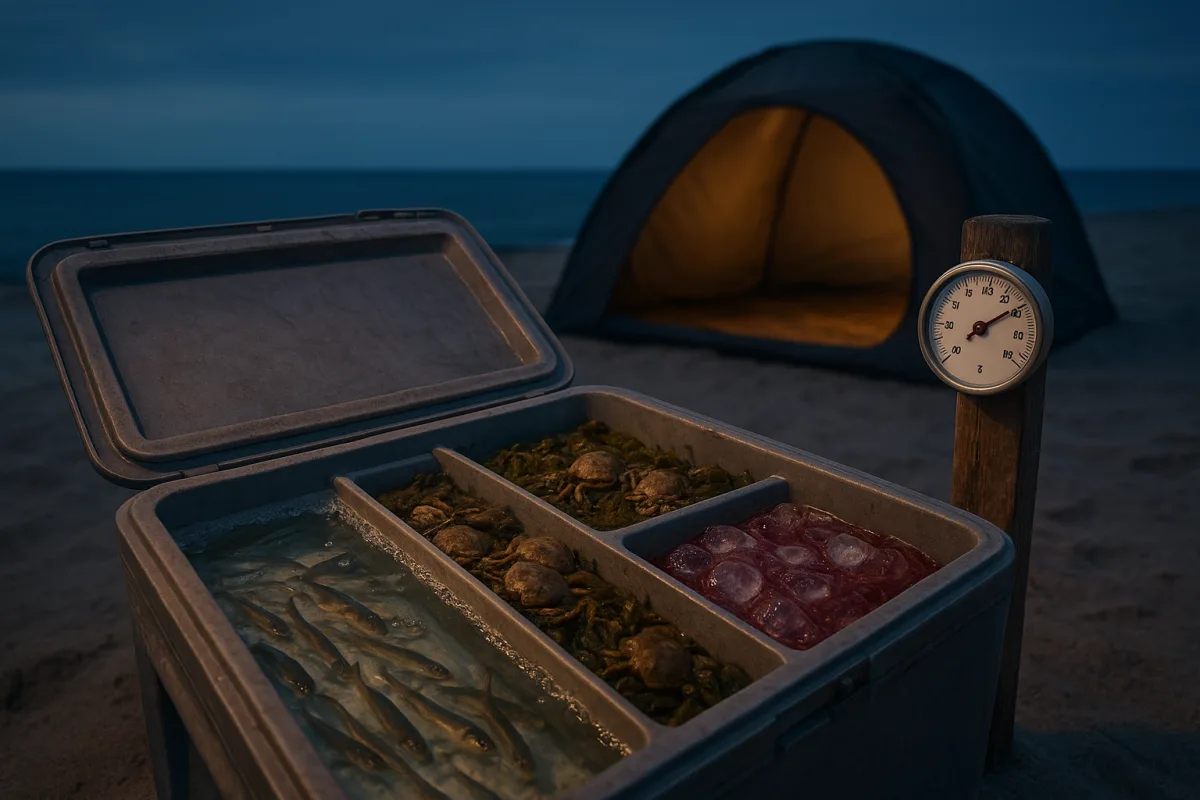
Start at the bait shop, not at the beach
The storage problem begins when bait changes hands. A shrimp that sits sealed in a hot vehicle, or a bucket of minnows carried in dirty water, is already deteriorating before the first cast reaches the trough.
Buy only what you can keep alive or cold through the planned session. That means looking at the forecast first: air temperature, sun, drive time, launch access and the stage of tide all determine whether you need bait for two hours or a full tide cycle.
For a short evening tide close to home, a modest amount of bait is practical. For a long daylight session on an exposed beach, more bait only makes sense if the cooler, aerator and water supply can support it.
Keep bait types separate from the outset. Sources on live-bait care warn against mixing bait species, and the practical reason is straightforward: different species tolerate temperature, moisture and crowding differently.[1][3] A mixed bucket makes it harder to see what is failing.
Do not treat all surf bait as if it wants the same storage conditions. Bloodworms have a stated holding range of 34 to 40°F, or 1 to 4°C.[1][3] Shrimp and sand crabs need to stay cool and moist, but the available guidance does not establish an equally precise temperature target.[18]
That distinction matters when packing for a warm beach. A bloodworm container needs controlled chilling without freezing the worms. Shrimp and sand crabs should not be left baking in meltwater, but neither should they be treated like baitfish that require aerated water.
Solve the drive before you solve the fishing
The drive is where anglers often make the first irreversible mistake: sealing living bait into an unventilated container or putting it directly against loose ice. Cold is useful only when it matches the bait being carried.
For freshwater minnows, published live-bait guidance puts the preferred water temperature at 50 to 65°F. Saltwater baitfish are generally held warmer, at 65 to 75°F.[1][3] Those ranges are not interchangeable, particularly on a summer run to the coast.
Use an insulated bait bucket or cooler as a temperature buffer, not as a container to fill indiscriminately with ice. Ice can create extreme cold zones, while a closed container in direct sun can heat quickly despite being labelled insulated.
If baitfish are travelling for more than a brief run, plan for aeration. Wholesale Bait and FishyKayak both identify oxygenation as central to keeping live bait going for 24 hours or more.[1][3] Water that looks clear can still become oxygen-poor.
Stocking density is part of the same calculation. The guidance of 24 to 36 minnows per five-gallon bucket provides a usable ceiling, not a target to exceed because the bite might improve later.[1][3] Fewer fish means more oxygen and less waste.
Avoid rough handling during loading and transport. Live-bait sources repeatedly stress gentle handling, because bait weakened in transit may technically survive but become poor fishing bait, unable to swim naturally or withstand repeated casting.[1][2]
For dead bait, separate the usable pieces from anything that is obviously spoiled before leaving home. A dead baitfish in a live-bait container must be removed immediately because decomposition contributes to ammonia problems that can kill the remaining bait.[1][3]
Choose the container for the session you actually have
An aerated bait container is worthwhile when live bait is part of the plan, not merely an option. A basic insulated cooler may preserve dead bait and worms, but it does not replace oxygenation for crowded baitfish over a long, warm session.[1][3]
The Engel 7.5 Quart Live Bait Pro Well is one compact commercial option. Its listed configuration includes a lithium-ion rechargeable aerator, and listings place it at about $100.[4] That price covers the portable bait-well unit, not bait, replacement water or extra battery capacity.
A 7.5-quart livewell suits the angler moving between cuts, jetties or beach accesses with a limited amount of bait. It is not the sensible category for storing a large supply of baitfish at home, where water volume and stable conditions matter more.[3][4]
For overnight holding or larger quantities, the available guidance points toward larger aquariums, dedicated bait tanks or commercial bait systems.[3] The important feature is not a brand badge. It is enough water volume, reliable aeration, temperature control and access for cleaning.
Do not assume a cheap homemade arrangement performs like an aerated commercial bait cooler. The research brief found no detailed evidence showing low-cost improvised systems match those products for holding live bait, especially over extended periods in warm weather.
The same caution applies to cooler choice. General fishing-cooler reviews from GearGavel, GearJunkie and Master Fishing Mag focus heavily on ice retention and construction, useful traits for dead bait and food, but those features do not by themselves provide aeration for live bait.[6][7][8]
Keep bait alive through the tide window
Once you reach the beach, place the bait container out of direct sun before setting rods. On an open surf beach, a calm morning can turn into hard midday heat quickly, and bait storage usually fails before the fishing plan does.
Check the bait at intervals rather than waiting for a fish to bite. Live-bait guidance recommends checks every 5 to 20 minutes, with the shorter interval making more sense in heat, with heavy stocking, or when bait is showing stress.[3]
Watch for dead baitfish, sluggish movement and dirty water. Remove dead individuals at once. Leaving them in the container risks ammonia poisoning, which can turn a manageable problem with one fish into a complete bait loss.[1][3]
Warm conditions require water management as well as aeration. One cited live-bait recommendation is to change 25 to 30 percent of the water every hour in warm weather.[1][3] That is easier if you have planned a clean water source before arriving.
Do not make a full water change unless conditions force it. The cited advice emphasizes partial changes, which reduce accumulating waste while avoiding an abrupt total change in the bait’s environment.[1][3] Temperature differences still matter when adding replacement water.
This is where fishing timing helps bait storage. If the productive water is expected around a tide change, arrive with fresh bait and fish the high-probability window instead of hauling live bait through six empty hours of bright, hot beach conditions.
A forecast that calls for high heat, little shade and a long walk from the vehicle should change the bait plan. Carrying less live bait, or choosing properly chilled dead bait, may be more realistic than hoping a small bucket can overcome bad holding conditions.
Store worms, shrimp and sand crabs differently
Bloodworms need more deliberate temperature control than many surf anglers give them. Keep them in the documented 34 to 40°F range, and prevent direct contact with ice that could freeze or damage them.[1][3]
For shrimp and sand crabs, keep the goal simpler: cool and moist. The sources do not provide a verified optimum temperature or a quantified survival time at particular temperatures, so claims that specify an exact setting for either bait go beyond the evidence.[18]
Do not submerge shrimp and sand crabs merely because they came from a marine environment. The available guidance specifically distinguishes their storage needs from baitfish, recommending cool, moist conditions rather than immersion.[18]
Use separate containers and avoid sealing moisture-sensitive bait in a way that encourages excessive heat or spoilage. Improper sealing is identified as a common storage error, alongside temperature extremes, overcrowding and poor equipment hygiene.[3]
If the day’s conditions make live sand crabs or shrimp difficult to hold, adjust the plan before the trip. Frozen or preserved bait can extend the useful season, and Fish the Surf identifies freezing and salting as methods used to preserve surf bait beyond immediate use.[18]
That does not mean preserved bait is identical to fresh bait in every bite. It means preservation gives you a usable option when the forecast, travel time or lack of reliable live-bait storage makes keeping delicate bait alive an unrealistic proposition.
Clean the system before the next tide
After the session, deal with unused bait immediately. Sort bait that can be preserved from bait that has spoiled, and do not return questionable bait to a clean container simply because it has not been used.
Rinse buckets, aerator hoses, cooler interiors and any bait boards after each trip. Failure to rinse equipment is listed among the common mistakes in live-bait storage guidance.[3] Old slime, scales and residue add contamination before fresh bait is ever loaded.
Bait-board care guidance from Bait Boards Direct also stresses maintenance as the way to extend board life.[15] For surf fishing, the more immediate advantage is a cleaner cutting surface when preparing mullet, squid, shrimp or other dead bait at the beach.
If you keep bait at home, use a larger aquarium or bait tank rather than expecting a travel container to do every job. Home storage brings longer exposure to waste buildup, temperature shifts and oxygen loss, all problems amplified by small water volume.[3]
Season and region should shape what you store. Surf-bait guidance notes that warmer southern conditions commonly bring use of bloodworms, sand fleas and shrimp through spring and summer, while cooler northern areas follow different bait timing and preferences.[17]
That is another reason not to buy bait by habit. A spring warm-up, a summer heat warning and a cold northern tide can all require different storage decisions. The correct bait is only useful when it reaches the wash fresh enough to fish naturally.
Frequently Asked Questions
How do I keep live bait alive for surf fishing?
Keep live bait separated by species and ensure proper aeration, temperature control, and cleanliness. Use an insulated bait bucket or cooler with aeration for longer sessions, avoid overcrowding (e.g., 24 to 36 minnows per five-gallon bucket), and handle bait gently to prevent stress. Check live bait every 5 to 20 minutes, remove dead bait immediately, and change about 25 to 30 percent of the water hourly in warm conditions.
What is the best temperature to store surf fishing bait?
Temperature recommendations vary by bait type. Bloodworms should be kept between 34 to 40°F (1 to 4°C). Freshwater minnows prefer 50 to 65°F, while saltwater baitfish are best held at 65 to 75°F. Shrimp and sand crabs should be kept cool and moist but not submerged, as no precise temperature range is established for them.
How should I transport bait to the beach for surf fishing?
Transport bait in insulated containers that buffer temperature without direct contact with ice, which can cause extreme cold spots. Use aerated containers for longer trips to maintain oxygen levels, and avoid sealing bait in unventilated containers. Handle bait gently during loading and transport to reduce stress and maintain bait quality.
What containers are best for storing surf fishing bait?
Insulated bait buckets or coolers with aeration systems are suitable for transporting live bait. For short mobile sessions, a small aerated bait well is adequate, while larger tanks or aquariums are better for overnight or longer storage at home. Commercial options like the Engel 7.5 Quart Live Bait Pro Well with lithium-ion aerator offer effective oxygenation.
How often should I check and change water for live bait on the beach?
Check live bait every 5 to 20 minutes depending on conditions and bait type. Remove dead bait immediately to prevent ammonia buildup. Change roughly 25 to 30 percent of the water hourly, especially when temperatures are high and heat is working against bait survival.
How we researched this
This article was assembled from 19 cited references.
Nothing here is based on hands-on testing. Where a figure or finding appears, it belongs to the source cited beside it, and the writing says so rather than implying otherwise. Every source is listed below so you can check it.
Sources
- Wholesale Bait - How to Keep Live Bait
- What Is Live Bait Fishing: A Beginner's Guide
- How to Store Live Bait | 10 Easy Steps (2026)
- ENGEL Live Bait Cooler PRO for Fishing - with Lithium-Ion Rechargeable Aerator | eBay
- 10 Best Bait Cooler For Fishing 2026 in the US | There's One Clear Winner | BestReviews.guide
- How to Choose a Cooler for Fishing Trips (2026) — Keep Catch & Drinks Cold | GearGavel
- YETI vs. RTIC: Rotomolded Cooler Breakdown
- Best Fishing Coolers That Actually Hold Ice
- Maggots — FishingHQ
- How to Keep Live Bait Alive While Kayak Fishing | Baitshark
- How Long Should I Wait Before Recasting? – Tight Lines and High Tides
- How To Store Soft Plastic Baits | Storables
- Does Powerbait Go Bad: 4 Things That Impact It - CNY Fishing
- How To Store Soft Plastic Lures (Keep Your Fishing Baits Organized & Fresh) – PlasticRanger
- Bait Board Maintenance and Care: Making Yours Last 10+ Years | Bait Boards Direct
- Ultimate Guide: Best Setup for Surf Fishing to Maximize Catch
- Best Surf Fishing Baits for Pompano, Whiting & Redfish
- Microsoft Word - Surf Fishing How To Preserve Bait
- Live baiting techniques - The Fishing Website
Related Articles
How to Choose Surf Fishing Bait for Summer
Learn how to choose the best surf fishing bait for summer, comparing live and artificial sand fleas for pompano and whiting.

Surf Fishing in Murky Water: Tips for Catching Fish
Learn how to catch fish surf fishing in murky water with rigs, bait, and beach reading tips for low-visibility conditions.
Best Surf Fishing Locations in Fall: Top Spots and Tips
Discover the best surf fishing locations in fall with tips on bait, tides, and regional hotspots for a successful autumn fishing trip.
How to Handle Fish After Catching: Proper Techniques
Learn how to handle fish after catching with proper techniques to minimize harm and improve catch and release success.