Best Surf Fishing Locations in Fall: Top Spots and Tips
Discover the best surf fishing locations in fall with tips on bait, tides, and regional hotspots for a successful autumn fishing trip.
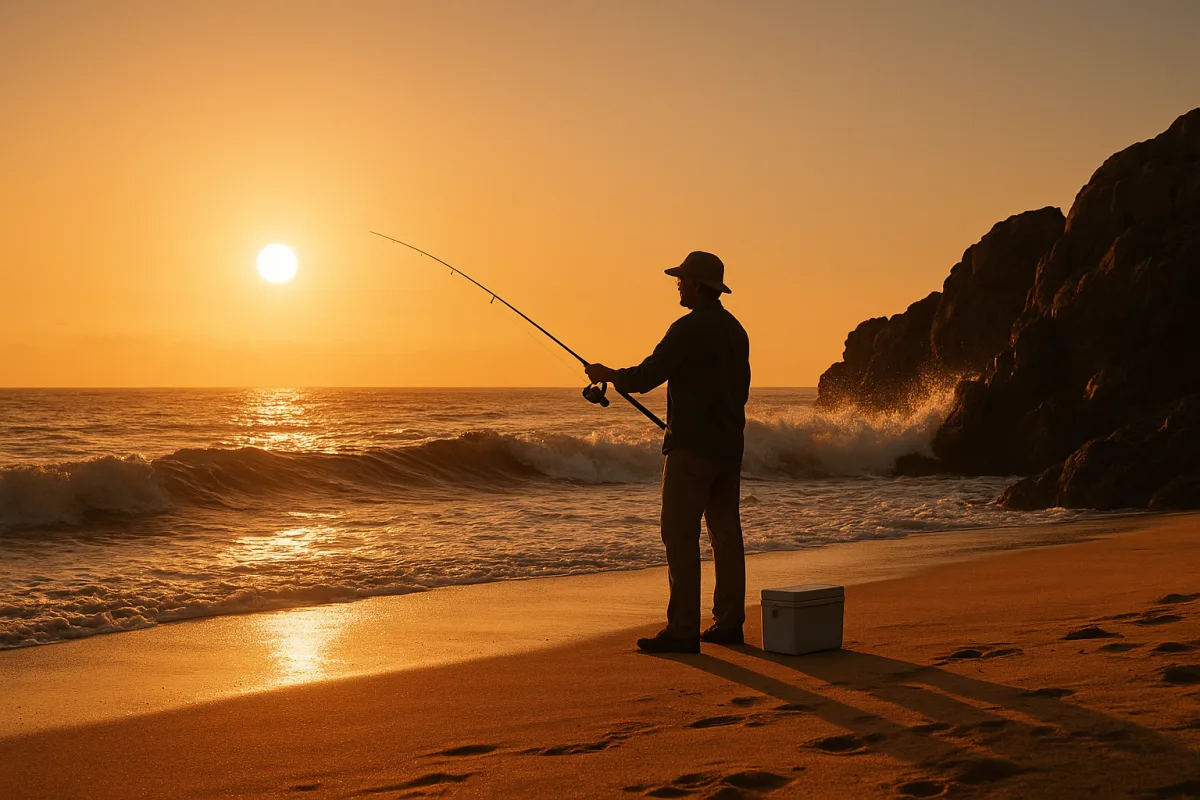
The fall shift is toward bait, structure and shorter casts
Fall surf fishing changes the location calculation. Summer fish can be scattered across warm, flat beaches, but autumn cooling starts moving baitfish along the coast and gives predators a reason to concentrate around beach structure.
The evidence is appearing in separate regional reports, not just in one optimistic fishing forecast. Northern Outer Banks reports list bluefish, Spanish mackerel, croakers, sea mullet, spot and pompano, while Long Beach Island reports describe abundant mullet and bay anchovies alongside bluefish and bonito. [1][2]
Florida reports show the same broad pattern through the mullet run. Haulover Beach’s nearshore opportunity is red drum, bluefish and Spanish mackerel following migrating mullet, while the Atlantic Beach area of North Carolina expects its fall bluefish run from late September. [5][6]
That is the useful trend for a surf angler: fish are becoming more tied to moving forage and the places where that forage is pinned against a beach feature. It does not mean every beach fishes well simply because the calendar says October.
The practical consequence is to stop selecting a fall spot by reputation alone. Pick the section of beach where a tide can move water through a cut, where birds show bait activity, or where a shallow bar forces forage into a reachable trough.
North Carolina: look for a run, not a famous access point
Topsail and Sneads Ferry are credible fall choices because recent reports identify Spanish mackerel, bluefish and red drum in the area. One reported red drum measured 34 inches and was caught on live finger mullet, which is a useful clue about available forage. [16]
That catch does not prove that live finger mullet will produce every day. It does suggest that an angler arriving with cut mullet, fresh mullet or a way to gather local bait has a better starting point than one relying only on stale freezer bait.
At Topsail or Sneads Ferry, fish the first deeper trough off the sand, especially where it connects to a visible cut through an outer bar. Bluefish and Spanish mackerel may roam, but red drum often make more efficient feeding passes along those defined lanes.
The Outer Banks offers a broader mixed-bag option. Fisherman’s Post reported bluefish, Spanish mackerel, croakers, sea mullet, spot and pompano around Nags Head during September, giving anglers a reason to carry both predator rigs and smaller-bait rigs. [1]
For the Outer Banks spot run, water temperature matters more than a fixed calendar date. Outer Banks Surf Fishing reports that spot activity commonly peaks in September and October after water temperatures drop below the low 70s, particularly after northeast storms. [13]
A northeast blow can reshape a bar, dirty the water and push forage closer, but it can also make casting and holding bottom impractical. Fish after the sea settles enough to identify a trough or cut, not while a heavy sweep continually drags your bait sideways.
Nags Head is not a place to assume that a long cast is automatically better. Sea mullet, spot, croakers and pompano often feed within the near trough, commonly 20 to 40 yards from the wash, where sand fleas, worms and dislodged bait naturally collect. [15]
Long Beach Island: follow the bait supply south
Long Beach Island deserves attention when mullet and bay anchovies are present because those bait concentrations line up with reports of bluefish and bonito. The September 16 Long Beach Island report described both forage species as abundant, rather than treating predator catches as isolated events. [2]
That matters because bonito and bluefish are not evenly distributed along a barrier island. Look for a clean, deeper wash beside a bar, then watch for diving birds, bait spraying at the surface or brief flashes of feeding fish before committing to a spot.
Mid-September water around Long Beach Island was still approximately 75 degrees, according to the local report. [2] That is early in the cooling process, not the full cold-water striped bass pattern many anglers associate with late fall.
As water cools through roughly 65 to 55 degrees, striped bass activity traditionally becomes a larger part of the Northeast surf picture. FishTalk Magazine identifies the fall run as the period when cooling water brings bait and larger striped bass closer to shore. [14]
The evidence supports planning for bluefish and bonito first when the water remains warm and bait is visible. Bring striped bass gear as the temperature falls, but do not mistake a seasonal expectation for a guarantee of trophy fish over 40 pounds.
Haulover Beach: do not confuse offshore reports with surf fishing
Haulover Beach is a useful fall location only if the objective is defined correctly. Captain Experiences reports productive mahi fishing offshore in 900 to 1,500 feet of water, but that is boat fishing, not surf fishing. [3]
From the sand, the fall opportunity is the mullet run. Florida Fall Mullet Run 2026 identifies red drum, bluefish and Spanish mackerel as species drawn to that nearshore bait movement, which makes wash lines and inlets more relevant than offshore depth charts. [5]
Fish the edges of a moving bait school rather than casting directly into its center. Predators often work the outside of the school, and a mullet chunk, whole finger mullet or baitfish-pattern lure placed along that edge is easier for a fish to isolate.
Haulover will not reliably reward a static bottom-bait approach on calm, barren water with no bait present. If mullet are not moving, birds are absent and the beach has no visible trough or current seam, another access point may be the better decision.
Southern California: separate beach fishing from boat reports
Southern California belongs on a fall surf list for corbina, barred surfperch and California halibut. Those are legitimate shore-oriented targets, and the most productive water is usually close, around troughs, holes and the edges of breaking waves. [8][9]
Reports of calico bass and sand bass need more care. The San Diego Fish Counts material records those fish from boat catches, so it should not be used as evidence that a surf angler can expect the same success standing on a beach. [4]
For corbina and surfperch, locate the softest, food-rich water rather than the biggest visible hole. A gentle trough with broken shell, sand fleas or stirred-up sand can be more useful than a deep channel that lies beyond practical casting range.
California halibut are the exception that can justify working a deeper trough or channel edge. Fish a bait or lure slowly near the bottom, but move when the beach lacks a defined depression, current edge or bait presence.
Read the beach before assembling every rod
The most common fall mistake is fishing a convenient patch of sand without first finding productive water. Bowery Beach’s surf-fishing guidance specifically warns against ignoring troughs, cuts, seams and bird activity, all of which indicate where food and current intersect. [15]
Walk high enough on the beach to see the water shape. A darker band may indicate deeper water, while a break in the outer line of surf can indicate a cut where water drains seaward and predators can hold along the edge.
Moving water is traditionally better than slack water because it carries scent, dislodges food and concentrates bait. The last two hours of an outgoing tide is a common recommendation, particularly where a cut drains strongly, but it is not validated as the best 2026 window at every named beach. [9]
That uncertainty matters. There is no authoritative, current NOAA or fisheries dataset establishing exact fall tidal phases or best hours for surf fishing at Topsail, Nags Head, Long Beach Island, Haulover or Southern California beaches.
Use tide charts to plan access and movement, then use local reports to decide whether the beach is actually fishing. Dawn and dusk remain sensible periods to check because low light can bring predators shallow, but a bait-filled trough at midday beats an empty beach at sunrise.
Rig for the fish and the sweep
A high-low rig is the sensible default for sea mullet, spot, croakers, whiting and other smaller bait-feeders. A common setup uses 40-pound mainline, short six-inch leaders and a two- to four-ounce pyramid sinker, baited with worms, shrimp or cut bait. [10]
Keep that rig light enough to hold without plowing sideways. Excess sinker weight buries bait and reduces natural movement, while too little weight lets the rig sweep out of the feeding lane. Change weight according to current, not habit.
For red drum, bluefish and larger striped bass, use a fish-finder rig. A sliding sinker of three to six ounces, a 24- to 36-inch fluorocarbon leader in 40- to 60-pound test, and a 5/0 to 8/0 circle hook suit whole or cut mullet, bunker or shrimp. [10][11]
Pompano rigs with bright floats are useful when the goal is to lift small baits above sand and debris. The available research does not establish one best pomapano bait or mainline specification, so local bait-shop advice remains more valuable than rigid internet recipes. [9]
A nine- to 12-foot spinning rod rated for one to six ounces covers most fall surf work. Pair it with a 4000 to 8000 reel, 20- to 40-pound braid and a 30- to 60-pound monofilament shock leader when casting heavier sinkers. [11]
Spend enough, then spend on information
A basic fall surf outfit generally costs $250 to $500. Typical 10- to 12-foot medium-heavy rods run $80 to $200, 5000 to 6000-size reels $60 to $150, and line and leaders another $10 to $30. [8]
Sinkers and hooks are roughly $10 each, while a rod holder, tackle bag and headlamp add about $15 to $60. [8] Those figures cover fishing gear, not travel, access fees, licenses, replacement line or the regular cost of fresh bait.
Fresh bait is a recurring cost worth planning around. Live shrimp commonly run $4 to $8 per dozen, pinfish $6 to $12 per dozen, frozen finger mullet or pilchards $4 to $7 per bag, and sand fleas $5 to $8 per dozen. [17]
The location trend is real, but it is not a promise of easy fishing. Fall produces when cooling water, migrating bait, moving tide and beach structure overlap. When one of those pieces is missing, move, change the rig, or save the effort for a better tide.
Frequently Asked Questions
What are the best surf fishing locations in fall?
Top fall surf fishing locations with recent catch reports include Topsail and Sneads Ferry in North Carolina, Nags Head on the Outer Banks, Long Beach Island in New Jersey, and Haulover Beach in Florida. These spots are noted for species like Spanish mackerel, bluefish, red drum, bonito, and others associated with local bait runs.
Where can I find the best bait for fall surf fishing?
Local bait such as live finger mullet, cut mullet, fresh mullet, bay anchovies, and bunker are effective during fall. Anglers are advised to gather or purchase fresh bait locally rather than relying on stale freezer bait to match the forage fish that predators follow.
How do tides affect surf fishing locations in fall?
The last two hours of an outgoing tide are traditionally considered a good starting window for surf fishing, but anglers should adjust to local conditions since no universal best tide phase is confirmed. Fish tend to concentrate where tides move water through cuts, troughs, or inlets, which compress bait and attract predators.
Which fish species are common in fall surf fishing?
Common fall surf species vary by region but include bluefish, Spanish mackerel, red drum, croakers, sea mullet, spot, pompano, bonito, and striped bass. For example, the Outer Banks sees bluefish and spot runs in September and October, while Florida experiences red drum and Spanish mackerel following the mullet run.
How does fall surf fishing differ by region?
Fall surf fishing differs mainly in species targeted and baitfish availability. The Northeast features striped bass and bluefish as water cools, the Southeast focuses on species like red drum and pompano during the mullet run, and the Mid-Atlantic sees a bluefish run starting in late September. Water temperature and local forage migrations strongly influence fish behavior and location choice.
How we researched this
This article was assembled from 17 cited references.
Nothing here is based on hands-on testing. Where a figure or finding appears, it belongs to the source cited beside it, and the writing says so rather than implying otherwise. Every source is listed below so you can check it.
Sources
- OBX/Northern Beaches – September 2026 | Fisherman's Post
- LBI Fishing Report – September 16, 2026 - LBI NJ Fishing Report - LBI Surf Fishing, Barnegat Bay & Inlet
- Haulover Beach Fishing Reports (September 2026)
- Estella Fish Counts & 2026 Schedule | SD Fishing Reports
- Florida Fall Mullet Run 2026: Surf Tactics & Rules
- Fall Bluefish Run at Atlantic Beach on the Crystal Coast | Atlantic Beach, NC
- Best Nearshore Fish for Surfboard & SUP Anglers — Complete Species Guide
- Surf Fishing: Complete Guide for All Coasts | WildNotch.com
- Surf Fishing Guide: Rigs, Baits, Best Beaches & Techniques | One…
- How to Rig for Surf Fishing - Rigging Tutorial | knots.fish
- Surf Fishing Line Setup: Braid, Leader & Rig Guide
- Fall Inshore Fishing Patterns in Georgia, South Carolina, and North Florida | Coastal Inshore Guide
- The OBX Spot Run: When It Hits, Bait, Rigs & Limits
- Surf Fishing in the Fall: Chilly Suds | FishTalk Magazine
- Common Surf Fishing Mistakes and How to Avoid Them
- Surf Fishing 2026 — Catch More from Shore | FishingWorldGuide
- Bait Shops Near Me: Sarasota–Venice Map, Hours & Live Shrimp | Sarasota Fishing Charters, Bait Included, Bait Shop Near Me, Live Bait Near Me, Bait & Tackle Near Me
Related Articles
Top Surf Fishing Spots for Summer Success
Discover the top surf fishing spots for summer, including tips on techniques and local conditions for a successful catch.
Best Surf Fishing Setup for Fall: Gear, Rigs & Tides Guide
Discover the best surf fishing setup for fall with gear, rigs, and tips on reading tides and beach structure for successful autumn fishing.
How to Choose Surf Fishing Bait for Summer
Learn how to choose the best surf fishing bait for summer, comparing live and artificial sand fleas for pompano and whiting.
How to Find Fish in the Surf: Reading the Beach & Tides
Learn how to find fish in the surf by reading tides, water features, and beach structure for better surf fishing success.