
Best Tides for Surf Fishing
Learn the best tides for surf fishing and why moving water around high and low tides boosts your catch success.
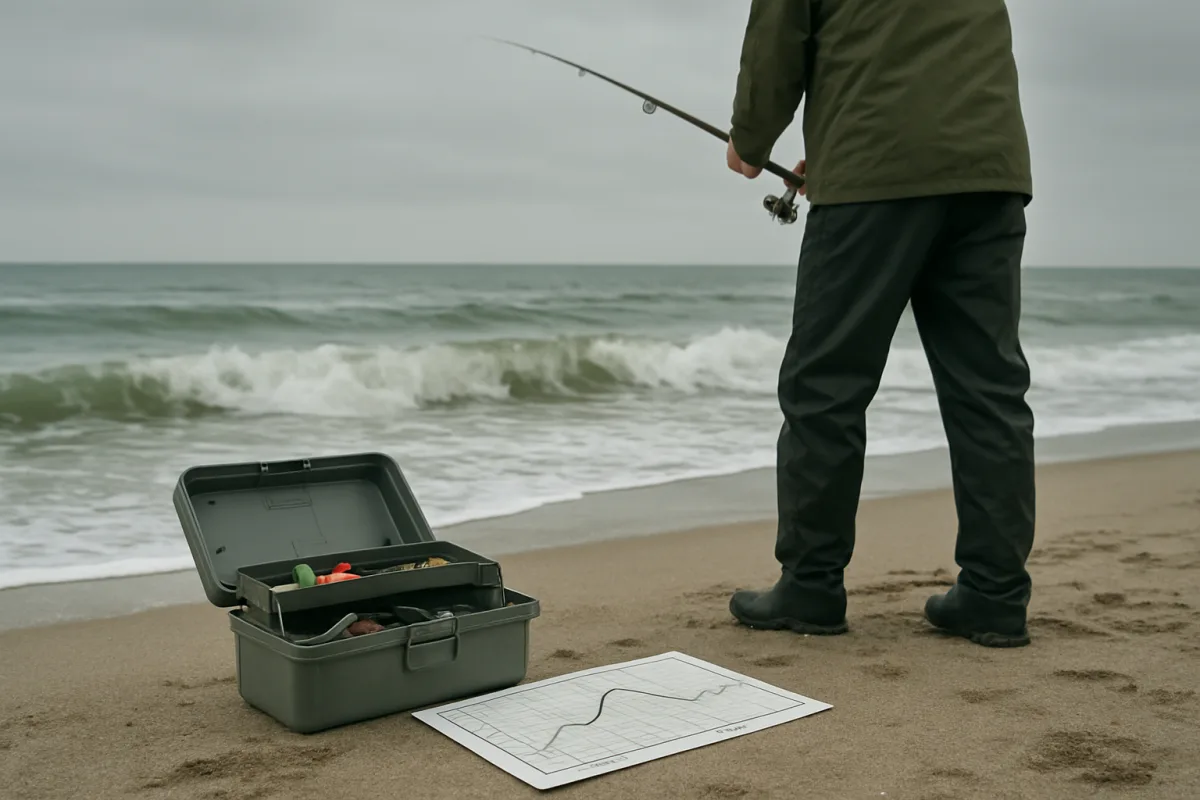
The useful idea is not high tide, it is moving water
The most useful answer to “what tide is best for surf fishing?” is moving water. A tide chart gives predicted high and low water, but the fishing value lies in what the rise or fall makes water do across the beach. [2][13]
That movement shifts food. Water flowing over bars, through cuts and along troughs can carry small baitfish, crabs, shellfish and other forage into places where predators and bottom-feeding fish can intercept them. [13][14]
Fish do not need to understand the tide table. They respond to the result: food displaced, cover changed, depth increased or reduced, and current concentrated in a route worth holding. That is why one beach can fish well while another nearby beach does not.
A tide is therefore best understood as a conveyor system. The tide supplies energy, while beach structure directs that energy. Your job is to fish where the conveyor narrows, accelerates or delivers food close enough to shore. [14][16]
This is more useful than treating “high tide” or “low tide” as universal answers. A high tide over a featureless beach can be mediocre, while an outgoing tide draining through a defined cut can put concentrated current directly in casting range.
What the tide cycle actually changes
On a rising tide, water advances across the lower beach and fills troughs, cuts and gutters behind sandbars. Fish that were holding farther out can move shoreward because the tide gives them depth and access. [3][4]
That extra depth matters particularly where the beach drops steeply or where the outer bar is close to shore. Predators can use the flooded edge of a bar or the darker water of a trough without being exposed in ankle-deep water.
On a falling tide, the beach drains. Water that entered shallow flats, troughs and sloughs must return seaward, often finding the lowest routes through breaks in the bar. Those drainage routes can become feeding lanes. [1][14]
The outgoing tide does not make every location better. If there is no cut, no trough, and no obvious drainage path, the current may simply spread across a broad beach with little concentration of bait or fish.
Current strength is the practical part of this system. A tide can be rising or falling but still move weakly at your particular stretch of coast, while a channel, bar end or cut can create useful localized flow. [14][15]
That is why tide height alone is a poor planning tool. The research brief does not establish a reliable number of feet or metres that guarantees better surf fishing. Current and structure matter more than an isolated height reading.
Why the hours around a turn are widely recommended
Several surf-fishing guides identify the two hours before and after high or low tide as productive periods. [2][6] That advice is sound when it means the period surrounding a tide change, not the exact minute printed as high or low.
In the approach to high water, the flood tide is still moving. In the period after high water, the water begins to drain. Both phases can move bait, alter depth around structure and give fish a reason to travel. [2][13]
The same logic applies around low tide. The latter part of an outgoing tide can concentrate water through beach drains, then the early incoming tide begins to refill troughs and push forage back toward the shore. [2][3]
The two-hour rule is a planning window, not a law. Actual tide cycles vary by location and lunar conditions, so the familiar idea that every stage lasts exactly six hours is only a rough generalization. [7]
A forecast tells you when to arrive. The water tells you whether the forecast is producing a fishable current. If the surface, foam lines and bait are not moving in a way that works with the beach structure, change position rather than waiting blindly.
Slack water is a pause, not automatically a dead zone
Slack tide is the short period near high or low water when the direction of movement changes and current can weaken substantially. Because less water is moving food, many sources describe it as less consistently productive. [3][4][13]
That does not mean every fish stops feeding at slack water. The research brief notes that some species and locations can fish well immediately before the current reverses, when bait has accumulated or fish are positioned for the next flow. [3]
The sensible approach is to distinguish a tide turn from the deadest part of the turn. The hour before high tide can be excellent, and the first push of outgoing water can be excellent, while the brief lull between them may not be.
High tide illustrates the difference clearly. Striped bass are reported to peak from roughly two hours before until two hours after high water, and pompano are associated with high-tide opportunities. [2][1]
Yet high-tide slack itself can reduce activity for some fish, including snook and redfish in conditions described by Surfcasting Republic in the research brief. The useful condition is usually changing water, not a motionless sea at maximum height.
Do not pack up automatically when the current eases. Watch the next direction develop, especially around a cut or trough. But do not assume slack is prime time either, particularly if the beach has stopped delivering visible bait.
Incoming versus outgoing: choose for the fish and the beach
Incoming water often favors fish that follow bait shoreward. The research brief specifically identifies redfish and striped bass as predators that can benefit when rising water gives bait and predators access to shallower beach water. [1][9]
For those fish, look for a trough parallel to the beach, a wash-over area, or a bar edge that becomes covered as the tide rises. The fish need a route and enough depth, not merely a higher water line.
Outgoing water can favor bottom dwellers. High Class Tackle Co. identifies flounder and whiting as fish more active on falling water, which fits the way drainage can move food through lower troughs and channels. [1]
That does not make the outgoing tide a universal bottom-fish guarantee. A falling tide that rips weed, debris or dirty water across your bait may make presentation difficult, even if the general direction suits the species.
The practical decision is specific: fish an incoming tide when your target is likely to work bait pushed toward the beach, and fish an outgoing tide where the beach visibly drains through a defined feature. [1][14]
If you cannot name the feature you are fishing, you are probably relying too heavily on the tide label. “Incoming” is not a spot. A cut, trough, bar end or drainage lane is a spot.
The rig has to survive the current
Tide strength changes how a bait sits on the bottom. In strong flow, a light sinker can roll, drag or swing the bait away from the feeding lane. A bait that will not stay put is not being presented deliberately. [15]
FishingHQ recommends heavier leads and tougher baits in stronger tides. [15] The reason is mechanical rather than fashionable: more weight resists current, while a durable bait remains on the hook when moving water and small pickers work at it.
This does not mean fitting the heaviest lead available. Excess weight can bury in soft sand, make casting inefficient, and reduce the ability to feel what the rig is doing. Use enough lead to hold the intended line, no more.
A bottom rig is suited to this job when fish are feeding near the sand and current requires the bait to stay in a trough or channel. Flounder, whiting and other bottom-oriented targets make that presentation relevant on an outgoing tide. [1]
In weak current, the opposite problem appears. Your bait may lie still in a large area of inactive water. Chronic Anglers advises finding localized movement, such as flow around structure, rather than expecting weak tide alone to create a bite. [14]
That means changing location before changing tackle. A modest rig in a working cut is generally more rational than an elaborate rig cast into flat water with no visible route for bait.
Moon phase changes the cost of fishing the tide
Spring tides occur around new and full moons and produce greater tidal range and stronger current. Neap tides around quarter moons generally have weaker movement and smaller tidal range. [2]
Stronger spring-tide flow can encourage more aggressive feeding because it moves more water and forage. [2] It also raises the cost of poor positioning, because a feature that is manageable in moderate flow can become unfishable when current and sweep increase.
During a spring tide, expect to adjust sinker weight, bait toughness and where you stand. A narrow cut may concentrate fish, but it can also pull your rig sideways so quickly that it spends little time in the lane you meant to fish.
Neap tides are not necessarily wasted trips. They simply demand a more exact choice of water. Search for small drains, the end of a bar, a point where wash crosses a trough, or another place where local structure creates movement. [14]
Do not claim that a particular tidal range in feet guarantees a better bite. The supplied research does not support a numerical threshold. Moon phase is useful because it indicates likely current strength, not because a chart number works everywhere.
Tide charts are only useful if read correctly
A tide chart is a scheduling tool. Check the date, the location, and the time zone before planning travel, because incorrect time-zone assumptions and ignored local variation are documented causes of poor tide planning. [11][3]
Use the chart to identify a likely moving-water window, then arrive early enough to inspect the beach. On a new venue, low water can reveal bars, troughs and cuts that become harder to read once the tide rises. [5][14]
Coasts do not all follow the same rhythm. The East Coast commonly has semi-diurnal tides, while the West Coast can have mixed semi-diurnal patterns with unequal highs and lows. [5][8]
Season also changes the value of the tide because migrations change which fish are present. A promising high-tide period cannot produce striped bass, redfish or pompano if the target species is not on that stretch of coast at that time. [9][2]
Regional and seasonal factors modify the general rule, they do not overturn it. Moving water remains the starting point, but the direction, strength, available species and productive beach feature must be read locally.
Let safety overrule the bite window
The best tide for fishing can be the worst tide for access. A rising tide can cover the route behind you, particularly around headlands, rock platforms, steep beaches and areas where water reaches a dune or seawall. [18]
Check your exit before committing to a productive gutter. If the rising water removes the dry route back to the access point, move earlier than feels necessary. A tide chart is no substitute for looking behind you.
High tide combined with large swell is particularly hazardous around rocks. The Bureau of Meteorology warns that waves can sweep people from rock-fishing platforms, and Castwise notes the danger of tide cut-off for shore anglers. [18][19]
The unsentimental rule is simple: fish moving water only while you still have stable ground, an open exit and conditions you can control. Tide creates opportunity, but it also decides when the beach stops being a sensible place to stand.
Frequently Asked Questions
What tides are best for surf fishing?
The best tides for surf fishing are moving tides—both incoming and outgoing—especially during the two hours before and after high or low tide. These periods provide water movement that carries bait and attracts fish, making fishing more productive than at slack tide or peak high water alone.
How does the tide movement affect surf fishing success?
Tide movement shifts food by carrying baitfish, crabs, and other forage through beach structures like bars, cuts, and troughs. This movement creates feeding opportunities for predators and bottom feeders, concentrating fish where currents narrow or accelerate. Without moving water, fish activity tends to decrease.
When should I fish around high and low tides for surf fishing?
Fishing is often most productive during the two hours before and after high or low tides when the water is moving. High tide itself can be a window rather than a single moment, with slack water at the tide turn sometimes slowing feeding. Therefore, targeting the periods of rising or falling water near these tides is generally more effective.
Why is moving water important for surf fishing?
Moving water acts like a conveyor system that transports food and creates currents fish use for feeding. It changes depth and cover, making certain areas more attractive to fish. Without current, bait and fish may be dispersed too widely, reducing feeding activity and catch rates.
How do incoming and outgoing tides influence fish behavior in surf fishing?
Incoming tides bring water—and bait—shoreward, favoring predators that follow prey closer to the beach. Outgoing tides drain water seaward through cuts and troughs, creating feeding lanes for bottom-dwelling fish like flounder and whiting. Each tide direction suits different species and fishing strategies.
How we researched this
This article was assembled from 19 cited references.
Nothing here is based on hands-on testing. Where a figure or finding appears, it belongs to the source cited beside it, and the writing says so rather than implying otherwise. Every source is listed below so you can check it.
Sources
- Tides and Saltwater Fishing: What Every Angler Must Know – High Class Tackle Co.®
- Best Tide for Fishing: The Complete Guide to Tidal Fishing
- How Tides Affect Fishing: Incoming, Outgoing & Slack Tide Explained, CatchTime
- Surf Fishing - Take Me Fishing
- Surf Fishing for Beginners: Reading the Beach, Right Gear & Best Times | HookCast
- How Tides Affect Surf Fishing on the Outer Banks (and How to Use Them) - Frank & Fran's Bait and Tackle
- How to Choose the Best Time to Fish Based on Tides (September 2026)
- How Tides Work: Why California Gets Two Different High Tides a Day | Surfsolver
- East Coast Surf Fishing Guide — Stripers, Red Drum & Bluefish
- Surf Fishing the Emerald Coast: A Beginner's Guide (2026)
- Common Surf Fishing Mistakes and How to Avoid Them
- Pier Fishing Tide Charts: How to Read Them and When Fish Actually Bite | PierSeeker
- Tides and Fishing: How Tidal Current Drives the Bite
- How to Read Water for Fishing: Tides, Structure & Clarity
- Presenting bait in strong tide — FishingHQ
- Current Events: How Tides and Currents Affect Anglers | FishTalk Magazine
- How Tide Changes Affect Inshore Fishing Success - Angler Sportsman
- Shore Fishing Tide Cut-Off Safety Guide | Castwise
- Rock fishing safety | The Bureau of Meteorology
Related Articles
Best Times to Surf Fish in Spring: Tide and Temperature Tips
Discover the best times to surf fish in spring based on tides, water temperature, and weather for more successful fishing trips.
How to Find Fish in the Surf: Reading the Beach & Tides
Learn how to find fish in the surf by reading tides, water features, and beach structure for better surf fishing success.
How to Catch Fish During a Beach Bonfire: Tips and Safety
Learn how to catch fish during a beach bonfire with tips on tides, gear setup, safety, and legal regulations for a successful surf fishing night.
How to Interpret Surf Fishing Reports for Better Fishing
Learn how to interpret surf fishing reports including tides, wind, and temperature to improve your surf fishing success.