How to Interpret Surf Fishing Reports for Better Fishing
Learn how to interpret surf fishing reports including tides, wind, and temperature to improve your surf fishing success.
Start by checking that the report is for your water
The first mistake is treating a regional surf report as though every beach inside that region fishes the same. It does not. Tide range, beach angle, inlets, sandbars and prevailing wind make conditions different even a few miles apart.
Confirm the report’s date, forecast window and exact beach before studying the numbers. A morning forecast can be irrelevant by afternoon if wind builds, a tide change passes, or a local storm dirties the water.
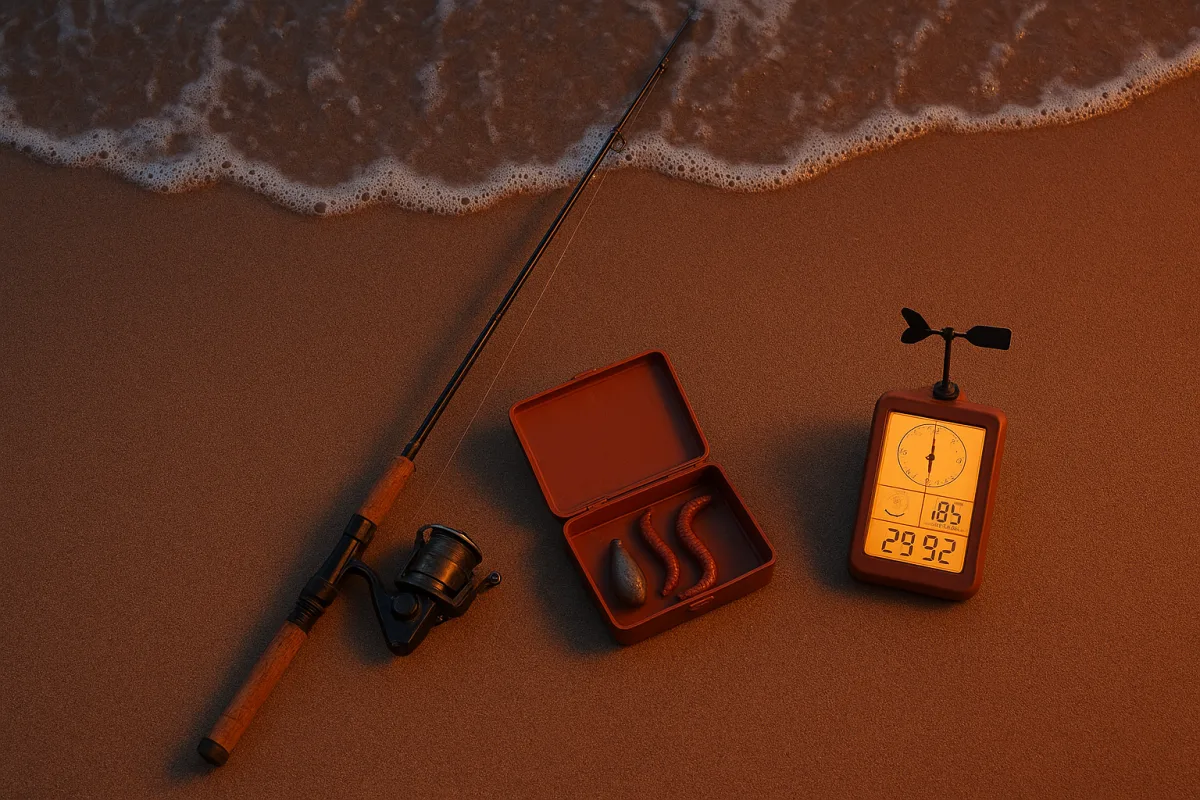
The report should tell you the tide times and stage, wind direction and speed, swell height and direction, water temperature, barometric trend, moon information and recent species activity. Those are the working parts of a useful surf-fishing forecast. [1]
Do not begin with a generic rating such as “good” or “fair.” A good rating for surfers may mean too much whitewater for holding a bait rig, while a mediocre-looking surf day can be right for fish feeding in stirred-up water.
Start with the fish you can reasonably expect. Water temperature and current reports narrow that list before you pack bait, hooks and sinkers. Chasing red drum in water outside their usual range is less useful than finding what is actually moving locally.
Decide what fish the report is describing
Water temperature is one of the quickest filters in a report because it affects which species are likely to be active close to shore. It is not a guarantee, but it stops you reading the rest of the forecast without a target.
Published temperature ranges put striped bass at roughly 55 to 68°F, bluefish at 58 to 72°F, red drum at 65 to 80°F, and pompano at 68 to 75°F. [7] Use those ranges to interpret a report, not as hard borders.
If the surf is 60°F and local reports mention bait, striped bass and bluefish are more plausible targets than pompano. If it is 72°F, pompano, bluefish and red drum deserve more attention, assuming they occur in that region. [7]
Then read the species notes, not just the temperature. A report showing water in the right range but no bait, no recent catches and poor water clarity is not a strong case for fishing one species exclusively.
Striped bass reports deserve especially close tide reading. Fishing Reports Today identifies the last hour of an incoming or outgoing tide, plus roughly two hours around high water, as productive periods for striped bass. [4]
Bluefish are less tied to a precise tide stage, but they follow bait concentrated by moving water. [11] If a report mentions birds working, bait schools or a current seam, that can matter more than whether high tide is exactly at dawn.
For red drum, look for the combination rather than one magic number: water in their likely temperature range, moving water and a beach feature where food can be pushed or held. A warm-water report alone is not a red-drum forecast. [7][11]
Turn tide times into a fishing window
A tide chart gives times and heights. Your job is to translate those into water movement at the beach. The important question is not simply “when is high tide?” but “when will current put bait along fishable structure?”
Incoming and outgoing tides are generally more productive than slack water because moving water shifts bait and creates feeding opportunities. Outer Banks fishing guidance specifically emphasizes fishing around moving tides rather than treating the high-water mark as the only event. [10][11]
Mark high and low tide, then plan around the hours leading into and away from them. If high tide is at 8:00 a.m., a striped bass angler could reasonably prioritize the late incoming period and the two hours around high water. [4]
That does not mean every beach fishes best at high water. Outer Banks guidance favors high tide and periods around it, while Melbourne Beach guidance puts more emphasis on rising and falling water. [10][22] Local beach shape decides how the tide reaches the troughs.
At a steep beach, high water may bring fish close enough to reach the inside trough. At a broad, shallow flat, the same tide can spread water across featureless sand, leaving little defined current and no obvious feeding lane.
Tide height matters, but reports and local guidance place more practical value on tide phase and timing. Do not reject a trip because the predicted high is not a favorite number if the report shows a useful incoming or outgoing window. [4][11]
New and full moons deserve attention because they create stronger tides. [17] Stronger movement can improve bait concentration, but it can also make a light rig useless and turn a clean trough into a difficult, fast-moving wash.
Read wind against the beach, not against the app
Wind direction is probably the most misread line in a surf report. “West at 12 mph” tells you almost nothing until you know whether the beach faces east, west, north, south or somewhere in between.
A wind that blows from land toward the ocean is offshore. A wind that blows from sea toward land is onshore. Cross-shore winds run along the beach. The same west wind can be offshore on one coastline and onshore on another. [13]
Offshore or light cross-offshore wind often makes the surface more manageable and can help you see troughs, bars and seams. That is useful when you need to read a beach before committing to a casting position. [13][15]
Onshore wind tends to build chop, push water toward the beach and make casting and line control harder. It can still produce fish, particularly where wind-driven water and current move bait, but it is not automatically “bad” or “good.” [13][14]
The practical question is whether the wind will let you fish the feature. If wind bows your line, rolls a sinker across the bottom and buries your bait in wash, a productive tide window may be unusable with your planned rig.
Compare the forecast wind to observed conditions once you arrive. A protected stretch near a dune line, jetty or headland may fish differently from the open beach represented by the report, especially when the wind is cross-shore.
Separate wave height from wave period
Wave height is the report field with the clearest tackle consequence. More surf means more force on the line, sinker and bait. It also means more suspended sand, harder footing and less ability to watch a subtle bite.
Take Me Fishing advises heavier sinkers and larger baits in 3 to 5 foot surf to maintain control. [5] That is a useful rig adjustment: increase holding power and bait durability before assuming a long cast will solve rough water.
In modest surf, use only enough sinker to hold bottom and keep the bait where you intended. In stronger surf, move to a sinker style and weight that holds in the current rather than repeatedly dragging through the trough.
If strong tide is pulling bait out of position, FishingHQ recommends focusing on presentation that keeps bait in the productive zone rather than allowing it to tumble freely. [6] The report tells you when this problem is likely before you arrive.
Swell period is worth noting, but it should not be treated as a universal rig formula. Forecast guides describe period as part of understanding surf energy, yet detailed, location-specific evidence connecting a particular period to a specific fishing rig is limited. [15][16]
Use period as a prompt to watch the beach closely. A longer-period swell may change where waves break and how water drains through cuts, but do not claim that a certain period automatically demands a certain sinker weight without local evidence.
Swell direction matters for the same reason wind direction does: the beach orientation determines whether the swell fills a sandbar, hits a point, creates a side current or leaves a protected stretch relatively calm. [15][16]
Find the place where the report can become a bite
A report cannot show every trough, hole or current seam. Once the numbers say conditions are worth fishing, spend time looking before casting. The beach tells you whether the predicted tide and swell have created a usable feeding lane.
Look for darker water close to shore, which can indicate deeper water or a trough. Look for a break in the line of waves, where water may be moving seaward through a cut. Look also for points where foam, weed or debris travels consistently.
Those features matter because fish and bait do not distribute evenly across a beach. A current edge, trough mouth or bar gap gives moving water a route, and that is more useful than casting randomly beyond the farthest breaking wave. [12][14]
Match the spot to the tide phase. On an incoming tide, a trough close to the beach may become accessible and begin carrying bait. On an outgoing tide, a cut draining water through a bar can become the more obvious feeding line.
Do not fish a pretty-looking hole if it is full of loose weed or your sinker cannot stay in it. Structure only works when your bait can remain there long enough for a fish to find it.
Use pressure, moon and solunar data as secondary evidence
Barometric pressure is easy to overread because apps display it as a precise number. The trend is more useful than the absolute value. Falling pressure is often associated with increased feeding, while rising pressure can reduce activity. [19]
A report showing falling pressure before a moving tide is a reason to pay attention, not a reason to ignore bad wind and unmanageable surf. Published guidance varies on supposedly ideal pressure thresholds, which is why trend should carry more weight. [20][21]
Moon phase works the same way. New and full moons bring stronger tides, and stronger tidal movement can improve fishing where bait is concentrated by current. [17] It can also create difficult surf, heavy sweep and poor bait control.
Solunar periods belong at the end of the decision process. Fishing Report Hub includes solunar information in surf reports, but its predictive value varies and should be combined with tide, wind, temperature and current species activity. [1]
If a report shows a major solunar period at slack tide in poor surf, do not expect the moon to rescue the day. If it coincides with the last of the incoming tide, suitable water temperature and manageable wind, it is a reasonable extra reason to go.
Make the go, change-plan or stay-home call
Go when several practical pieces align: your target species is plausible for the water temperature, a moving tide overlaps your available time, wind allows you to fish the beach, and surf is within the control range of your sinkers and bait. [5][7][10]
Change the plan when only the location is wrong. If the tide is right but an onshore wind makes one exposed beach unfishable, seek a stretch with a different orientation, more protection, or a feature that still lets you hold bottom. [13]
Stay home, or choose another method, when the report calls for surf and wind beyond your ability to keep a rig presented safely. A strong tide is not productive if every cast immediately rolls through weed, sand and uncontrolled sweep.
The disciplined reading is not about finding every green indicator. It is about identifying the few conditions that let bait stay in a place where fish are likely to travel, during a tide stage when those fish have reason to feed.
Frequently Asked Questions
How do I interpret tide information in surf fishing reports?
Tide charts provide times and heights, but the key is to understand water movement at your specific beach. Incoming and outgoing tides are usually more productive because moving water concentrates bait and creates feeding lanes, while slack water is often the slowest period. Plan your fishing around the hours leading into and away from high and low tides, focusing on moving water rather than just the high tide mark.
What wind directions are best for surf fishing according to reports?
Wind direction should be interpreted relative to the orientation of the beach you are fishing. For example, a west wind is beneficial only if west is offshore or cross-offshore for that particular beach. Treat wind direction as a map problem, not just a compass direction, to determine if the wind will help or hinder surf conditions.
How can water temperature help me choose target species from a surf report?
Water temperature narrows down which species are likely active near shore. For instance, striped bass prefer roughly 55 to 68°F, bluefish 58 to 72°F, red drum 65 to 80°F, and pompano 68 to 75°F. Use these ranges as guides to focus on species that match the current water temperature, but also consider other report details like bait presence and recent catches.
What does barometric pressure trend mean for surf fishing success?
The trend in barometric pressure—whether it is falling, stable, or rising—is more important than the absolute pressure value. Falling or stable pressure tends to be more favorable for fishing. Use barometric pressure trends as a tie-breaker after considering tides, wind, surf, and temperature.
How do I identify the best fishing windows from tide charts in reports?
The best fishing windows align with moving tides—either incoming or outgoing—because these currents concentrate bait and create feeding opportunities. Specifically, for species like striped bass, the last hour of an incoming or outgoing tide and roughly two hours around high tide are productive periods. Focus less on the exact time of high tide and more on when water movement will put bait near fishable structure.
How we researched this
This article was assembled from 22 cited references.
Nothing here is based on hands-on testing. Where a figure or finding appears, it belongs to the source cited beside it, and the writing says so rather than implying otherwise. Every source is listed below so you can check it.
Sources
- Outer Banks Fishing Report Today (September 2026) | Fishing Report Hub
- San Diego Surf Report: How to Read Conditions (2026)
- NJ Fishing Report — Weekly Conditions | Shore Report
- How To Catch Striped Bass: Complete Guide To Techniques, Gear, And Locations | Fishing Reports Today
- Beach Conditions
- Presenting bait in strong tide — FishingHQ
- How Water Temperature Affects Surf Fishing: Best Temps & Fish Behavior
- Surf-Forecast | Belmar Fishing Pier Water Temperature and Wetsuit Guide
- Kure Beach Water Temp, Surf & Conditions Today | NC
- Surf Fishing Guide - OuterBanks.com
- How Tides Affect Surf Fishing on the Outer Banks (and How to Use Them) - Frank & Fran's Bait and Tackle
- Surf Fishing for Beginners: Reading the Beach, Right Gear & Best Times | HookCast
- How Wind Changes Surf Conditions | SwellOracle Academy
- Surf Fishing Conditions: Tide, Wind & Swell Together
- How to Read a Surf Report: Swell, Wind, Tide and Period Explained – Eisbach Riders Surfing Company
- How to Read a Surf Forecast | Surfbase Guide
- TIDES, MOONS AND FISHING IN THE SURF | BDOutdoors
- Moon Phase Fishing Activity Calculator
- BeAngler | Best Weather for Fishing: Barometric Pressure, Wind & Moon
- Barometric Pressure & Fishing: The Complete Guide | BitePredict
- Fishing Barometer App — Is Pressure Good Today? | Tackle
- Timing The Tides: Seasonal Surf Fishing At Melbourne Beach, FL
Related Articles
Interpreting Surf Fishing Conditions: Waves, Wind & Tides
Learn how to interpret surf fishing conditions like waves, wind, and tides to improve your beach fishing success and safety.
How to Find Surf Fishing Reports Online for Accurate Updates
Learn how to find surf fishing reports online with tips on using timestamped observations, local updates, tides, and weather for better fishing success.
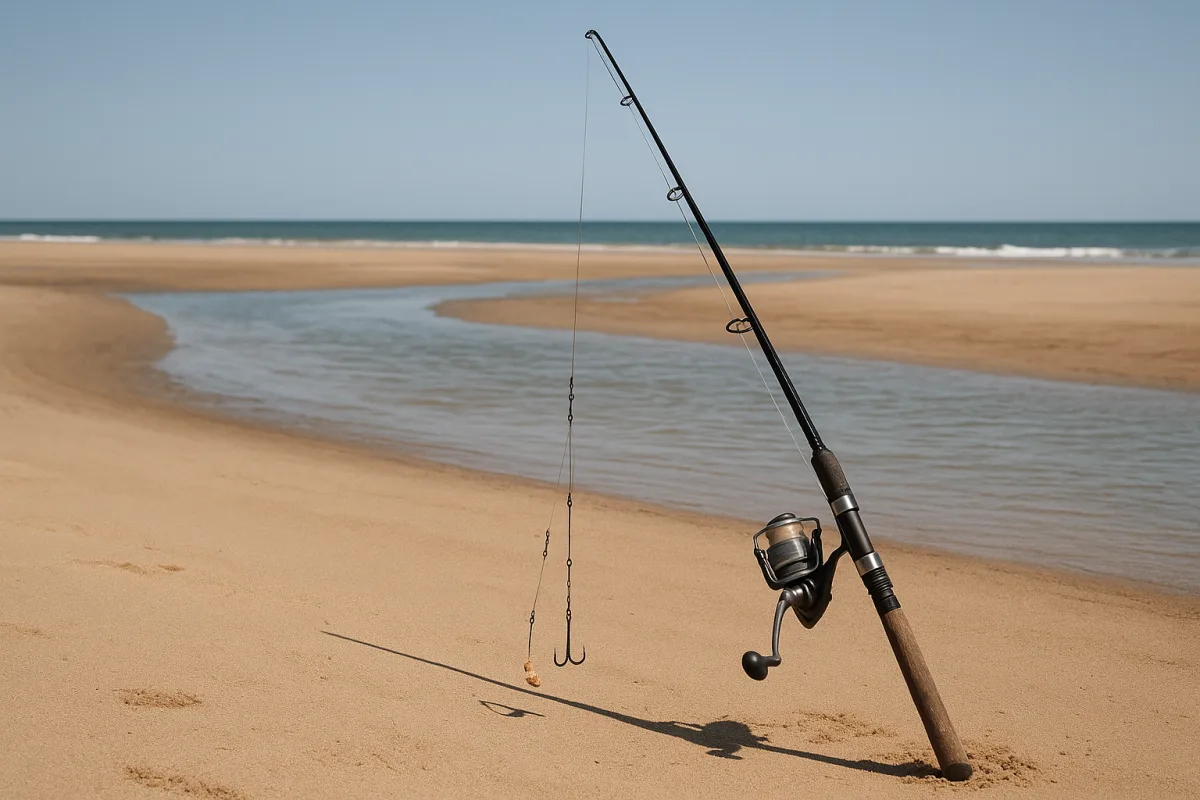
How to Fish During Low Tide
Learn how to fish during low tide with tips on finding fishable water, choosing rigs, casting distance, and reading the beach for surf fishing success.
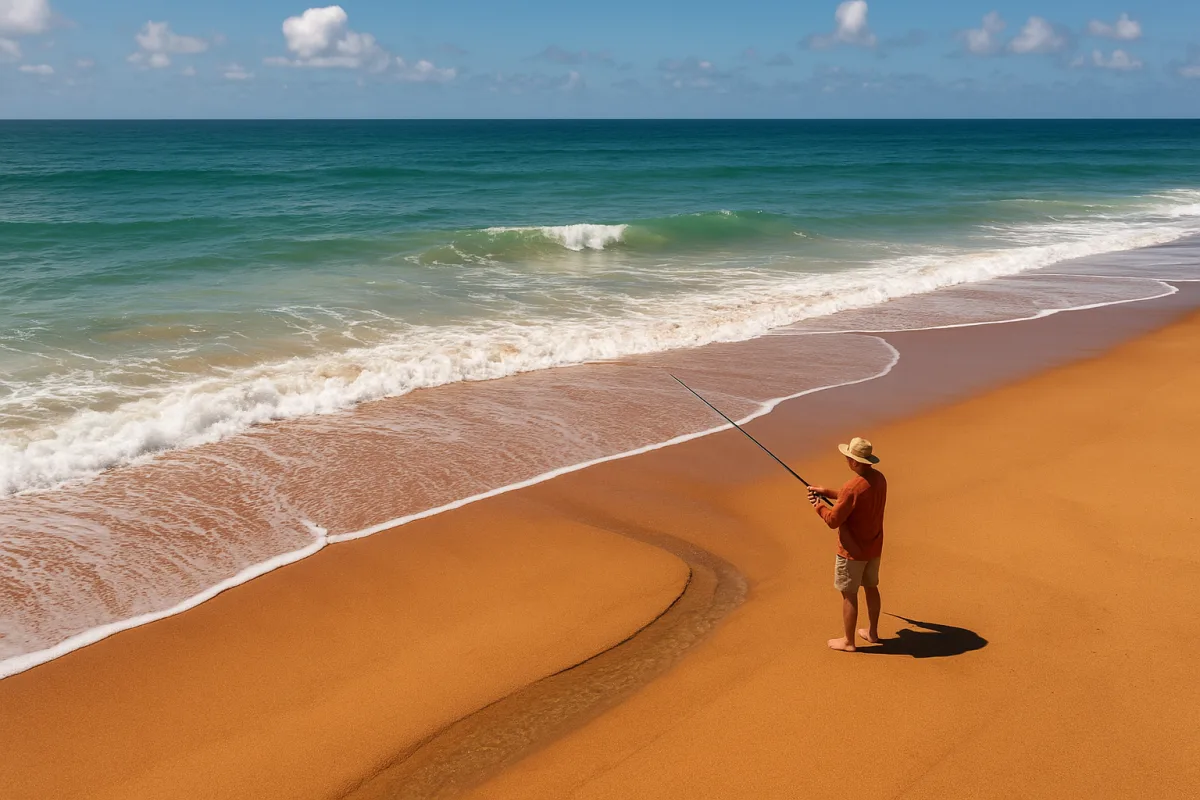
How to Find Fish in the Surf: Reading the Beach & Tides
Learn how to find fish in the surf by reading tides, water features, and beach structure for better surf fishing success.