
How to Fish During Low Tide
Learn how to fish during low tide with tips on finding fishable water, choosing rigs, casting distance, and reading the beach for surf fishing success.
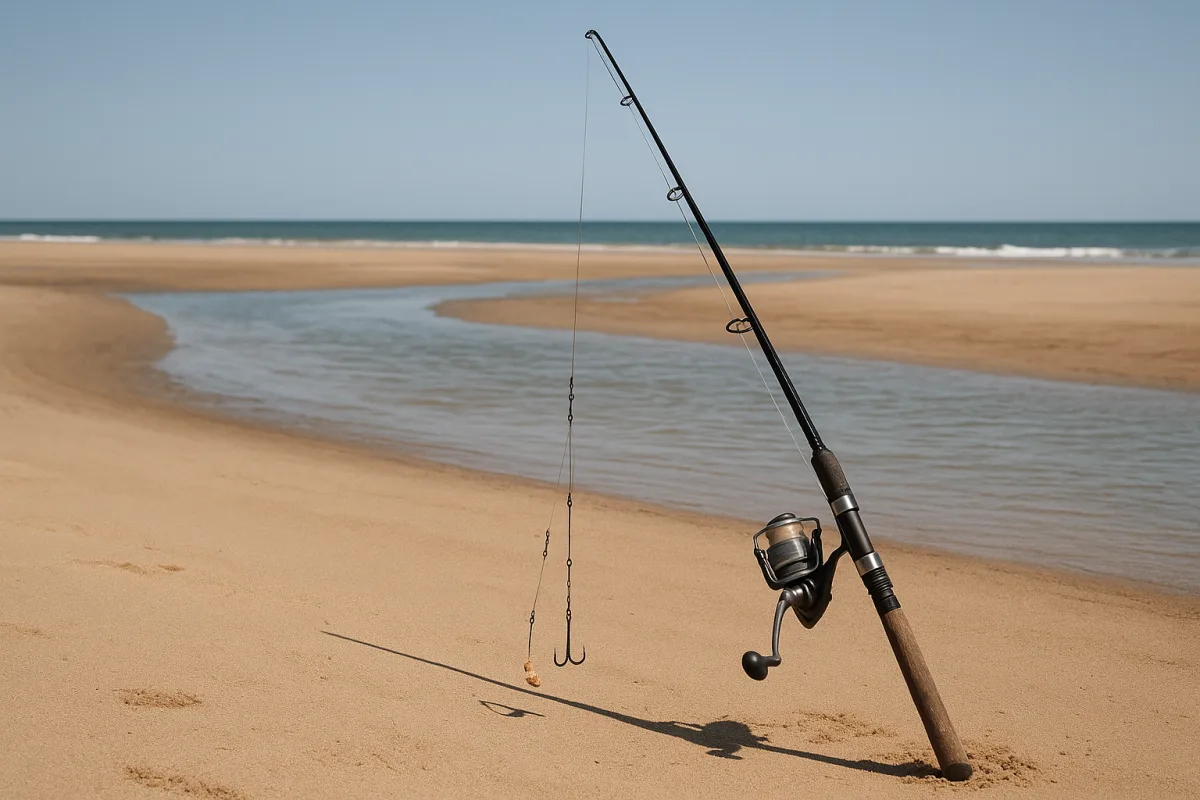
How to Fish During Low Tide: A Practical Surf-Fishing Plan
Problem one: deciding whether low tide is worth the drive
Low tide is not automatically the best time to catch fish. Its main advantage is visibility: water pulls off the beach and exposes the layout that waves conceal at higher stages of the tide. Troughs, sandbars, cuts and firm-bottom channels become easier to identify. [2][4]
That scouting matters because fish do not distribute evenly along a clean-looking beach. They use deeper troughs for travel and shelter, and they use cuts through sandbars where current concentrates food moving between the surf and the outer water. [2][4]
Check the tide chart before choosing your arrival time, but look beyond the low-tide time itself. Several surf-fishing guides place more consistent action on the incoming tide, particularly in the two hours before and after high tide, when water and food are moving. [2][6]
A useful low-tide plan is to arrive near the bottom of the tide, walk the beach while the structure is visible, mark two or three likely lanes, then fish the start of the flood. This turns low tide into useful information rather than a hopeful guess.
Do not confuse low water with slack water. If the tide has stopped falling and has not yet begun pushing, current can be minimal, and minimal current usually means less bait movement and fewer reasons for fish to sit in an exposed surf zone. [15]
There are exceptions. Some fish will stay close in at low water where a trough remains deep, a cut carries water, or structure gives them a route through the bars. The point is not to avoid low tide, but to fish the water that remains useful. [5]
Problem two: finding fishable water after the ocean has pulled back
Start your walk above the wash line and look seaward rather than immediately setting up in the nearest open water. You are looking for a break in a sandbar, a darker band of water, or a depression where the waves do not stand up and collapse as uniformly. [4][8]
A trough is the first deeper gutter running parallel to the beach. At low tide it may look like a darker strip, a smooth channel between breaking waves, or simply the last area that retains water as the beach drains. [2][4]
A cut is more valuable when it joins that trough to deeper water beyond a sandbar. Water moving through a cut can carry displaced sand fleas, shrimp and small baitfish, which is why predators and bottom feeders have a reason to investigate it. [2][8]
Do not assume the deepest-looking hole is automatically best. A hole without moving water can be a resting place rather than a feeding lane. Favor a trough or cut that has current, enough depth to hold fish, and a reachable casting lane. [15][5]
Make notes while the beach is exposed. Use a phone map, a landmark such as a dune crossover, or a simple written distance from a fixed object. On a featureless beach, the cut that looked obvious at low tide can be hard to relocate once water rises.
If the beach is flat from the swash zone to the outside bar, low tide may reveal an inconvenient truth: there is no obvious holding water within reach. In that case, moving along the beach is usually more rational than adding distance to an unproductive cast.
Problem three: knowing how far to cast
Low water makes anglers want to cast over the horizon, especially when the outer bar is visible. That is a common mistake. Bowery Beach warns that overcasting can put bait beyond the productive zone when fish are actually using troughs 20 to 40 yards offshore. [16]
Typical surf casts range from 20 to 80 yards, but distance should follow the feature, not the maximum range of the rod. Many fish feed within 50 to 80 yards, and a close trough can be more productive than distant, featureless bottom. [2][4]
At a low-tide trough, begin with one bait in the closest deeper lane and another in the cut or the next distinct depression. If regulations and your available rod count permit it, this is a practical way to learn which lane has current and fish.
Casting across a cut can work, but avoid dropping directly into the fastest part if your sinker cannot hold. A bait that rolls down-current, buries in loose sand, or drags through other lines is not fishing effectively, regardless of how good the structure looked.
Problem four: choosing a rig that fits the fish and the low-water bottom
For larger targets such as striped bass, red drum and sharks, use a Fish-Finder, also called Carolina, rig. This setup lets a sinker slide above a leader, allowing a fish to take a substantial bait with less immediate resistance. [1]
A practical starting point is a 24- to 36-inch fluorocarbon leader in 40- to 60-pound test for general larger-species surf fishing. One Outdoors gives lighter 10- to 15-pound leader guidance for small species, while larger predators require heavier leader choices. [2]
For pompano, croaker and whiting, use a Pompano rig, commonly a double-drop setup with two short baited hooks above the sinker. It covers more than one feeding level close to the bottom and suits fish that are picking through the wash and trough edges. [1]
Match the sinker to the water movement rather than treating weight as fixed. General surf terminal-tackle guidance includes 2- to 5-ounce sinkers, but the correct choice is the lightest weight that holds where you cast. [2][17]
If your bait keeps rolling out of the trough, go heavier within that range. If the bottom is calm and the sinker is burying in soft sand, excessive weight can make retrieving difficult and can leave your presentation less responsive to a bite.
For striped bass on clam, Striperspace recommends a High Low rig with circle hooks. That rig makes sense when you want two clam baits held above the bottom rather than a single large offering presented behind a sliding sinker. [3]
Hook size must follow the bait and target, not a universal rule. A 2/0 circle hook is cited for medium species, while sharks may require 8/0 to 12/0 hooks. Large hooks paired with small shrimp or sand fleas will cost bites. [2][11]
Problem five: selecting bait that belongs in the water you found
Use fresh-cut mullet when the target is a larger predator working a trough, cut or deeper channel. Its scent and substantial profile suit Fish-Finder presentations for species such as red drum, striped bass and sharks. [1][2]
Live or fresh-dead shrimp is a more flexible low-tide bait when smaller bottom feeders are present, but it is not immune to nuisance bites. Fish it on the Pompano rig when you are working the edge of a trough or the gentler water beside a cut. [2]
Sand fleas, also called mole crabs, are logical where they are naturally present in the wash. Collecting or buying bait that local fish already encounter is more useful than forcing a large predator bait into a zone holding whiting or pompano. [2]
Clams deserve a place in the bait cooler when striped bass are a realistic target. The High Low rig and circle-hook approach recommended by Striperspace is specifically suited to presenting clam in the surf. [3]
Freshness matters because a low-tide bite can be sparse and brief. If you get several taps without a hookup, inspect the bait rather than assuming fish have left. Small surf fish can strip soft shrimp or clam quickly. [2]
Problem six: staying through the part of the tide that matters
Once the tide begins rising, watch whether the trough fills and whether the cut starts pulling more water. This is often when the beach you mapped at low tide becomes genuinely fishable, because the current carries bait through the lanes you identified. [2][6]
Recast only when necessary. Repeatedly retrieving a bait that is holding properly removes it from the water during the period you are waiting for. Recast after a missed bite, a clear loss of bottom contact, or when the tide changes enough to move the bait.
If the incoming water covers your close trough and pushes the breaking waves shoreward, move your cast to the next defined lane rather than simply adding distance. The productive zone can shift as the tide fills the beach. [4][16]
High tide is not magic either. A high tide with weak current, dirty water full of weed, or a beach with no reachable structure can still fish poorly. Tide stage is one part of the decision, alongside bottom shape, current and available bait. [5][15]
Problem seven: adjusting for coast, season and conditions
Do not copy an Atlantic tide strategy directly onto every Gulf Coast beach. Fishing Weather notes that Gulf Coast tides are often diurnal and have smaller ranges than Atlantic tides, so the amount of exposed structure and timing of water movement can differ. [6]
On Atlantic beaches, spring and fall commonly bring migratory striped bass and bluefish into surf-fishing plans. Those seasons can make cuts and troughs especially worthwhile, but only when the relevant fish are actually present along your stretch of coast. [14]
In summer, cooler parts of the day are generally more favorable, while winter calls for slower presentations and attention to deeper water. Low tide can help locate those deeper winter lanes, but it does not make shallow, cold, empty water productive. [14]
Local reports should override broad rules when they are specific to your beach. Check what species are present, whether current is running, whether weed is fouling rigs, and whether a recently moved bar has filled the cuts you marked last month. [5][6]
Problem eight: buying enough gear without pretending gear solves location
A basic surf setup generally means a 9- to 12-foot rod, a 4000- to 6000-size reel, 20- to 30-pound braided line, 2- to 5-ounce sinkers, and circle hooks ranging broadly from 1/0 to 7/0 for ordinary surf applications. [2][17]
Published package estimates range from about $105 for budget equipment to roughly $140 to $350 for mid-range equipment, with high-end setups cited at $650 to $1,100. Those are broad combined estimates, not a separate price for gear uniquely suited to low tide. [2][17]
Buy the category that lets you reach and hold the trough you found. A costly rod does not correct a cast placed beyond the fish, and a light sinker does not become useful merely because the tide chart says the water is rising.
The best low-tide technique is therefore simple but demanding: read the exposed beach, identify the water that will remain or improve as the tide rises, place the right bait in that lane, and avoid wasting casts on water with no current or structure.
Frequently Asked Questions
How do you find fishable water during low tide surf fishing?
During low tide, walk the beach above the wash line and look seaward for breaks in sandbars, darker bands of water, or depressions where waves don’t break uniformly. Focus on troughs—deeper gutters running parallel to the beach—and cuts that connect troughs to deeper water beyond sandbars. These areas often hold moving water and bait, making them more attractive to fish.
What rigs work best for surf fishing at low tide?
Use a Fish-Finder (Carolina) rig with substantial bait for larger species like striped bass, red drum, and sharks. For smaller bottom feeders such as pompano, croaker, and whiting, a Pompano double-drop rig is effective. Match leader strength and hook size to the target species, with heavier leaders and larger hooks for big predators.
When is the best time to fish around low tide?
The two hours before and after high tide generally produce more consistent feeding than the dead-low tide itself. Low tide is valuable primarily for scouting structure and marking promising spots, which can then be fished as the tide floods back in. Avoid fishing during slack water when the tide is not moving, as minimal current usually means less bait movement and fewer fish.
How far should you cast when fishing at low tide?
Cast distances of 20 to 80 yards are typical, with many surf species feeding within 50 to 80 yards of shore. Avoid blindly casting beyond visible structure; instead, aim casts toward troughs or cuts identified during low tide scouting, often found 20 to 40 yards offshore.
How do you read the beach to fish effectively during low tide?
Look for visible features such as troughs, cuts, and sandbar gaps exposed by the receding water. Identify areas where waves break unevenly or water appears darker, indicating deeper or moving water. Favor troughs or cuts with current and enough depth to hold fish rather than deep holes with no water movement. Use landmarks or maps to mark these productive lanes for fishing as the tide returns.
How we researched this
This article was assembled from 18 cited references.
Nothing here is based on hands-on testing. Where a figure or finding appears, it belongs to the source cited beside it, and the writing says so rather than implying otherwise. Every source is listed below so you can check it.
Sources
- Surf Fishing 101: Best Rigs, Baits & Beaches for Success
- Surf Fishing Guide: Rigs, Baits, Best Beaches & Techniques | One…
- Surf Fishing Rigs
- Surf Fishing Guide: How to Catch Fish from the Beach — The Fishing Manual
- Surf Fishing: Complete Guide for All Coasts | WildNotch.com
- Surf Fishing for Beginners: Reading the Beach, Right Gear & Best Times | HookCast
- Surf Fishing the Emerald Coast: A Beginner's Guide (2026)
- How to Read the Beach While Surf Fishing | FishTalk Magazine
- Surf Fishing - Take Me Fishing
- What Lb Test for Surf Fishing: Make Every Cast Count - CNY Fishing
- What Size Hook for Surf Fishing? The Ultimate Guide - Battlbox.com
- What Line to Use for Surf Fishing? | The Real Setup
- Surf Fishing for Beginners: Gear, Rigs & Timing
- How Water Temperature Affects Surf Fishing: Best Temps & Fish Behavior
- Does Tide Matter When Surf Fishing? Yes, Here's Why - Fishingfactor
- Common Surf Fishing Mistakes and How to Avoid Them
- DEADB8 — Where the Water Goes Dark
- Surf fishing
Related Articles
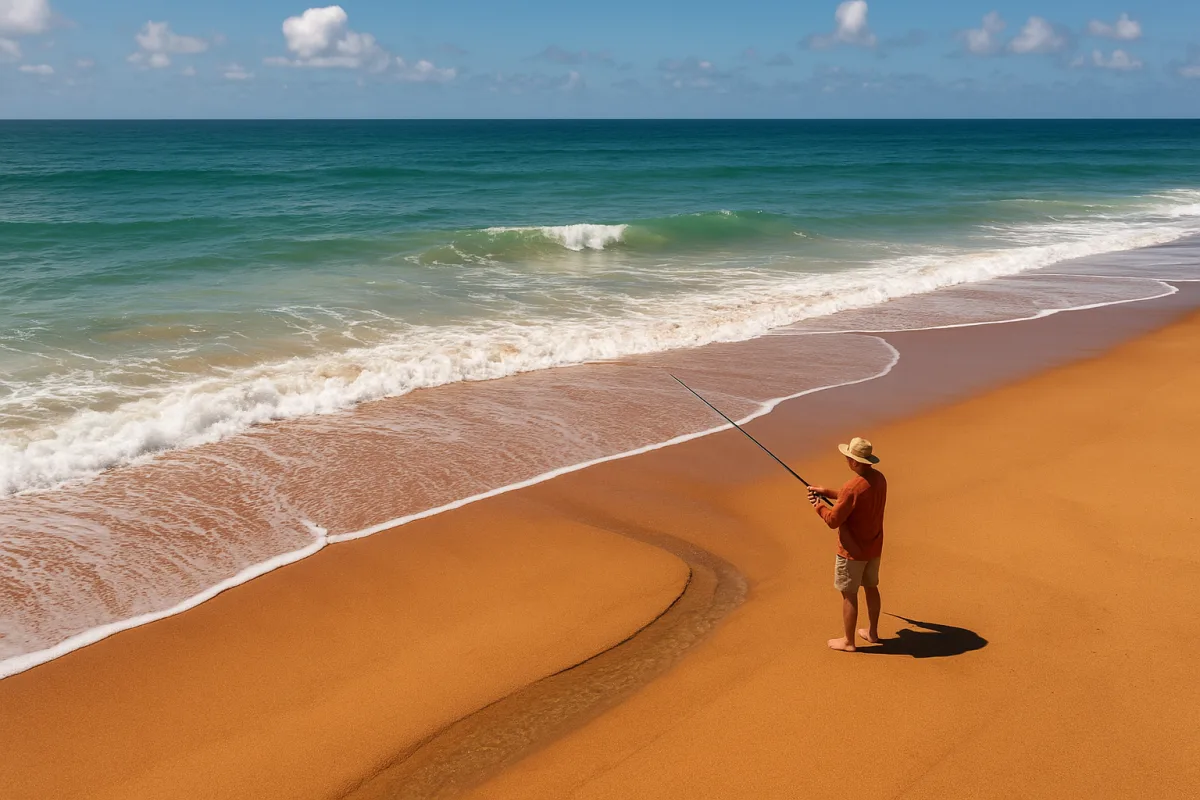
How to Find Fish in the Surf: Reading the Beach & Tides
Learn how to find fish in the surf by reading tides, water features, and beach structure for better surf fishing success.
How to Catch Fish During a Beach Bonfire: Tips and Safety
Learn how to catch fish during a beach bonfire with tips on tides, gear setup, safety, and legal regulations for a successful surf fishing night.
Best Surf Fishing Setup for Summer: Rods, Rigs & Tides
Discover the best surf fishing setup for summer, including rods, rigs, tides, and beach reading tips for successful fishing sessions.
Common Surf Fishing Mistakes and How to Avoid Them
Learn common surf fishing mistakes about rigs, tides, gear, and reading the beach to improve your catch and fishing strategy.