
Best Surf Fishing Setup for Summer: Rods, Rigs & Tides
Discover the best surf fishing setup for summer, including rods, rigs, tides, and beach reading tips for successful fishing sessions.
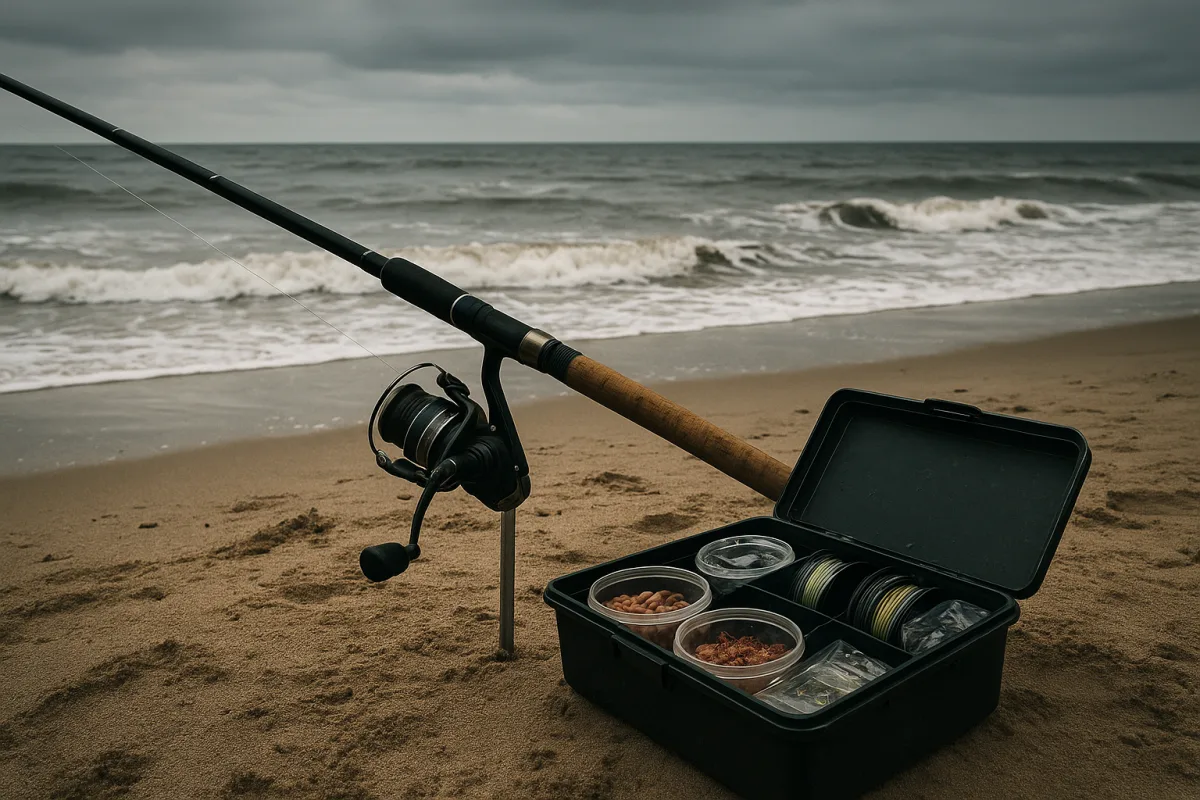
The shift is from a standard surf outfit to a condition-matched setup
The useful shift in summer surf fishing advice is plain: the old default of a long rod, heavy sinker and maximum cast is giving way to setups matched to surf height, beach structure, target species and tide stage.
That is not merely one guide taking a different view. Rod guides from Talk of the House and Knots Fish converge on 10 to 12-foot medium-heavy to heavy rods, but Frank and Fran’s Bait and Tackle adds an important qualification: calmer surf and lighter targets can call for an eight to 10-foot rod. [1][2][4]
Line recommendations point in the same direction. The Wearify recommends 20 to 30-pound braid as a practical middle ground between casting and abrasion resistance, while leader guides emphasize that leader length must change with surf and bottom rather than remain fixed. [5][6]
Tide advice has also become less rigid. Tide Times Global and Surfcasting Republic both treat incoming, outgoing and slack-water periods as potentially productive, which is more useful than the common instruction to fish only a rising tide. [15]
This matters most in summer because the beach changes quickly. A trough that held water and bait on the morning flood may be shallow or disconnected after the tide turns, while afternoon wind can make a light rig unworkable even on a beach that looked calm at dawn.
The evidence does not support a single universal summer rig. It supports a repeatable process: check the forecast, read the beach at low or falling water when possible, identify the species likely to be present, then match rod, sinker, leader and bait to that water.
Start with the beach, not the tackle rack
A summer beach can look featureless from the parking lot and still fish well. The relevant features are the nearshore trough, the outer bar, darker cuts through that bar, points of sand and any rip current seam carrying discoloured water seaward. [16]
A cut matters because it concentrates moving water. On a flood, water pushes across the bar and through openings; on the ebb, bait and food are often pulled back through those same channels. Fish do not need the deepest water everywhere, only a place where food is delivered predictably.
That is why casting farther is not automatically fishing better. OneOutdoors and HookCast both warn against overemphasising distance while ignoring structure, a mistake that commonly sends a bait beyond the active trough or over the bar into comparatively unproductive water. [9][16]
For a summer session, look first for a close trough with enough depth to hold water through part of the tide. If the first trough is alive with foam, bait flickers, small crabs or a defined seam, a modest cast is usually a better starting proposition.
A long, clean beach with no visible cut is not necessarily unfishable, but it gives you less to work with. In those conditions, fish the changing water around dawn or dusk, move if the water remains sterile, and do not expect heavier hardware to manufacture a bite.
The all-purpose summer setup, and when to depart from it
The broad consensus is a 10 to 12-foot rod in medium-heavy or heavy power with moderate-fast to fast action. That range gives enough leverage to control a sinker and bait in typical summer surf without making every close-range presentation unnecessarily awkward. [1][2]
Pair it with a reel that holds sufficient 20 to 30-pound braid for the beach and target. That braid range is repeatedly recommended because it casts efficiently while retaining useful abrasion resistance around shell, sand and occasional rough ground. [5]
A practical starting leader is three to four feet, generally 20 to 30 percent lighter than the main line. That is a baseline rather than a law, since leader choice depends on what is rubbing against sand, shell, rocks, fish teeth and the force of the surf. [5][6]
When surf is heavy or the bottom is rocky, Surfcasting Republic allows for leaders up to 15 feet to provide more abrasion resistance. The cost is added drag, more material to manage and a setup that may be less pleasant to cast repeatedly. [6]
At the other end, The Fuzz Daily notes that short 12 to 18-inch leaders can help casting distance. That can be useful where the cast itself is the limiting factor, but shorter leaders may sacrifice stealth and are not an automatic answer in clear, calm summer water. [8]
The important trend is not toward ever-longer leaders or ever-shorter ones. It is toward treating leader length as a response to conditions: short enough to cast cleanly, long enough to protect the line and present bait naturally in the water in front of you.
The standard 10 to 12-foot rod also has limits. Frank and Fran’s Bait and Tackle specifically identifies eight to 10-foot rods as sensible for lighter tackle and calmer surf when targeting smaller species such as sea mullet or smaller bluefish. [4]
That shorter outfit is not a downgrade. It is a better match when the productive water is close, the sinker requirement is modest and the bait does not need a large, heavy presentation. A 12-foot heavy rod is wasted effort if a calm inside trough is where fish are feeding.
Rig choice should follow how the fish are taking food
Summer bait fishing usually comes down to four common rig families: high-low, pompano, fish-finder and Carolina rigs. OneOutdoors and Fishing Mood list all four because they cover different presentations, not because one belongs permanently on every rod. [9][12]
A high-low rig is the practical choice when small fish are feeding close to the bottom and you want to offer two compact baits. It suits shrimp, bloodworms or sand fleas in a trough where smaller species are moving through regularly. [9][10]
A pompano rig follows much the same logic: small baits held above the sand, often with floats or attractors depending on the exact build. Use it where the wash is carrying small forage and you need the hooks visible above loose sand and shell.
A fish-finder rig is the better starting point for cut bait and a larger single bait presentation. It allows a fish to take line with less immediate resistance than a fixed sinker arrangement, which makes sense when larger fish approach cautiously or move through deeper water. [9]
A Carolina rig is another single-bait option where a sliding sinker and natural presentation matter. It is more appropriate when current and bottom allow that bait to move convincingly, not when surf is strong enough to tumble the entire offering down the beach. [9][12]
No supplied research establishes a detailed Atlantic-versus-Pacific division in bait or rig choice, so it would be false precision to claim one exact regional rig formula. The better-supported regional distinction is in the rod, reel and line systems anglers commonly use.
On Atlantic beaches, OneOutdoors describes the familiar heavier surf approach: 10 to 12-foot rods, heavier reels and power-casting systems that can include 40 to 50-pound monofilament shock leaders around 15 feet long. [9]
On the Pacific coast, Fly Fisherman describes a different lane, fly fishing with seven to 10-weight rods, sinking shooting-taper lines and five to eight-foot leaders for species including surfperch and striped bass. [19]
That does not mean conventional bait fishing disappears on the Pacific or that every Atlantic beach demands a shock leader. It means the summer setup should begin with the method, local species and beach energy, not a generic claim that all surf fishing is the same.
Bait matters, but only where the water puts it in front of fish
The reliable summer bait list is short: sand fleas, fresh shrimp, bloodworms and cut bait such as mullet or menhaden. OneOutdoors and the Outer Banks tourism guide both identify those baits as productive choices for beach fishing. [9][10]
Match the bait to the fish activity you can see. Sand fleas and shrimp fit a close, sandy trough where small bottom-feeders are working, while a larger strip or chunk of mullet or menhaden is a more deliberate offering for fish willing to eat substantial forage.
Freshness matters more than elaborate bait preparation. A good bait placed in a cut during moving water has a clear purpose. A perfect bait cast into featureless, dead water at midday has no such advantage, regardless of how expensive the rod or reel was.
Tide charts should set the plan, not provide an excuse
The useful planning window is not simply “high tide.” Tide Times Global identifies a traditional productive period around the hour before high water and the first hour of falling water, when water movement can place bait along bars, troughs and cuts. [15]
That traditional “magic hour” is a planning tool, not a scientifically proven catch-rate guarantee. The research supplied does not quantify how much moon phase, tide strength or a specific hourly window changes catches, so treat those ideas as prompts to observe rather than promises.
Slack water around high or low tide can also be worth fishing, particularly when the beach structure is clear and fish are already in the trough. [15] What slack lacks in current, it may make up for in easier bait control and a more stable presentation.
Dawn and dusk remain sensible summer starting points because lower light can improve fish confidence and avoid the hottest, busiest stretch of the day. Both tide guides place those periods among the better general times to fish. [15]
A new or full moon is often associated with increased fish activity in published tide advice, but the brief contains no quantified evidence that establishes a reliable advantage for every beach or species. [15] Check the chart, then give more weight to wind, wave direction and an actual fishable cut.
Spend the budget where it prevents a ruined session
OneOutdoors places a beginner setup, including rod, reel, line, terminal tackle and accessories, at roughly $150 to $350. A mid-range setup is estimated at $250 to $500, while high-end equipment begins at $800 or more. [9]
Those are aggregate ranges, not brand-by-brand price promises. They also do not settle what an individual angler needs, since a basic outfit for calm summer troughs has different demands from a power-casting setup intended for rough Atlantic water.
The recurring mistakes are more expensive than buying a slightly less glamorous rod. Guides identify inadequate tackle, neglected reels, unsuitable line weight, incorrect leader length, wrong sinkers, premature hook-sets and failure to read the beach among the common problems. [9][22]
Avoid them with a simple pre-trip check. Match the sinker to the current rather than habit, inspect and maintain the reel, carry enough terminal options to change presentation, and make your first decision from the tide chart and visible structure.
The summer setup that works best is therefore not a fixed shopping list. It is a 10 to 12-foot baseline outfit for ordinary surf, scaled lighter for calm close-range fishing, rigged according to bait and bottom, and moved when the tide reveals that the chosen water is not holding fish.
Frequently Asked Questions
What is the best rod and reel setup for surf fishing in summer?
A general summer surf fishing outfit uses a 10 to 12-foot medium-heavy to heavy power rod with moderate-fast to fast action. This length and power range provide enough leverage to handle typical sinkers and bait in summer surf conditions. Some anglers may choose shorter rods (8 to 10 feet) for lighter tackle or calmer surf targeting smaller species.
How do tides affect surf fishing success in summer?
Both incoming and outgoing tides can be productive for surf fishing in summer. The best times often include the hour before high tide and the first hour of the ebb tide when bait is moving through cuts and troughs. Slack water periods around high or low tides can also offer fishing opportunities, especially if bait is being pushed through a trough.
Which rigs work best for summer surf fishing conditions?
For small natural baits in feeding troughs, high-low or pompano rigs are effective. When using cut bait to target larger fish, fish-finder or Carolina rigs are recommended. The choice of rig should match current, bottom type, and bait rather than relying on a single universal setup.
How can I read the beach to improve summer surf fishing?
Focus on nearshore features like troughs, outer bars, cuts through bars, sand points, and rip current seams. These structures concentrate moving water and bait, making them prime fishing spots. Casting beyond visible structure often places bait over empty water, so prioritize fishing closer troughs with active bait presence.
What line and leader should I use for summer surf fishing?
A 20 to 30-pound braided main line offers a good balance between casting distance and abrasion resistance. Leaders typically range from three to four feet but should be adjusted based on surf conditions and bottom type. Longer leaders may be needed in heavy surf or rocky areas to prevent abrasion, while shorter leaders improve casting distance but may increase drag.
How we researched this
This article was assembled from 23 cited references.
Nothing here is based on hands-on testing. Where a figure or finding appears, it belongs to the source cited beside it, and the writing says so rather than implying otherwise. Every source is listed below so you can check it.
Sources
- 10 Best Surf Fishing Rods (September 2026) Complete Guide
- Best Surf Fishing Rods - Fishing Gear Guide | knots.fish
- What Rod to Use for Surf Fishing? Best Gear Guide - Battlbox.com
- How to Choose a Surf Fishing Rod: Length, Power, Lure Weight & More - Frank & Fran's Bait and Tackle
- What Line to Use for Surf Fishing? | The Real Setup
- What Leader Should I Use for Surf Fishing? – Fish From Beach
- What Lb Test for Surf Fishing: Make Every Cast Count - CNY Fishing
- How to Set Up Surf Fishing Rigs for Maximum Casting Distance - The Fuzz Daily
- Surf Fishing Guide: Rigs, Baits, Best Beaches & Techniques | One…
- Outer Banks Surf Fishing | Outer Banks, NC
- Surf Fishing: A Beginner's Guide | Field & Stream
- Surf Fishing 101: Best Rigs, Baits & Beaches for Success
- Surf Fishing Gear : Tackle / Surf Fishing Gear / Gear Shop | Red Sky Surf Hunters
- Surf Fishing for Beginners: The Essential Gear Checklist
- Best Tide for Fishing: The Complete Guide to Tidal Fishing
- Surf Fishing for Beginners: Reading the Beach, Right Gear & Best Times | HookCast
- Surf Fishing in the Outer Banks: Best Times of the Year
- Surf, Jetty & Kayak Fishing Guide: Gear, Techniques & Tips | West Marine
- Fly Rodding the Pacific Surf - Fly Fisherman
- Surf Fishing Guide: How to Catch Fish from the Beach — The Fishing Manual
- How to Rig a Surf Fishing Rod | Three Rigs That Actually Catch Fish
- Surf Fishing Mistakes: 5 Habits You Need to Break
- Surf Fishing 2026 — Catch More from Shore | FishingWorldGuide
Related Articles
Best Surf Fishing Setup for Fall: Gear, Rigs & Tides Guide
Discover the best surf fishing setup for fall with gear, rigs, and tips on reading tides and beach structure for successful autumn fishing.
Surf Fishing in Murky Water: Tips for Catching Fish
Learn how to catch fish surf fishing in murky water with rigs, bait, and beach reading tips for low-visibility conditions.
How to Prepare for a Surf Fishing Trip: Gear, Tides & Tips
Learn how to prepare for a surf fishing trip with tips on gear, tides, beach reading, and safety to ensure a successful fishing day.
Surf Fishing Techniques for Flounder: Rigs, Tides & Tips
Learn the best surf fishing techniques for flounder including rigs, tides, and how to read the beach for successful catches.