Best Tide Phase for Surf Fishing: Timing Your Catch
Discover the best tide phase for surf fishing and learn how rising and flood tides boost your chances of catching more fish.
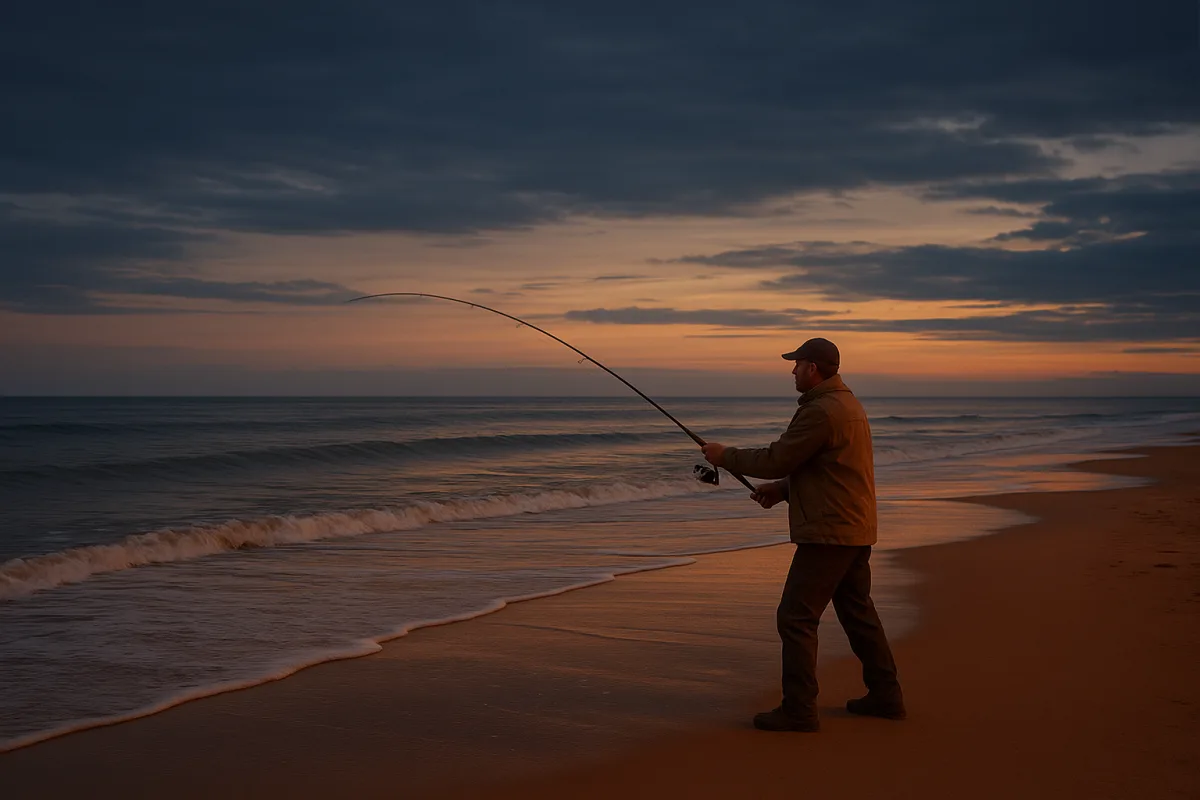
The useful answer: fish moving water, not merely high water
The best general tide for surf fishing is the rising tide, especially the final two hours before high tide and the first hour after it. That is not because a tide chart’s “high” mark is magic. It is because water is moving. [1][3]
A rising tide changes the part of the beach fish can use. Water covers shallow bars, fills troughs and pushes baitfish, shrimp and crabs closer to shore. Predators follow the available food, not the number printed beside the tide height. [3][13]
One source, Surfcasting Republic, puts a number on the effect, reporting a 42.3 percent catch-rate increase during incoming water because baitfish move toward shore. That figure comes from one source, not a broad multi-beach study, so use it as direction rather than a guarantee. [1]
The more dependable lesson is simpler: an incoming tide creates a conveyor belt. Water crosses the bar, enters channels, deepens troughs and gives fish access to feeding ground that may have been too shallow an hour earlier. [3][14]
That is why a beach that looks lifeless at low water can fish well later. The fish did not necessarily appear from nowhere. The rising tide made the beach’s useful structure reachable and moved forage into predictable routes.
Why the last two hours of the flood tide matter
The last two hours of the rising tide are often productive because enough water has entered the beach system to cover shallow feeding lanes, while current is still strong enough to carry bait. [1][3]
At the beginning of an incoming tide, the trough may still be skinny and disconnected from the outer bar. Bait can remain offshore, and larger fish may not yet have enough depth to work close. The tide is rising, but the beach is not fully engaged.
Later in the flood, water spills over low portions of the bar and drains through deeper cuts. That flow concentrates food rather than spreading it evenly. A predator sitting in the deeper water can hold position and intercept whatever the current delivers. [13][14]
This is the important distinction between a productive spot and a random cast. Fish do not need a feature that merely looks deep. They need a feature that routes water, bait and shelter into the same small piece of beach.
A trough running parallel to shore can be good, but a trough with a clear opening through the outer bar is better. The opening, commonly called a cut, allows water and bait to pass between the outer water and the inside beach. [3][13]
On the rising tide, place a bait or lure in the trough near that connection, not automatically beyond the farthest breaking wave. Overcasting is a common surf-fishing mistake because anglers often throw beyond the water where fish are actually feeding. [5][12]
The cast should follow the structure. If the bar is close, the productive water may be within a short cast. If the cut is distant, longer range may matter, but distance alone does not make a bait more available to fish.
High tide is a transition, not an all-day answer
High tide has a deserved reputation because it gives fish access to shallow flats and pushes the surf zone close to the beach. Species such as red drum can use that added water to move over ground that was dry or nearly dry earlier. [3]
But the strongest high-tide fishing can occur before the precise high-water time. During the final part of the push, food is still moving and channels still have directional flow. Once the current slows, the feeding lanes can lose definition.
Simple Tides cautions that significant high water can spread fish across a broader area. The same flooded flat that gave fish access can make them harder to concentrate, since they are no longer confined to troughs and obvious channels. [3]
That is why “fish high tide” is incomplete advice. A better plan is to arrive early enough to fish the last two hours of the flood, stay through the first hour around high water, then judge whether the current and bait remain concentrated.
Slack water is usually the period to be most skeptical about. When the tide briefly pauses near high or low water, current weakens, bait movement slows and the beach often loses the concentrated feeding conditions that made the prior hour useful. [3][12]
Slack tide does not mean no fish can be caught. It means the angler needs a more specific reason to stay, such as visible bait, a species known to be present, or a defined piece of structure still holding enough moving water.
Read the beach at low tide, fish the map at high tide
Low tide is usually better for reconnaissance than for general surf fishing. It exposes the bar-and-trough layout that high water hides: depressions, drain cuts, shell patches and places where wave energy breaks unevenly. [3][5]
Walk the beach at low water and identify a deeper, darker trough between shore and the first sandbar. Then look for a lower section of the bar where waves break less consistently, which can indicate a cut or channel. [3][13]
A cut matters because it links water levels on either side of the bar. As the tide rises, water crosses and circulates around it. As the tide falls, water drains through it, often carrying shrimp and small baitfish seaward. [5][13]
The same feature can therefore fish on both sides of the tide cycle, but for different reasons. The flood tide brings forage into the beach system, while the ebb tide can funnel food back through the cut and give predators an ambush lane. [5]
Do not expect every cut to produce. A channel with no current, no bait and no suitable depth is just a channel. Watch for birds working, bait dimpling, a distinct seam between fast and slow water, or repeated boils in the same lane.
The practical cost of ignoring structure is wasted casts. Anglers can stand in open water for hours because the tide is theoretically right, while a productive trough sits fifty yards down the beach where current and depth meet. [12]
Mobility matters as much as choosing the initial spot. As the tide rises, a trough can fill, a bar can disappear and the best casting angle can change. Staying fixed after the water has rearranged the beach is another common mistake. [3][12]
The outgoing tide can be better when the beach funnels food
The outgoing tide is not a second-rate option. It is especially worth fishing around cuts, channels and jetties where draining water carries bait in a narrower path. Shrimp and baitfish moving with the ebb are easier for predators to intercept. [5]
The difference is that outgoing water needs structure more urgently. A broad, flat beach with no defined drain may simply pull water away without creating a reliable feeding lane. A cut with strong outflow gives fish a clearer reason to gather. [13]
This is where tide timing should shape your position. On the flood, fish may work inside troughs as water arrives. On the ebb, concentrate closer to the mouth of a cut or along its edges, where moving water meets calmer holding water.
Safety also changes with the tide. Rising water can cut off access around points, rocks or steep beaches. Strong channels can create difficult footing and hazardous currents, particularly when swell and tide pull in opposite directions. [4][12]
No feeding opportunity is worth standing in water that is becoming unsafe. Check your exit route before the beach narrows, keep an eye on wave sets, and avoid wading into channels simply because they look like productive water.
Species can reverse the general rule
The incoming-tide rule is a starting point, not a universal answer. The Tide Chart notes that the best phase varies by beach and species, which makes sense because different fish use different depths, prey and current conditions. [2]
For striped bass, Farmers’ Almanac guidance places the preferred window from two hours before to two hours after high tide, while advising anglers to avoid slack periods. That aligns with bass using increased depth and active water around high tide. [1]
For red drum, Outer Banks Tide Charts identifies a different window: the last two hours of falling water into the first hour of the incoming tide. That transition can put drum near changing current, exposed food and accessible trough edges. [7]
Flounder are the useful reminder that “high tide is best” can be wrong. Betta Fish Info identifies low tide around trough edges as a productive period, where a flatfish can hold near depth changes and ambush prey moving along the bottom. [8]
The lesson is not to memorize three rules and stop thinking. It is to match the tide phase to the fish’s feeding position. A striped bass moving in shallow water is not using the beach the same way as a flounder lying along a low-water edge.
Tide timing only works when the fish are present
Tide determines access and movement, but it does not create fish that are out of season. In the Northeast, spring and fall migrations are the major periods for striped bass and bluefish, so a strong incoming tide is most useful when those runs are underway. [4]
On the Southeast and Gulf coasts, pompano peak in spring, while redfish and flounder migrate in fall. A carefully timed tide in the wrong seasonal window can still produce little because the target species may not be along that beach. [9]
On the West Coast, inshore fishing is influenced by kelp and hard-bottom habitat, while some offshore species peak from June through October. Tide remains relevant, but it must be read alongside the local bottom and the fish available that season. [10]
Moon phase can increase tidal range and current, particularly around new and full moons. Stronger movement may improve feeding conditions, but the supplied research does not establish a dependable numerical catch-rate advantage for any particular moon phase. [1]
Build the trip around the tide chart, then verify the beach
A useful tide forecast needs more than the next high-water time. Check the height, the rate of rise or fall, the expected high and low times, moon phase and whether the tide window overlaps daylight, safe access and target-species season.
Tidewise Fishing for Android, Ebb: Tides & Fishing Times for iOS, TideChart for Android, Tide-Forecast.com for iOS, and Fishing Forecast for iOS are listed as options for tide timing and fishing planning. [15][16][18]
Use the app before leaving home, but let the beach make the final decision. If the forecast says rising water but the trough is featureless, the cut has filled with sand, or bait is absent, move rather than waiting for the chart to rescue the spot.
The tide chart tells you when water should move. Reading the beach tells you where that movement becomes useful. Put those together, and the best general answer is clear: fish the incoming tide where structure turns rising water into a feeding lane.
Frequently Asked Questions
What is the best tide phase for surf fishing?
The best general tide phase for surf fishing is the rising tide, especially the last two hours before high tide and the first hour after. This period offers moving water that brings baitfish shoreward and allows predators to access shallow feeding areas. However, the optimal tide phase can vary by species and local conditions.
Why is the rising tide best for surf fishing?
The rising tide covers shallow bars and fills troughs, pushing baitfish, shrimp, and crabs closer to shore. This movement creates a "conveyor belt" effect, concentrating food and allowing predators to hold position near cuts and trough openings. Fish follow the moving water and available forage, not the tide height alone.
How does the flood tide affect surf fishing success?
During the flood tide, especially its last two hours, water flows over bars and through cuts, concentrating bait and creating productive feeding lanes. The current carries food into predictable routes where predators can intercept it. Early in the flood tide, these connections may not be fully established, making fishing less productive.
When should I fish around high tide for surf fishing?
High tide should be treated as a window rather than a fixed target. Fish often spread out across newly flooded shallow flats once the tide stops rising, which can reduce feeding concentration. Some species like striped bass favor the period two hours before to two hours after high tide, but slack tide periods are generally less productive.
How to use tide phases to improve surf fishing catch rates?
Use low tide to scout beach features such as cuts, troughs, and sandbars, then fish as the tide rises and water flows over these structures. Focus on the last two hours of the incoming tide and the first hour of high tide when bait is moving shoreward. Adjust for species-specific preferences and avoid fishing during slack tide when water movement is minimal.
How we researched this
This article was assembled from 18 cited references.
Nothing here is based on hands-on testing. Where a figure or finding appears, it belongs to the source cited beside it, and the writing says so rather than implying otherwise. Every source is listed below so you can check it.
Sources
- Best Tide for Fishing: High vs Low, Incoming vs Outgoing
- Tides for fishing: the best tide to fish — The Tide Chart
- Surf Fishing and Tides: A Practical Guide | Simple Tides
- Surf Fishing: Complete Guide for All Coasts | WildNotch.com
- Surf Fishing: Complete Beginner's Guide To Gear, Rigs & Catch More Fish
- How tides affect fishing
- OBX Red Drum Fishing — Season & Tides | OBX Tide Charts
- Is High Tide or Low Tide Better for Surf Fishing - bettafishinfo.com
- March to May Pompano on Gulf Shores: Surf Fishing Tactics and Beach Rentals
- Today's Best Fishing and Tide Times for San Diego, US | FishingReminder
- Surf Fishing Ocean City MD: High Tide vs Low Tide Feeding Windows
- Surf Fishing Basics: Read the Beach, Time the Tide, and C…
- Surf Fishing Guide: Rigs, Baits, Best Beaches & Techniques | One…
- Saltwater Fishing Habitats - Reel Techniques
- Ebb: Tides & Fishing Times — Offline Tide Charts & Best Fishing Times
- 239+ Best Tide Forecast Apps for iPhone (2026) | Free & Paid
- Timing The Tides: Seasonal Surf Fishing At Melbourne Beach, FL
- Tidewise Fishing - Apps on Google Play
Related Articles
Best Times to Surf Fish at Night: Tide and Moon Insights
Discover the best times to surf fish at night using tides, moon phases, and seasonal tips for more productive night fishing sessions.
Best Times to Surf Fish in Spring: Tide and Temperature Tips
Discover the best times to surf fish in spring based on tides, water temperature, and weather for more successful fishing trips.
Surf Fishing Seasonal Windows: When to Target Key Species
Discover surf fishing seasonal windows by species and region to plan trips for Atlantic pompano, Gulf redfish, and more with tide and light tips.
How to Fish During Low Tide
Learn how to fish during low tide with tips on finding fishable water, choosing rigs, casting distance, and reading the beach for surf fishing success.