Surf Fishing Tide and Temperature Guide for Better Catch
Learn how tides and water temperature affect surf fishing success for different species with this practical tide and temperature guide.
Start with the question: what fish can reasonably be there?
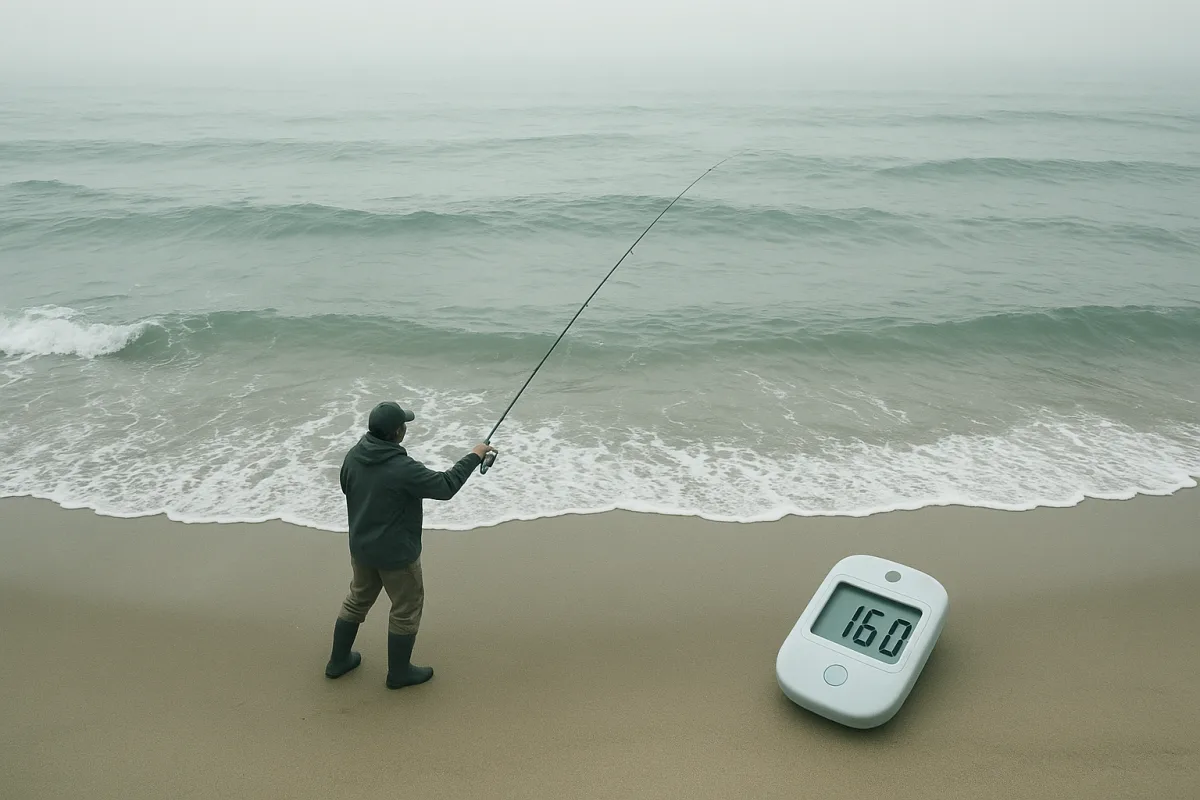
The first condition is not tide or wave height. It is whether the water temperature suits the fish you intend to catch. A clean-looking beach can still be a poor prospect when the seasonal temperature has moved the target species elsewhere. [17]
For fall striped bass in temperate water, the useful range is often around 55 to 60°F. Bluefish are commonly associated with 58 to 72°F, red drum with 65 to 80°F, and pompano with 68 to 75°F. [8][17]
Those numbers overlap, but they are not interchangeable. A 58°F beach may be timely for striped bass or bluefish, while it is below the stated range for pompano and toward the low end for red drum. [8][17]
Treat water temperature as a regional clue, not a universal switch. General surf-fishing guidance often identifies 60 to 75°F as broadly favorable, but species preference and local seasonal patterns matter more than a generic range. [3][17]
That is why a local report is worth checking before committing to a beach. If the target fish are absent, a favorable tide chart merely tells you when water will move, not when fish will arrive. [6][7][14]
Read the tide chart for movement, not a magic hour
Moving water is usually the first condition to favor. Incoming and outgoing tides concentrate bait and prompt fish to travel through troughs, cuts and channels, while slack water is generally less productive. [1][2][5]
The common shortcut is to fish the incoming tide, particularly the two hours around high water. That is a sensible starting window because rising water can bring fish nearer the beach and over shallow structure. [1][3][10]
It is not a rule that survives every coast. The San Francisco Bay planner from The Box Score identifies the last two hours of ebb or flood around dawn and dusk as productive striped bass timing, rather than declaring one direction universally best. [7]
North Carolina red drum guidance also points toward a different pattern: rising water into dusk can be particularly useful. That is a species and place-specific answer, not evidence that every fish on every beach prefers the flood. [6]
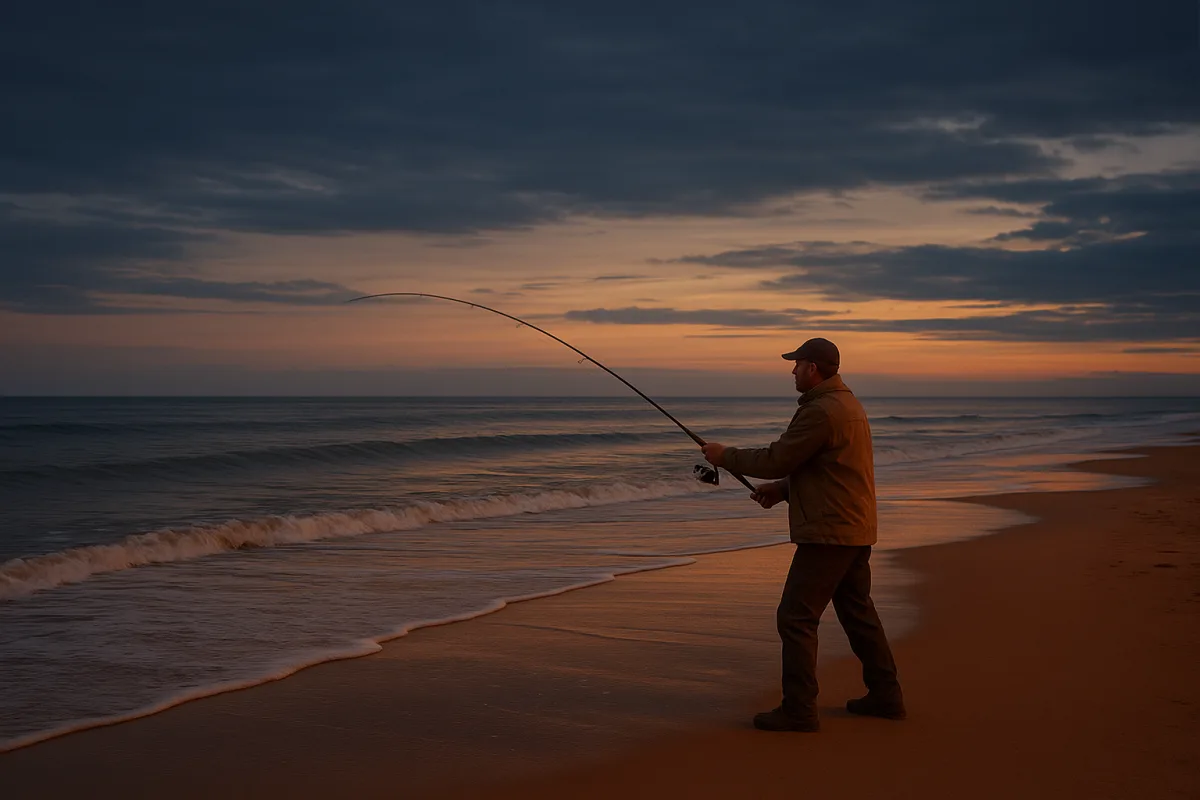
Before leaving home, mark high tide, low tide and the periods when the water is actually moving. Then compare those windows with dawn or dusk, because low-light periods commonly improve surf-fishing opportunities. [2][3][15]
If dawn coincides with an outgoing tide through a visible cut, fish that instead of abandoning the beach because a generic rule said incoming was best. The structure and the fish’s route matter more than tide labels alone. [1][5][7]
Slack tide is usually a lower-percentage period because the water is not carrying bait or scent through the beach’s feeding lanes as strongly. It can still produce locally, so regard it as a caution, not an automatic reason to leave. [1][4]
The practical mistake is arriving only for a printed high-tide time. Fish the lead-in and the water movement afterward, especially where a trough or cut gives fish a defined corridor. [2][10][15]
Check the swell before trusting the beach forecast
Wave height matters because surf must stir food and create moving water without making the nearshore zone unfishable. General surf-fishing guidance favors waves around 1 to 3 feet, particularly with periods of roughly 12 to 15 seconds. [3][4]
That range is only a screening tool. On a steep beach, even a modest 1 to 3 foot forecast can produce close, forceful shorebreak that prevents fishable presentations and makes wading or casting unnecessarily hazardous. [4][15]
Look at what the waves do after they reach the beach, not only what the marine forecast says offshore. Useful water often shows a defined break over a bar, then a darker, calmer lane where the trough lies inside it. [2][4]
A longer-period swell can create more organized sets, but bottom shape controls the outcome. The same 12 to 15 second period can make an appealing cut on one beach and a hard, closed-out shorebreak on another. [3][4]
Do not mistake turbulent water for productive water. If every cast is dragged sideways, buried in suspended sand or repeatedly dumped in the shorebreak, the surf is not helping your bait stay in a feeding zone. [4][15]
When the beach is too rough, changing location can be more useful than changing tackle. A protected section, a different beach angle or a place where the bar breaks farther offshore may offer a workable lane. [4][11]
Let the wind decide whether bait can hold near shore
Wind direction matters because it changes how surface water, bait and waves arrange themselves along the beach. Onshore wind can push bait closer to shore, which can improve access for surf anglers. [11][12]
But an onshore breeze is not automatically favorable. Once wind becomes excessive, the benefit of concentrated bait can be overwhelmed by dirty water, difficult casting, heavy shorebreak and a poor ability to detect bites. [4][12]
A useful working range is 5 to 15 mph, with about 10 to 11 mph often identified as a productive middle ground. That is enough wind to animate the surface without routinely making the beach unmanageable. [12]
Treat 15 mph as a point to reassess rather than a number to ignore. Above it, effectiveness and safety decline, especially where wind-driven waves are breaking close to a steep shoreline. [4][12]
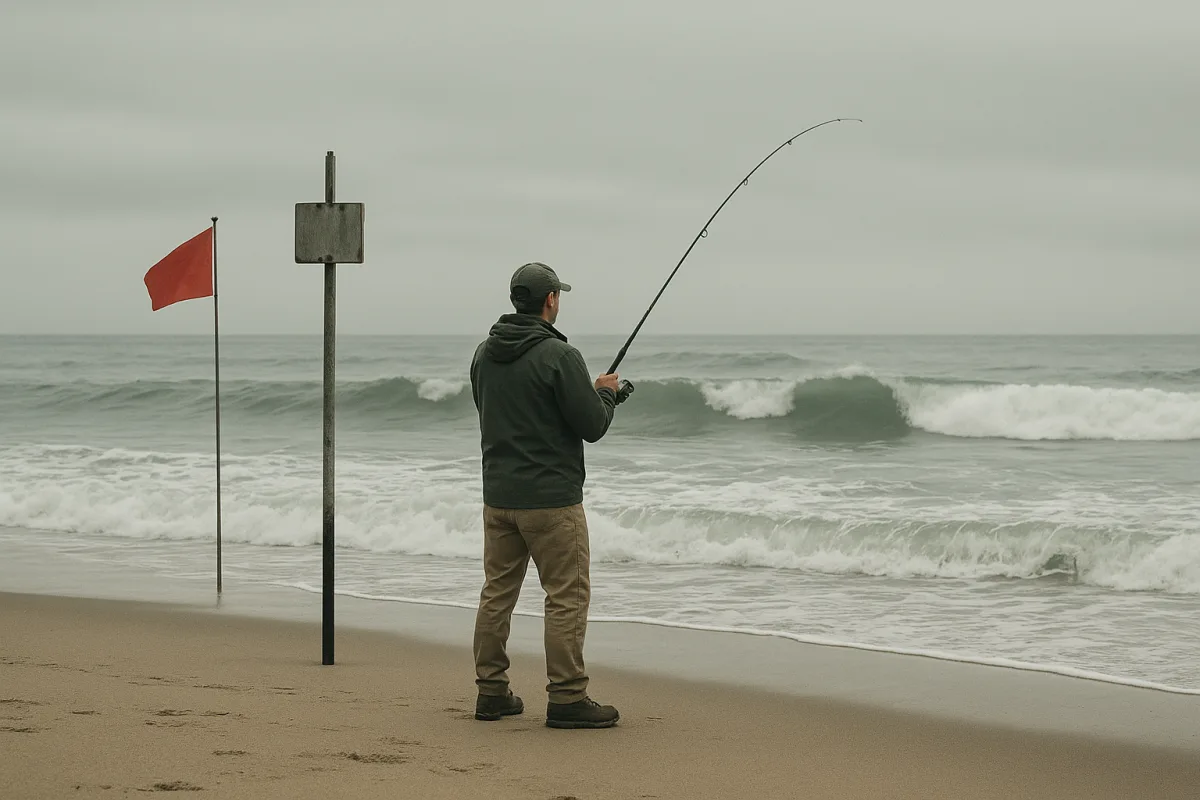
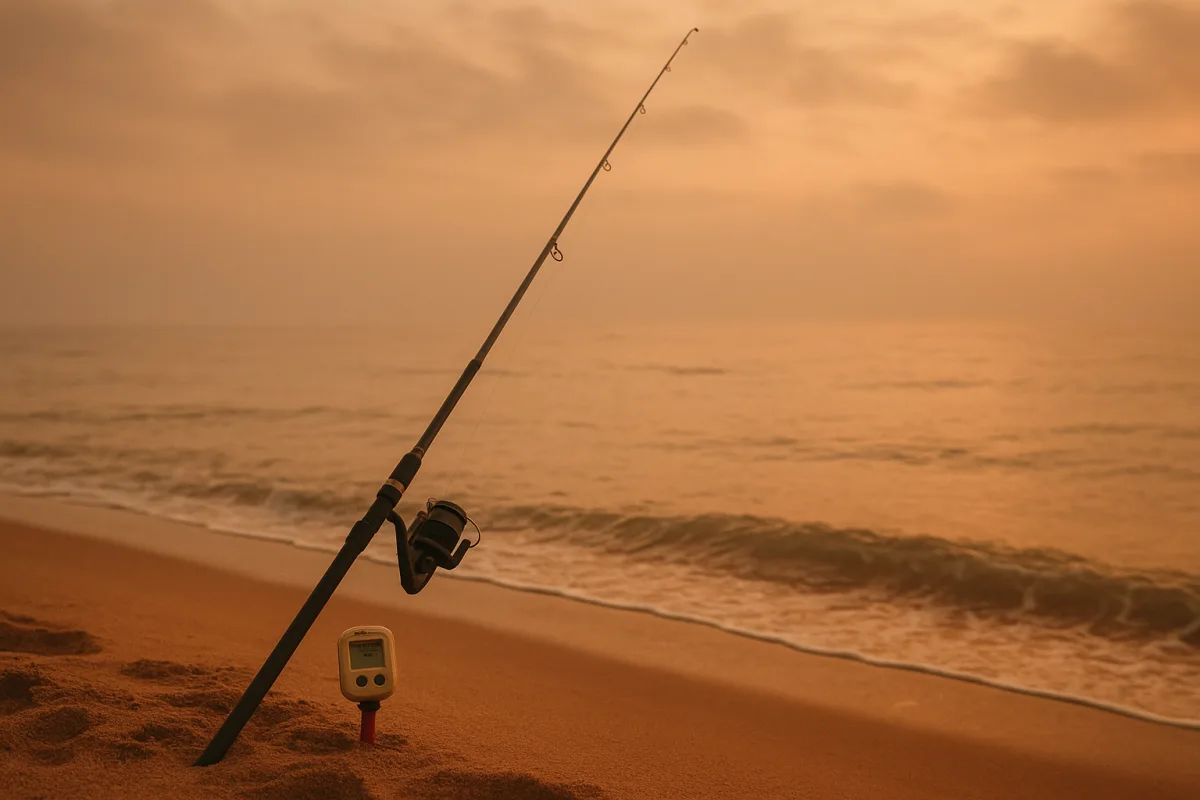
Use a compass and an anemometer rather than guessing from the flag at the car park. Wind direction can feel different at the dune line than it does at the water, and the number matters when deciding whether to fish or relocate. [11][12]
There is no universal best bank or wind direction. A wind that piles bait onto one open beach may make another beach unsafe or turn its main trough into a washing machine, so judge direction against that beach’s shape. [11][14]
Find the part of the beach that concentrates fish
Once conditions look broadly fishable, the next problem is choosing where to cast. Fish do not distribute evenly along a beach, and featureless water rarely deserves the same attention as a clear feeding lane. [2][15][16]
The main features to seek are troughs, sandbars, cuts or rips through bars, and points. These features concentrate moving water and bait, and give fish routes where they can feed without roaming every yard of shoreline. [2][15]
A trough is the deeper channel between the beach and an outer sandbar. From shore, it often appears as darker water, a smoother strip behind breaking waves, or a lane where waves lose height before reaching the beach. [4][15]
A cut is a lower section of sandbar where water moves seaward or shoreward through the break. It can gather bait and provide a travel route, especially when a tide is moving rather than stalled. [2][4]
Points matter because they alter current and create an edge between different depths or water speeds. A fish can hold near that edge and intercept food brought past it, which is a better proposition than casting blindly across flat sand. [15][16]
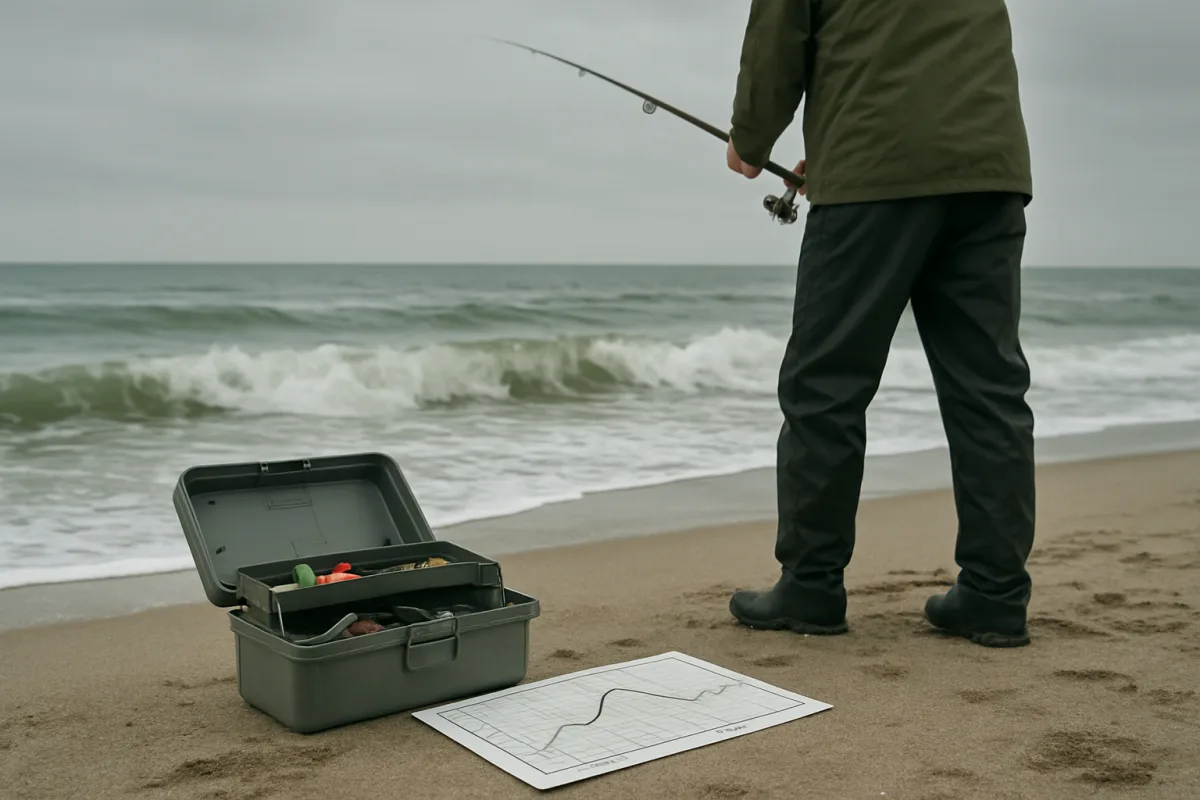
Low tide is the time to learn these features. Walk the beach and note exposed bars, depressions, shell patches, channels and points, then return when rising or falling water makes those places accessible to fish. [2][15]
Do not assume the deepest-looking water is automatically best. A deep trough without current, bait or a connection through the bar may be less useful than a shallower cut that funnels moving water across a productive section. [2][4]
Beach structure changes with weather and sand movement. The feature found last month may fill in, shift or stop functioning after rough surf, which is why a familiar beach still requires a fresh look. [14][15]
Add light and pressure, then make the go or no-go call
Dawn and dusk are worth planning around because lower light commonly overlaps with stronger feeding activity. The best calendar window is often a tide change that intersects one of those low-light periods. [3][7][15]
Barometric pressure is a quieter variable, but it belongs in the forecast check. Falling pressure is associated with increased feeding activity, while rising pressure can reduce it, although the effect is not consistent enough to overrule tide and structure. [13]
Use a barometer to track the trend rather than expecting one pressure number to predict a catch. A falling needle alongside a fishable swell, moving tide and suitable water temperature is more meaningful than pressure considered alone. [13]
A practical go decision has several parts: the target species fits the temperature, water will move during dawn or dusk, the wind is manageable, and a visible trough, cut or point gives fish a route. [2][3][12][17]
A practical no-go decision is equally useful. Skip or move when the forecast combines wind above 15 mph, dangerous close shorebreak, slack water and no visible structure, because none of those conditions improves bait presentation. [4][12][15]
The forecast should get you to the right stretch of coast, not persuade you to fish bad water. On arrival, let the actual break lines, current lanes, wind and beach shape decide whether the plan still holds. [4][14][15]
Frequently Asked Questions
What tide phases are best for surf fishing different species?
The best tide phase varies by species and region. Incoming and outgoing tides generally stimulate fish movement and concentrate bait, making them productive phases. For example, striped bass in San Francisco Bay prefer the last two hours of ebb or flood tide at dawn or dusk, while red drum in North Carolina peak during the rising tide into dusk. Slack tides are usually less productive but can yield catches depending on local conditions.
How does water temperature influence surf fishing success?
Water temperature is a key factor in determining whether target species are present. Different species have specific temperature ranges they prefer; for instance, fall striped bass favor 55 to 60°F, bluefish 58 to 72°F, red drum 65 to 80°F, and pompano 68 to 75°F. These ranges overlap but are not interchangeable, so matching the water temperature to the species’ preference is important for success.
When should I fish surf based on tide and temperature?
Fish when the water temperature suits your target species and during moving tides—either incoming or outgoing—rather than slack water. A common approach is to fish the two hours around high tide, especially during dawn or dusk, as rising or falling water can bring fish closer to shore and over structure. Checking local reports for current temperature and tide conditions helps optimize timing.
How to match surf fishing trips to fish temperature preferences?
Identify the water temperature range preferred by your target species and plan your trip accordingly. For example, if the water is around 58°F, it may be suitable for striped bass or bluefish but less so for pompano or red drum. Because temperature preferences vary by region and season, consult local reports to confirm which species are active in the current conditions before choosing a fishing location.
What tide movement patterns concentrate bait for surf fishing?
Incoming and outgoing tides move water that concentrates baitfish near beach features like troughs, sandbars, cuts, and points. These moving waters stimulate fish to travel through these productive areas. Low tide scouting helps identify these structures so you can return during tide changes when fish have access to them. Slack tides generally reduce bait concentration and fish activity.
How we researched this
This article was assembled from 17 cited references.
Nothing here is based on hands-on testing. Where a figure or finding appears, it belongs to the source cited beside it, and the writing says so rather than implying otherwise. Every source is listed below so you can check it.
Sources
- Surf Fishing and Tides: A Practical Guide | Simple Tides
- Surf Fishing - Take Me Fishing
- Best Techniques and Surf Conditions for Surf Fishing | Guidesly
- Interpreting Surf Fishing Conditions: Waves, Wind & Tides
- Best Tide for Fishing: High vs Low, Incoming vs Outgoing
- Cape Hatteras & the Outer Banks Fishing Report, Tides & Conditions (North Carolina) | BizkFish
- SF Bay fishing planner — tides, best times, what's biting | The Box Score
- https://saltwaterpros.com/texas/surfside-beach/blog/surfside-beach-surf-fishing-gear-species-tides?utm_source=openai
- Surf Fishing | Red Sky Surf Hunters
- Best Tide for Surf Fishing: Maximize Your Catch Today
- Wind and Fishing: Which Bank to Stand On | BiteCast
- Fishing Wind Speed Guide — How Wind Affects Fishing | CastConditions
- Barometric Pressure and Fishing: What the Falling Needle Really Means | FishingHelps
- Adapting To New Patterns: An Ever-Changing Surf Climate - The Fisherman
- Surf Fishing Guide: How to Catch Fish from the Beach — The Fishing Manual
- Surf Fishing Guide: Rigs, Baits, Best Beaches & Techniques | One…
- Water Temperature for Surf Fishing: When Flounder and Yellowtail Switch On|Minagiman's Fishing Adventures in Japan
Related Articles
Interpreting Surf Fishing Conditions: Waves, Wind & Tides
Learn how to interpret surf fishing conditions like waves, wind, and tides to improve your beach fishing success and safety.
Best Tides for Surf Fishing
Learn the best tides for surf fishing and why moving water around high and low tides boosts your catch success.
Best Times to Surf Fish in Spring: Tide and Temperature Tips
Discover the best times to surf fish in spring based on tides, water temperature, and weather for more successful fishing trips.
Best Tide Phase for Surf Fishing: Timing Your Catch
Discover the best tide phase for surf fishing and learn how rising and flood tides boost your chances of catching more fish.