Best Surf Fishing Setup for Winter: Rigs, Gear & Tips
Discover the best surf fishing setup for winter including rigs, sinker weights, rod choices, and tips to keep bait in feeding lanes during cold months.
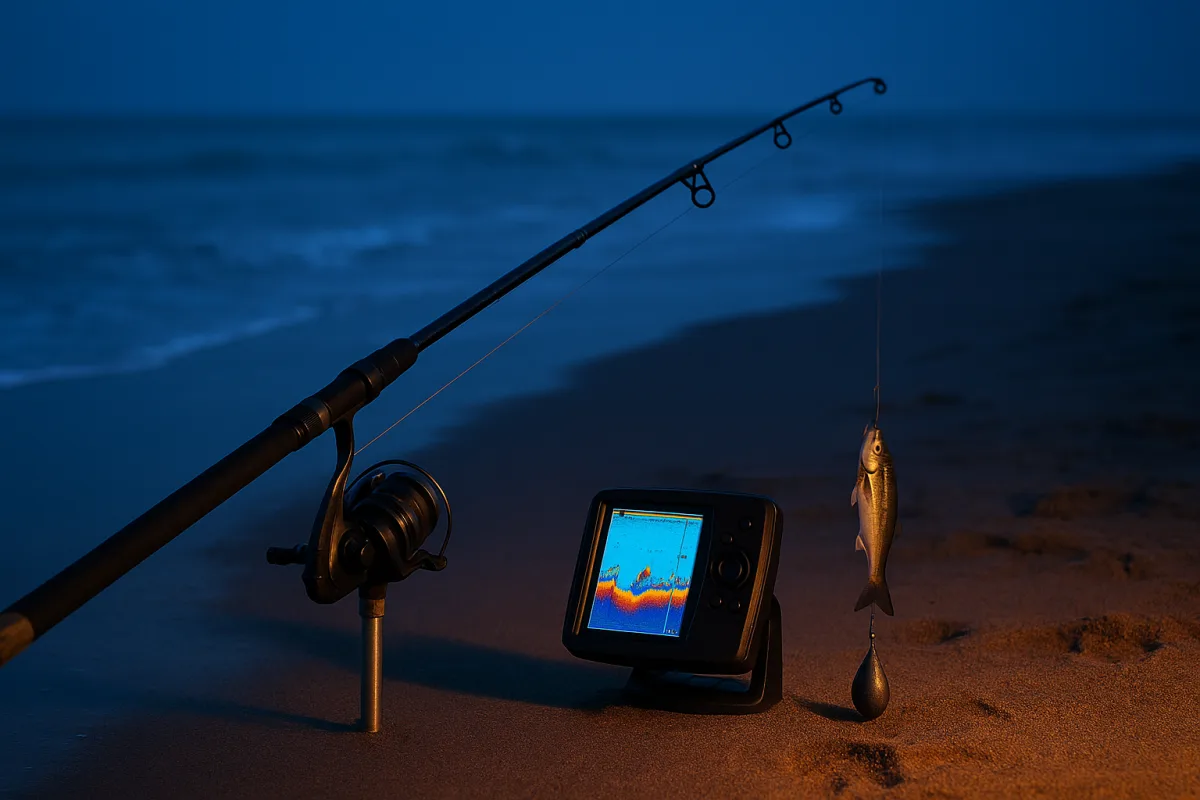
The winter surf setup is an anchoring system
The useful way to think about winter surf fishing is not “what is the best rod?” It is “how do I keep a natural bait where a fish will actually pass?” The fish finder rig answers that question better than most general-purpose surf rigs.
Winter commonly means colder water, stronger wind and fewer fish spread across the beach. When water temperatures fall below 55 degrees, fish activity generally declines, so the water you fish matters more than sheer time with a bait soaking. [8][9]
That changes the job of the tackle. In warm conditions, a fish may cross broad shallow flats, chase bait high in the wash or tolerate a bait rolling around near shore. In winter, the more reliable opportunity is often a bait held in a deeper travel lane.
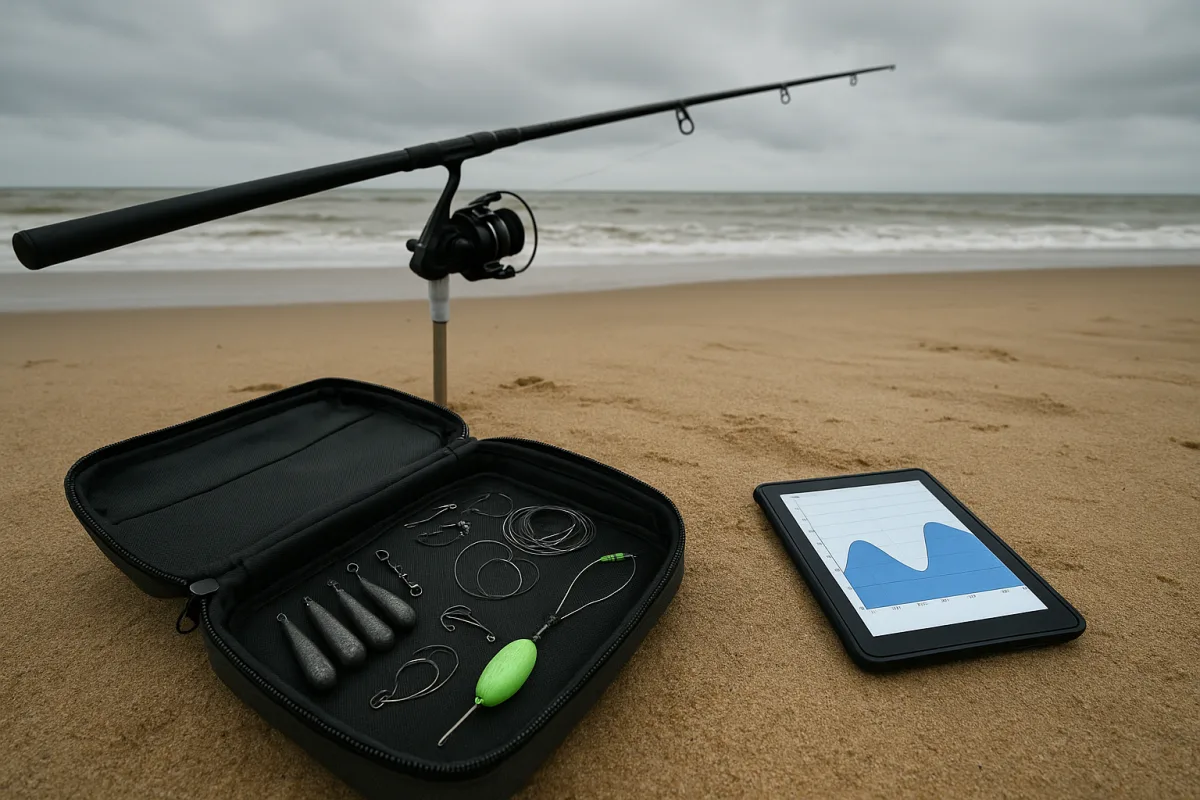
A fish finder rig is built around that holding job. It uses a sliding sinker arrangement ahead of a leader, allowing the weight to pin the rig while the bait and hook sit behind it on a separate section of line. [16][18]
The important point is not that the rig is complicated. It is that the sinker and bait do different work. The sinker deals with current and wave push, while the leader gives the bait room to settle and move more naturally.
That separation matters most on a beach with moving water. If the sinker cannot hold, the bait drags across the bottom, tangles around the leader or ends up outside the trough you intended to fish. None of those outcomes improves in cold weather.
Why the sinker determines whether the rig works
A winter fish finder rig is commonly paired with a 3 to 6 ounce pyramid sinker and a 24 to 36 inch leader for larger surf species. [6][16] That range is not a fixed prescription. It is a response to the amount of water moving across the beach.
A pyramid sinker is used because it digs into sand better than a smooth rounded weight. The edges resist being pushed along the bottom, which is useful when a cross-current is pulling line down the beach or waves are repeatedly lifting the rig.
Start at the light end only when the rig stays put. A 3 ounce sinker that holds is better than a 6 ounce sinker thrown unnecessarily, because heavier weights demand more from the rod, make casting less forgiving and can bury a bait too aggressively.
Move up when the line steadily bows down-current, the sinker walks across the bottom, or each wave shifts the bait out of position. The target is not a perfectly motionless line. The target is a bait remaining in the productive section of water.
That distinction prevents a common winter mistake. Anglers often react to rougher weather by adding weight until the entire rig feels immovable, then fish a bait buried in a washout or pinned under loose sand. Holding bottom is useful only if the bait remains available.
The same logic tells you when to leave. If the surf is so forceful that even a sensible sinker weight cannot maintain presentation, the problem is not a lack of tackle. It is that the beach is currently unfishable with that method.
The available guidance identifies a 2 to 4 foot swell as a workable surf range. [8] That does not mean every 4 foot day is productive, because period, wind direction, current and the beach contour decide how that swell breaks.
A clean 3 foot swell can create readable troughs and manageable seams. A shorter-period wind swell of similar height can churn the nearshore zone, pull the rig sideways and make it difficult to distinguish a fish bite from constant wave movement.
The leader is where the bait becomes believable
A leader around seven feet is often cited for striped bass and flounder fishing, while fish finder rig guidance also commonly uses shorter 24 to 36 inch leaders for larger species in heavier surf. [4][6] Those figures are not contradictory.
They describe different trade-offs. A shorter leader is easier to control when current is strong and the bait must stay close to the sinker. A longer leader gives the bait more room to move, but also creates more opportunity for tangles and drift.
For a winter fish finder rig, choose leader length based on water movement before choosing it based on habit. In a hard lateral sweep, a 24 to 36 inch leader is a practical starting point because it limits the bait’s ability to helicopter around the main line.
Where the water is gentler and the bait is sitting in a defined trough, a longer leader may present more freely. The cost is control. A leader that works on a calm beach can become a mess when wind and current build.
Leader strength also is not settled by one universal number. Surfcasting Republic recommends 20 to 30 pound braid for striped bass, while Center of Outdoor puts the braided main-line range at 30 to 40 pounds. [3][4]
The same variation appears in leaders. Published guidance runs from roughly 15 to 30 pound fluorocarbon through 20 to 40 pound monofilament, depending on species, abrasion and the size of fish expected. [3][4][5]
That spread is useful rather than confusing. Light leader is sensible only where the beach is clean, fish are modest in size and the surf is not grinding line across shells, rocks or structure. Heavy leader earns its place where abrasion is the real threat.
Winter does not automatically require heavier line. It requires line matched to the beach. If the bait is fishing a sandy trough with little abrasion, oversized terminal tackle can make no practical improvement. Around rocks, jetties or shell beds, it can be necessary.
The rod supports the rig, it does not replace it
There is no authoritative winter-only rod specification in the available research. The usual recommendations are general surf-fishing recommendations adapted to winter’s heavier sinkers, colder hands and more frequent wind. That limitation is worth stating plainly.
Knots.fish identifies 10 to 12 foot rods as the common surf-fishing range. [1] That length is a sensible working default because it handles substantial sinkers, keeps line above much of the nearshore wash and remains manageable for repeated casts.
Battlbox.com recommends longer 13 to 15 foot rods when extra casting distance is needed, particularly for fish holding farther offshore. [2] The benefit is real leverage and line clearance, but the cost is greater physical effort and reduced control.
That cost matters in winter. Cold hands reduce dexterity, bulky clothing limits movement and a strong onshore wind can turn a long rod into more work than advantage. A longer rod is not automatically a better winter rod if you cannot cast it accurately.
Medium-heavy to heavy power is the useful category when the rig carries 3 to 6 ounces of sinker and a substantial bait. [1][2] The rod must load safely with that payload and still have enough backbone to manage a fish in moving water.
Moderate-fast to fast action is generally recommended because it balances casting performance with bite detection. [1][2] In practical terms, you need enough tip response to register a pickup while retaining enough stiffness to move the sinker and bait together on the cast.
Regional fishing prevents a single rod recommendation from becoming doctrine. The research brief notes that some Mid-Atlantic anglers use shorter, lighter rods around 7 feet 6 inches and medium-light power, while Northeast and West Coast situations may call for heavier equipment. [14][15]
That difference follows the fish and beach, not a regional preference for its own sake. A lighter rod can suit smaller species and gentler water. It becomes inadequate when the sinker will not hold, the bait is large or the current demands heavier terminal tackle.
Put the rig in a lane, not just in the ocean
A fish finder rig only works if it is anchored where fish can find it. The first task is reading the beach for troughs, cuts, sandbars and current seams, rather than casting toward the farthest visible water. [7][17]
A trough is the deeper depression running between the beach and a sandbar. In winter, it can concentrate travel because fish moving along the shore often use the deeper, more protected water instead of crossing shallow whitewater repeatedly.
A cut is a lower section of sandbar where water drains seaward. It often creates current and a change in depth, both of which can funnel bait and fish. The useful casting position is usually beside or into the edge of that moving water.
Do not automatically cast directly into the hardest outflow. A bait dragged through the fastest part of a rip may not hold or may be difficult for a fish to locate. Often the quieter edge, where fast and slow water meet, is the better lane.
The best tidal window is usually moving water, particularly the two hours before and after high tide. [8] That does not make high tide magical. It means rising and falling water can carry bait, cover shallow routes and create enough current for fish to travel.
Slack tide is often less productive because the system loses movement. [8] Without current, the fish finder rig still holds bait, but it is no longer positioned within an active flow of scent, bait or travelling fish.
Winter anglers using summer habits often fail by fishing featureless water, ignoring tide timing and making rigs too complicated. [17][19] A simple rig placed in a trough during a moving tide is usually more useful than a multi-hook arrangement thrown into dead water.
Bait and the conditions that rule it out
Cut mullet, fresh dead shrimp, mussels, sand fleas and sandworms are all commonly recommended winter baits. [6][13] The practical choice depends on what local fish recognise as food and whether the bait will survive the surf long enough to matter.
A delicate bait in rough water can be stripped quickly, leaving an empty hook in an otherwise good lane. A tougher bait may remain available longer, but toughness alone does not make it effective if local fish are keyed on something else.
There is limited evidence for declaring one winter bait best across every coast. Mussels and sand fleas can be productive in the right region, but bait effectiveness is local enough that the responsible choice is to match the beach’s forage and target species. [6][13]
The same restraint applies to the entire setup. There is no evidence that winter-specific surf gear is categorically more expensive than all-season gear. Costs depend on rod class, reel capacity, line and terminal tackle, not on a proven winter premium.
What winter demands is adjustment. Fish the moving tide, identify a trough or cut, use enough pyramid weight to hold there, and shorten the leader when current makes a longer presentation unmanageable. If those conditions are absent, more casting distance will not rescue the session.
Frequently Asked Questions
What is the best rig for surf fishing in winter?
The best rig for winter surf fishing is a fish finder rig designed to hold bait in moving water. It uses a sliding sinker ahead of a leader so the sinker anchors the rig while the bait moves naturally behind it. This setup helps keep the bait in the feeding lane despite currents and waves.
How much sinker weight should I use for winter surf fishing?
Use a pyramid sinker weighing between 3 and 6 ounces, depending on water movement. Start with the lightest weight that holds the rig in place; adding more weight only helps if the sinker drifts or the bait moves out of position. Avoid using heavier sinkers than necessary, as they can bury the bait or make casting harder.
What rod length is ideal for winter surf fishing?
A 10 to 12 foot medium-heavy rod is generally the practical default for winter surf fishing. Longer rods of 13 to 15 feet can cast farther but are harder to handle, especially in cold and windy conditions. Choose rod length based on your strength and the distance you need to reach.
How do I keep bait in place when surf fishing in winter?
Keeping bait in place relies on using a fish finder rig with a sliding pyramid sinker that anchors the rig in the current. The sinker holds the rig against waves and cross-currents while the bait on a separate leader moves naturally. Adjust sinker weight to ensure the rig stays in the productive trough or cut without dragging or tangling.
Where should I fish during winter surf fishing tides?
Fish the two hours before and after high tide near beach features like cuts, troughs, and sloping sand. Winter fish tend to travel through defined water channels rather than roaming shallow flats, so targeting these structures during moving tides improves your chances. Avoid slack tide periods, which are less productive.
How we researched this
This article was assembled from 20 cited references.
Nothing here is based on hands-on testing. Where a figure or finding appears, it belongs to the source cited beside it, and the writing says so rather than implying otherwise. Every source is listed below so you can check it.
Sources
- Best Surf Fishing Rods - Fishing Gear Guide | knots.fish
- What Rod to Use for Surf Fishing? Best Gear Guide - Battlbox.com
- What LB Fishing Line Do You Need For Striped Bass? - Center of Outdoor
- Surf Fishing Line Setup: Braid, Leader & Rig Guide
- Rio Striped Bass Leader | Trident Fly Fishing
- Surf Fishing Guide: Rigs, Baits, Best Beaches & Techniques | One…
- Surf Fishing for Beginners: Reading the Beach, Right Gear & Best Times | HookCast
- Timing And Weather Windows For Winter Surf Fishing - The Beach Angler
- Winter Surf Fishing Peaks When It's Coldest
- Surf Fishing in the Outer Banks: Best Times of the Year
- Surf Fishing Gear | DICK'S Sporting Goods
- Fishing Rods | Defender Marine
- Try These Tips For Winter Surf Fishing - Hill Country Post
- Surf Fishing Gear Guide: Essential Equipment for California Beaches | Blog
- Surf, Jetty & Kayak Fishing Guide: Gear, Techniques & Tips | West Marine
- Fishing Rigs: Types, Setup, Best Rigs & How To Choose One
- Common Surf Fishing Mistakes and How to Avoid Them
- How To Make Your Own Surf Rigs: A Complete Guide - Fishingfactor
- Top 5 Mistakes Surf Casters Make — And How to Fix Them
- Surf fishing
Related Articles
Best Surf Fishing Setup for Night Fishing: Rods, Rigs & Gear
Learn the best surf fishing setup for night fishing including rods, rigs, line, and tips for effective bait placement and tide timing.
Best Surf Fishing Setup for Summer: Rods, Rigs & Tides
Discover the best surf fishing setup for summer, including rods, rigs, tides, and beach reading tips for successful fishing sessions.
Surf Fishing Gear Checklist
Get a practical surf fishing gear checklist focused on rigs, sinkers, rods, and packing tips for effective fishing during your chosen tide window.
Best Times to Surf Fish in Winter: A Practical Guide
Discover the best times to surf fish in winter, including tips on local conditions, species behavior, and optimal fishing strategies.