
What to Do If You Catch a Shark While Surf Fishing
Learn what to do if you catch a shark surf fishing, including safe handling, release tips, and legal considerations to protect you and the shark.
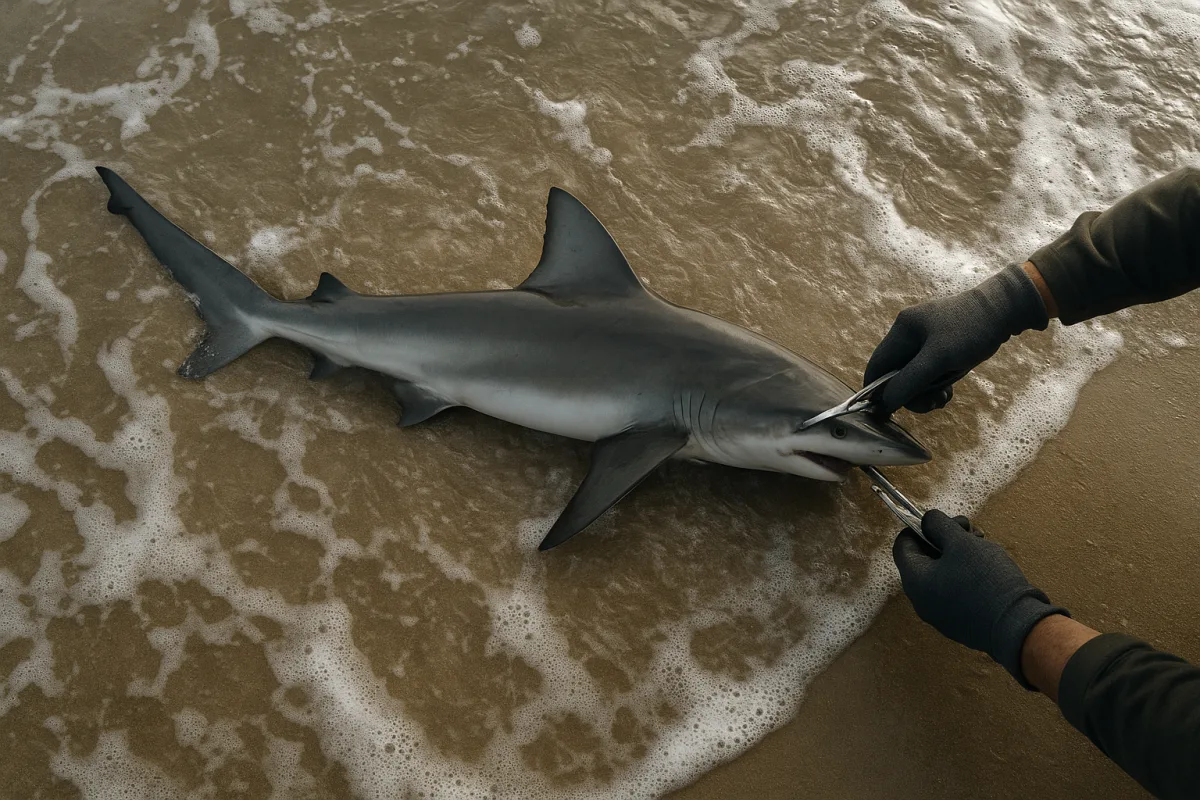
The system that matters: reducing the release window
The central idea in surf-shark handling is not a universal fight time or a clever beaching method. It is the release window: the period from bringing the shark within reach to getting it swimming away again.
That window determines most of the outcome. A shark hooked securely, dragged high onto dry sand, wrestled for photographs, measured repeatedly, and handled by several people has spent far longer out of its normal environment than necessary.
Texas Parks and Wildlife Department’s catch-and-release guidance puts the priority plainly: keep sharks in the water where possible, use wet gloves or towels, deal with the hook carefully, and release promptly. [1]
For a surf angler, that changes the order of operations. The goal is not “land shark, then decide what to do.” The goal is to arrive at the wash with a plan that allows a lawful release without turning the fish into a beach-side handling project.
Why the wash is better than dry sand
Water supports the shark’s body weight. Sand does not. That is the practical reason to work at the edge of the surf whenever the sea state, species, and your own footing permit it.
Keeping a small or medium shark partly submerged also reduces the temptation to grab whatever is convenient. The convenient grab is often the tail, gill region, or jaw, precisely the areas anglers should avoid handling. [1][2]
A shark on wet sand can still move violently, especially when the next wash reaches it. That movement is not a cue to pin it harder. It is a reason to keep distance, keep the leader organized, and avoid kneeling beside the head.
The tail is not merely an awkward handle. A powerful tail can knock an angler off balance or drive the shark farther up the beach, extending the release window instead of shortening it.
The mouth is equally poor territory. Teeth are obvious, but an angler concentrating only on teeth can forget the abrasive skin, body torque, leader tension, and sudden turns that occur when a shark rolls.
Texas Parks and Wildlife Department specifically advises anglers to avoid fingers near the eyes and gills. [1] That is sensible even with a smaller fish, because a shark that appears calm can regain movement as soon as pressure changes.
Size changes the procedure
“Shark” is too broad a category to produce one handling method. A blacktip commonly encountered by surf anglers may run 4 to 5 feet and around 100 pounds, while leopard sharks are often 3 to 5 feet. [6]
Those fish still deserve careful handling, but a trained, prepared angler can sometimes control the situation from the waterline with a leader, long tool, and another person watching the surf. That is not a license to grab the animal.
A juvenile tiger shark around 5 feet presents a different problem. The animal may be manageable in length, but its build, teeth, and power require more distance and better tool control than a comparably long leopard shark.
The upper end is a different category again. The Associated Press reported a great white shark caught off Massachusetts at roughly 9 feet. [3] A shark of that size is not a fish to manhandle for hook removal.
With a large shark, the release-window system becomes simpler: do not attempt close body control, do not try to lift or pose it, and do not insist on extracting an inaccessible hook. Cut the leader as close as safely possible. [1]
That choice can feel incomplete to an angler who dislikes leaving tackle behind. It is still better than converting a difficult release into an injury, an illegal retention, or prolonged stress for a protected fish.
The hook is not always worth retrieving
A visible hook at the corner of the mouth is one problem. A hook deep in the mouth, obscured by a turning head, surf surge, or tight leader angle is another.
The first case may justify a long dehooker or pliers. The second calls for cutting the leader, provided you can do so without reaching into the shark’s danger zone. Texas Parks and Wildlife Department includes cutting the leader among appropriate release options. [1]
This is why a shark release should be planned around tool reach, not hand reach. If the hook cannot be reached with a long-handled tool while the angler remains outside the bite zone, it is not an easy hook removal.
Circle hooks help shape this system because they are commonly selected for shark fishing and are available in sizes from roughly 8/0 to 15/0 depending on intended shark size. [8][9] They do not eliminate bad hook placements or handling risk.
The useful question is not whether a hook can theoretically be removed. It is whether it can be removed quickly, with the shark supported in water, without putting hands near its mouth or gills.
Tackle determines whether release is quick or chaotic
The release window starts during the fight. A shark fought on underpowered tackle may take far longer to bring within range, then arrive exhausted, still hooked, and difficult to control in the wash.
There is no dependable average fight duration. Available advice ranges from roughly 30 minutes to several hours, depending on shark size, tackle, current, and angler technique. [11][16]
That uncertainty is precisely why anglers should not select shark tackle around a hoped-for short fight. Choose gear for the largest realistic fish and conditions at that beach, not the smallest shark likely to take a bait.
For medium sharks, published surf setups commonly call for 9 to 12 foot heavy-action rods rated around 30 to 80 pounds, reels holding at least 300 yards, and 50 to 80 pound braided main line. [8][9]
Larger sharks call for heavier equipment, including rods rated around 60 to 100 pounds and leaders extending into the 100 to 400 pound range. Recommended leaders commonly run 18 to 36 inches. [8][9]
That leader is not simply insurance against teeth. It is the connection you may need to control from a safe position while another angler operates a dehooker or cuts the trace.
Steady pressure, suitable tackle, and a fighting belt or harness can reduce needless exhaustion during the fight, according to guidance collected by West Marine and the Shark Angling Club of Great Britain. [11][16]
None of that means forcing the fish. It means avoiding a drawn-out contest caused by a light reel, inadequate line capacity, or an angler who cannot apply controlled pressure without losing balance in the surf.
Build a release kit around reach and control
A release kit should sit where it can be reached before the shark reaches the beach. Searching through a tackle bag while a shark lies in the wash is how a short release window becomes a long one.
Heavy-duty gloves are for abrasion resistance and grip, not permission to put hands in dangerous places. An AFTCO Utility glove is listed at about $29 and suits the angler wanting basic protected handling around leader and skin contact. [11]
Wire Max gloves, listed around $100, suit anglers who expect more demanding leader and hook work and want a more robust glove category. [11] Neither glove makes a shark’s mouth, gills, or tail safe to grab.
For hook removal, a Danco pistol-grip dehooker costs about $14 and suits accessible hooks on smaller sharks where the angler can keep clear of the head. [11] It is a basic reach tool, not a solution for deeply embedded hooks.
ARC dehookers are listed from roughly $15 to $70, a range that suits anglers choosing among different lengths and more specialized removal designs. [15] The relevant feature is reach and control, not an elaborate mechanism.
A towel and saltwater hose also belong in the kit, particularly for keeping contact surfaces wet when brief handling is unavoidable. Texas Parks and Wildlife Department recommends wet towels or gloves to protect the shark’s skin and gills. [1]
A measuring device matters because regulations can turn an apparently simple catch into a compliance issue. Measure only when it is lawful, necessary, and possible without extending the handling process beyond what the fish and conditions allow.
Deterrents are not release tools
A Sharkbanz bracelet is listed at about $138 and is marketed as a shark deterrent for people in the water. [14] It may suit swimmers, paddlers, or anglers wanting an additional personal-safety item while wading.
It should not be treated as the core of a shark-handling system. The available research brief does not establish that shark deterrents are necessary or reliably effective for surf anglers handling a hooked shark.
Gloves, a long dehooker, cutting pliers, a towel, and a clear plan solve defined problems: abrasion, hook reach, leader removal, wet handling, and decision-making. A deterrent does not replace any of those jobs.
Regulations decide what “successful” means
A successful release is also a lawful one. Before fishing, identify what shark species may be present, whether retention is allowed, the applicable size limits, possession limits, and any local gear restrictions.
Massachusetts, for example, has minimum sizes of 54 inches for general sharks and 78 inches for hammerheads, alongside possession rules and protected-species requirements. [4] A fish that cannot legally be retained must be released promptly.
North Carolina announced new shark harvest restrictions effective in 2026. [5] That is a reminder not to rely on last season’s dock talk, an old screenshot, or a generic online chart when deciding whether to retain a shark.
Australian rules can be more gear-specific. The Australian Fisheries Management Authority identifies protected shark species under national arrangements, while state rules can limit hooks or wire traces in particular circumstances. [17][18][19][20]
New South Wales, South Australia, and Western Australia each have rules relevant to shark fishing and protected species. [18][19][20] A rig that is ordinary in one place can be restricted in another.
This is also where tide charts and forecasts belong in the decision. They help determine whether an angler should fish a beach at all, but the research does not establish a specific tide-based handling method for sharks.
If heavy surf makes it impossible to stand safely, maintain leader control, or release a fish without dragging it far above the wash, that is not a minor inconvenience. It is a condition that makes a clean release less likely.
The unsentimental answer is to change the plan before the bait goes out. A forecast may promise feeding water, but no bite is worth creating a release situation that you cannot manage safely and legally.
Frequently Asked Questions
What is the safest way to release a shark caught while surf fishing?
The safest release method is to keep the shark in the water at the edge of the surf whenever possible. Control the leader with tools, remove the hook only when it is plainly accessible, and cut the leader if removing the hook would cause excessive handling. Prompt release reduces stress and injury to the shark.
How should I handle a shark caught on the beach during surf fishing?
Avoid lifting the shark by its tail, head, gills, or jaws. Keep hands, feet, and loose clothing away from the mouth, gill area, and thrashing tail. Use wet gloves or towels to protect the shark’s skin and gills, and work quickly to minimize the time the shark spends out of the water.
When is it appropriate to cut the leader instead of removing the hook from a shark?
Cut the leader when the hook is not plainly accessible or when removing it would require excessive handling that could prolong the release window. This approach helps reduce stress and potential injury to the shark.
What tools do I need to safely handle a shark caught surf fishing?
Essential tools include heavy-duty fishing gloves, long dehookers, pliers, a cutting tool, and a measuring device. These tools help control the leader, safely remove or cut hooks, and minimize direct contact with the shark.
How does shark size affect handling and release techniques in surf fishing?
Handling techniques vary significantly with shark size. Smaller sharks like blacktips (4-5 feet) can be handled with less gear and effort, while larger sharks such as great whites (up to 9 feet) require more robust tackle and careful handling to ensure safety and compliance with regulations. Matching tackle to the expected shark size is important for effective and safe handling.
How we researched this
This article was assembled from 20 cited references.
Nothing here is based on hands-on testing. Where a figure or finding appears, it belongs to the source cited beside it, and the writing says so rather than implying otherwise. Every source is listed below so you can check it.
Sources
- Catch and Release Techniques for Sharks — Texas Parks & Wildlife Department
- 50 CFR § 300.27 - Incidental catch and tuna retention requirements. | Electronic Code of Federal Regulations (e-CFR) | US Law | LII / Legal Information Institute
- Tiger shark caught off Massachusetts could be sign of warming waters
- Recreational saltwater fishing regulations | Mass.gov
- SHARK – COMMERCIAL AND RECREATIONAL - OPENING DATE AND HARVEST RESTRICTIONS | NC DEQ
- How to Catch Blacktip Shark: Complete Guide | Guidepole
- How to Go Shark Fishing in the Surf | FishTalk Magazine
- How To Fish For Sharks In The Surf: Your Complete Guide - Realfishings
- Best Surf Fishing Gear for Sharks - Fishing Gear Insider
- Surf Fishing Gear : Tackle / Surf Fishing Gear / Gear Shop | Red Sky Surf Hunters
- How to Catch Swordfish: Expert U.S. Fishing Guide | West Marine
- Nurse Shark - Habitat, Tackle & How to Catch | Anglervale
- Shark Fishing: Complete Guide to All Shark Species (2026)
- Spearfishing Accessories - Shark Deterrent - MAKO Spearguns
- Microsoft Word - IATTC-102-PROP-H-4_VAR Sharks
- Best Practice | Shark Angling Club Of Great Britain
- Sharks | Australian Fisheries Management Authority
- New fishing rule to protect critically endangered Greynurse sharks at Terrigal Haven
- Hook sizes and traces - PIRSA
- Shark, hammerhead - Western Australian recreational fishing rules
Related Articles
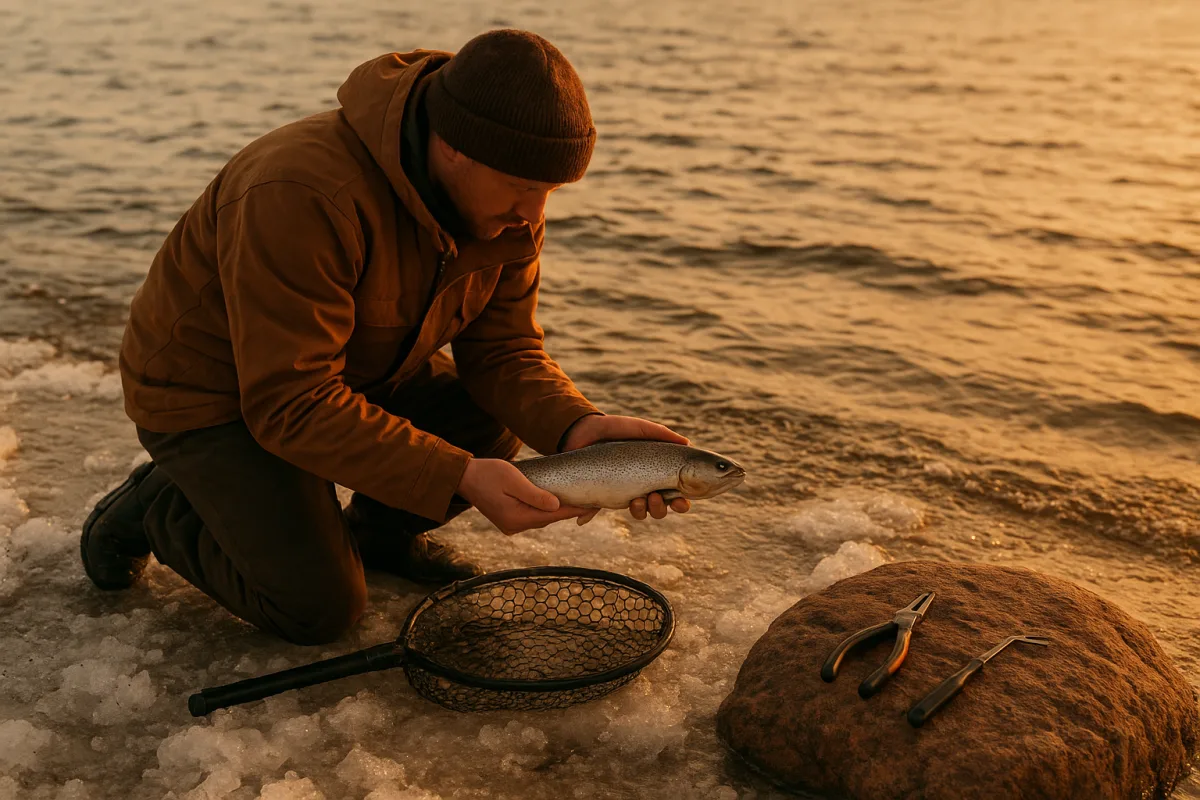
How to Handle Fish After Catching: Proper Techniques
Learn how to handle fish after catching with proper techniques to minimize harm and improve catch and release success.
How to Find Surf Fishing Reports Online for Accurate Updates
Learn how to find surf fishing reports online with tips on using timestamped observations, local updates, tides, and weather for better fishing success.

How to Catch Fish During a Beach Bonfire: Tips and Safety
Learn how to catch fish during a beach bonfire with tips on tides, gear setup, safety, and legal regulations for a successful surf fishing night.
Surf Fishing Techniques for Flounder: Rigs, Tides & Tips
Learn the best surf fishing techniques for flounder including rigs, tides, and how to read the beach for successful catches.