
Sun Protection for Surf Fishing: Tips to Avoid UV Damage
Learn effective sun protection for surf fishing with gear, timing, and sunscreen tips to reduce UV exposure and avoid sunburn on the beach.
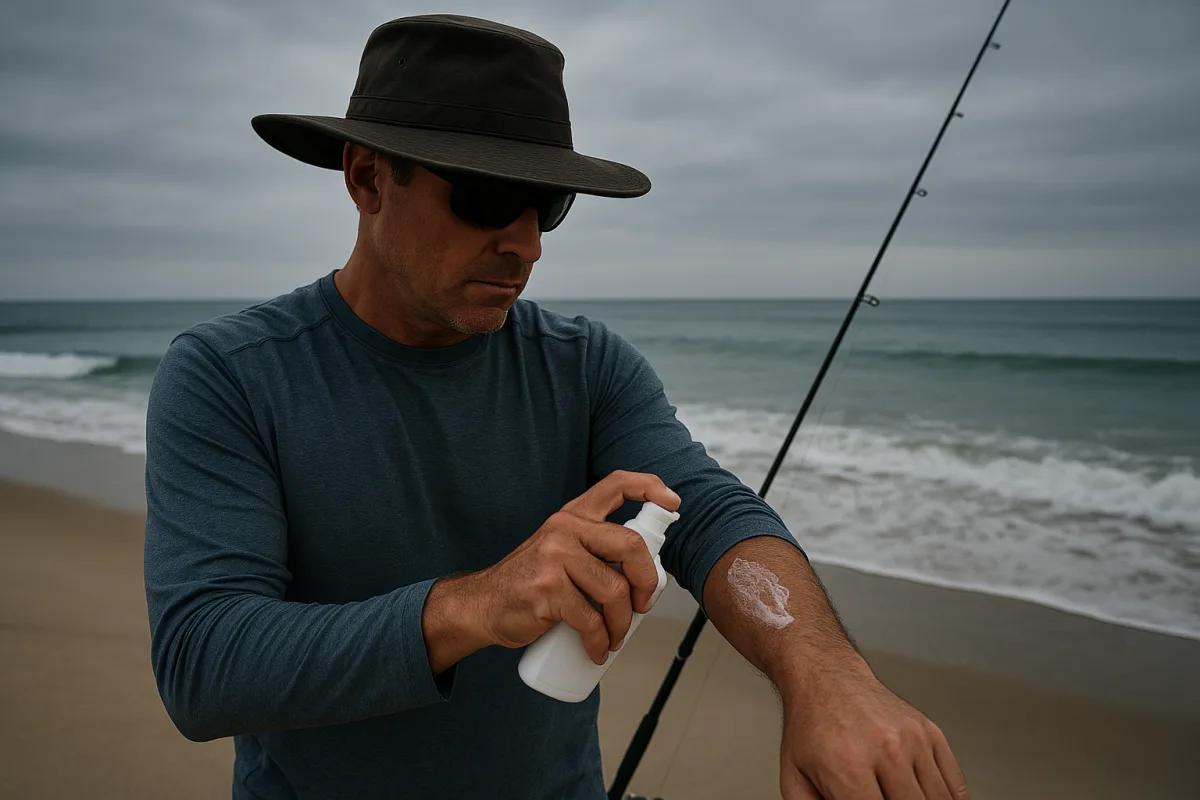
Before choosing the beach, check the UV window
A tide chart tells you when fish may move through a cut. The forecast tells you whether standing on that cut is sensible. Read both before committing to a midday outgoing tide in July.
UV radiation is strongest around solar noon, generally 11 a.m. to 1 p.m., and summer raises the baseline further. [5][6] That matters because surf fishing is often stationary work, with nowhere to get out of the reflected light.
The practical answer is to fish the first light period or the late-afternoon stretch whenever the tide and target species permit it. [5][6] A dawn flood tide or evening ebb can offer fishing time without beginning the day under its hardest sun.
This is not an instruction to ignore tide. If the only fishable window is around midday, fish it prepared. It is a warning that a favorable tide does not reduce UV exposure, and cloudless noon conditions need a stricter protection routine.
Do not let a cool northeast breeze make the decision for you. Wind can hide the heat you would normally use as a warning signal, while UV continues to reach exposed skin. [5] Feeling comfortable is not evidence that you are protected.
Regional conditions deserve the same attention as wind direction. UV intensity increases nearer the equator, rises roughly 10 to 12 percent for each 1,000 metres of altitude, and is stronger in summer. [5] Water reflection adds to the exposure at any latitude.
For a beach angler, the point is simple: a bright day at the water is not one-directional sun. Light comes down, then bounces off the water and pale sand. Coastal reflection can increase UV exposure by 25 percent or more. [5][6]
Pack protection as part of the fishing kit
Start with sunscreen, but choose the specification rather than the label design. The useful baseline for surf fishing is broad-spectrum SPF 50+ with an 80-minute water-resistance rating. [1][4] Broad-spectrum coverage matters because protection should cover both UVA and UVB radiation.
Water-resistant does not mean waterproof. FDA water-resistance ratings are generally 40 or 80 minutes, and no sunscreen should be treated as permanent protection through repeated wading, sweat, spray, and towel use. [1][4]
An 80-minute rating gives more margin than a 40-minute rating during a wet beach session, but it does not replace the two-hour schedule. Reapply every two hours, and immediately after swimming, heavy sweating, or toweling off. [1][4]
Bring enough product for the length of the tide, not just a small tube that will cover your nose once. Full-body application takes about two ounces, roughly six to eight tablespoons. [1][4] Underapplying sunscreen is a common way to get less protection than the SPF number suggests.
For face and neck, use the two-finger rule: dispense sunscreen along the length of two fingers, then spread it across those areas. [1][3] That is more practical at the truck than guessing after the first rod is already in the sand spike.
A sunscreen stick can be useful as a reapplication tool for the nose, cheekbones, ears, and around the eyes, where anglers often avoid greasy lotion. Editor-recommended sunscreen sticks are specifically positioned as easy beach-bag carry items by Who What Wear. [3]
The brief does not establish that mineral formulas outperform chemical formulas for surf fishing, or vice versa. Choose a broad-spectrum SPF 50+ formula you will actually apply at the proper amount and interval, rather than assuming one active ingredient solves a missed reapplication. [1][4]
Cover skin before you walk onto the sand
Sunscreen is the base layer, not the complete system. Wear UPF 30+ or higher clothing with coverage, particularly a long-sleeve shirt and long pants when the weather allows. [5] That reduces the amount of skin depending on a product that must be reapplied.
Synthetic fabrics such as polyester and nylon generally offer higher UPF than untreated natural fibers. [5] For surf work, that means choosing fishing clothing by coverage and fabric rating, not merely by whether it feels thin and airy in the shop.
The research brief does not provide direct evidence for an ideal clothing-and-sunscreen layering formula unique to surf fishing. Still, the practical division is clear: clothing covers the broad areas, sunscreen covers exposed skin and gaps such as the face, ears, wrists, and ankles. [5]
A UPF 50+ head and neck gaiter is one of the cheapest meaningful additions to a beach kit. Red Angle Fishing lists this category for fishing head and neck coverage, and comparable gaiters commonly fall in the $10 to $20 range. [7]
Use the gaiter for the neck, lower face, and sides of the face, but do not let it create a blind spot. Apply sunscreen to the bridge of the nose, cheeks, ears, forehead, and any exposed skin above or beside it. [1][5]
Fishing gloves cost about $19 in the budget gear range identified in the research brief. [5] They suit anglers holding a rod for hours, baiting rigs, and repeatedly handling wet line, where the backs of the hands otherwise stay exposed all day.
A UPF 50+ visor at roughly $20 is another affordable option, especially for anglers who need an open crown for ventilation. [5] A visor protects the face but leaves scalp, ears, and neck exposed, so pair it with a gaiter and sunscreen rather than calling it a complete solution.
A full-brimmed hat offers more all-around shade than a visor, but reflected light still reaches the underside of the jaw, neck, and cheeks. [5][6] Hats are useful structure in the system, not an excuse to skip sunscreen.
Apply before the rods are out
Apply sunscreen before arriving at the waterline. Once bait is cut, rigs are tied, and a fishable trough appears, most anglers will rush or miss areas. A careful application at the vehicle is more reliable than trying to fix it later.
Use roughly two ounces for full-body coverage, then give particular attention to exposed fishing positions: face, neck, ears, forearms, hands, calves, and feet if wearing sandals. [1][4] Lips are another routinely neglected area, so use appropriate lip protection with sun protection.
The back of the neck needs deliberate coverage even under a hat. It catches direct sun while you watch rod tips, look down to rebait, or walk a long bar. The ears need the same deliberate pass. [1][5]
Do not assume the sun is weak because it is early. Morning fishing reduces peak exposure compared with noon, but it does not eliminate it. [5][6] Start protected, then let the lower UV window be an additional advantage rather than your entire plan.
Manage the session, not just the first application
Set a two-hour alarm when the first cast goes out. [1][4] It is a better trigger than waiting until skin feels hot, particularly when wind, wading, and concentration on a bite hide the warning signs.
Move the schedule forward after wading deep, swimming, sweating heavily, or drying off with a towel. [1][4] The research does not provide surf-specific data on how saltwater degrades different formulas, so do not invent a longer interval because the label says water-resistant.
Reapply exposed areas even if UPF clothing remains on. The face, ears, neck gaps, hands, and lower legs are where the system breaks down. [1][5] Keep the sunscreen where you can reach it without walking back to the vehicle.
Pay attention when the beach gets brighter as the day progresses. A rising sun over pale sand, clear water, and open shoreline can produce more exposure than the air temperature suggests. Reflection from water and sand is exactly why the underside of shaded areas still burns. [5][6]
If the bite turns on during the peak window, add coverage rather than stripping it off. Pull up the gaiter, put on gloves, and keep the hat in place while handling fish or re-casting. The fish may be active, but the UV conditions have not become safer.
Know when the conditions are not worth forcing
A cloudless summer midday on open sand is the condition most likely to punish a long, static session. [5][6] If the tide offers no compelling reason to stay, moving the trip to dawn or late afternoon is the cleanest solution.
There is no research in the brief showing that a particular tide phase, wave height, or beach structure reduces sun exposure or makes sunscreen last longer. Do not confuse good fishing structure with protective structure. A deep cut can hold fish and still leave you fully exposed.
Likewise, no evidence here supports a special surf-fishing sunscreen application technique beyond standard coverage and reapplication guidance. [1][4] The reliable approach is not cleverness, it is enough product, broad coverage, protective clothing, and a schedule you follow.
At the end of the session, check the places that were covered imperfectly: ears, neck, hands, calves, and the line where the gaiter or shirt shifted. That review improves the next trip more than buying another bottle and repeating the same gaps.
Frequently Asked Questions
What is the best sunscreen for surf fishing?
The best sunscreen for surf fishing is a broad-spectrum SPF 50+ sunscreen with an 80-minute water-resistance rating. This ensures protection against both UVA and UVB rays and offers sufficient durability against water, sweat, and towel use during a surf fishing session.
How to minimize UV exposure while surf fishing?
Minimize UV exposure by fishing during lower-UV windows such as early morning or late afternoon, avoiding the peak solar hours between 11 a.m. and 1 p.m. Additionally, consider the tide and target species to plan fishing times that reduce sun exposure while maintaining productivity.
What gear helps protect from sun during surf fishing?
Sun protection gear for surf fishing includes UPF 50+ neck gaiters, fishing gloves, and brimmed hats or visors. These items cover commonly missed areas like the neck, hands, and face, and are available at affordable prices under $50.
When are the safest hours to surf fish to avoid sunburn?
The safest hours to surf fish to avoid sunburn are early morning and late afternoon, outside the peak UV radiation period of 11 a.m. to 1 p.m. These times reduce exposure to the strongest sunlight while still allowing for productive fishing around favorable tides.
How often should sunscreen be reapplied while surf fishing?
Sunscreen should be reapplied at least every two hours and immediately after swimming, sweating, or toweling off. Even water-resistant sunscreens with an 80-minute rating lose effectiveness with repeated water exposure and physical abrasion.
How we researched this
This article was assembled from 7 cited references.
Nothing here is based on hands-on testing. Where a figure or finding appears, it belongs to the source cited beside it, and the writing says so rather than implying otherwise. Every source is listed below so you can check it.
Sources
- Surf Sunscreen Guide: SPF, Zinc and Reef Rules
- 2026 SURFER Awards: Best Sun Protection Of The Year - Surfer
- The Beach Is Beckoning-Choose One of These Editor-Recommended Sunscreen Sticks to Throw in Your Bag
- 7 Best Water-Resistant Body Sunscreens to Bring to the Beach | Allure
- Outer Banks Fishing Sun Protection: OBX Season Guide for Surf and Pier – WindRider
- The hours that matter | Surfers SPF
- UPF 50+ Fishing Head & Neck Gaiters - Red Angle Fishing
Related Articles
Avoid Sunburn While Fishing: Essential Sun Protection Tips
Learn how to avoid sunburn while fishing with SPF 50+ sunscreen, UPF clothing, and smart reapplication strategies for safe surf fishing.
Best Surf Fishing Reels for Beginners
Compare the best surf fishing reels for beginners, including Penn Battle IV 6000 and Pursuit V 5000, to find the right reel for your beach fishing needs.
How to Read Surf Conditions for Fishing: A Guide
Learn how to read surf conditions for fishing, including wave height, tides, wind, and water clarity for a successful outing.
Find the Best Surf Fishing Spots Near Me Using Tide Windows
Learn how to find the best surf fishing spots near me by using tide windows, reading beach structure, and leveraging fishing apps effectively.