
Avoid Sunburn While Fishing: Essential Sun Protection Tips
Learn how to avoid sunburn while fishing with SPF 50+ sunscreen, UPF clothing, and smart reapplication strategies for safe surf fishing.
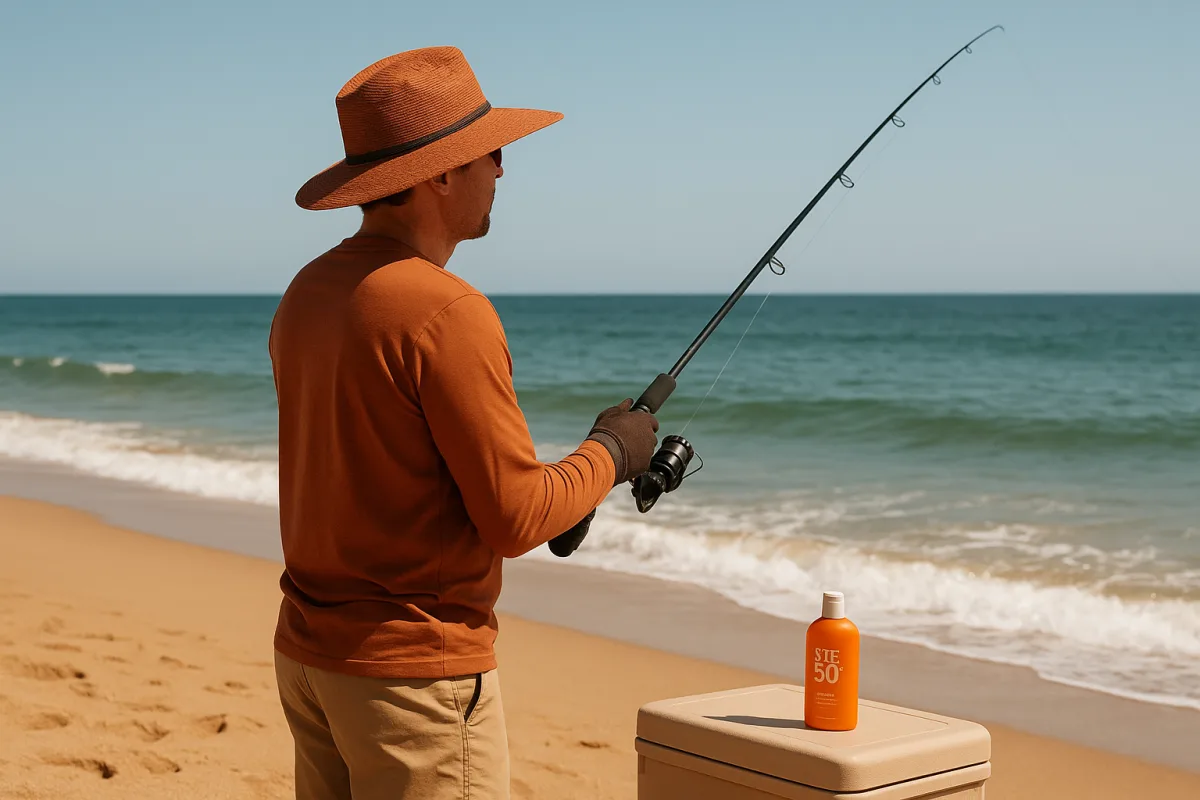
The system to understand is the protection clock
A surf fisherman tends to organise the day around a tide chart. First light on an outgoing tide, perhaps, or the last two hours of flood when bait is pushed into a trough. Skin protection needs the same discipline.
The useful number is not just SPF 50. It is two hours. That is the maximum interval to treat as dependable for a water-resistant sunscreen application during a fishing session, and it can become shorter when sweat, spray or a wade enters the picture. [1][2]
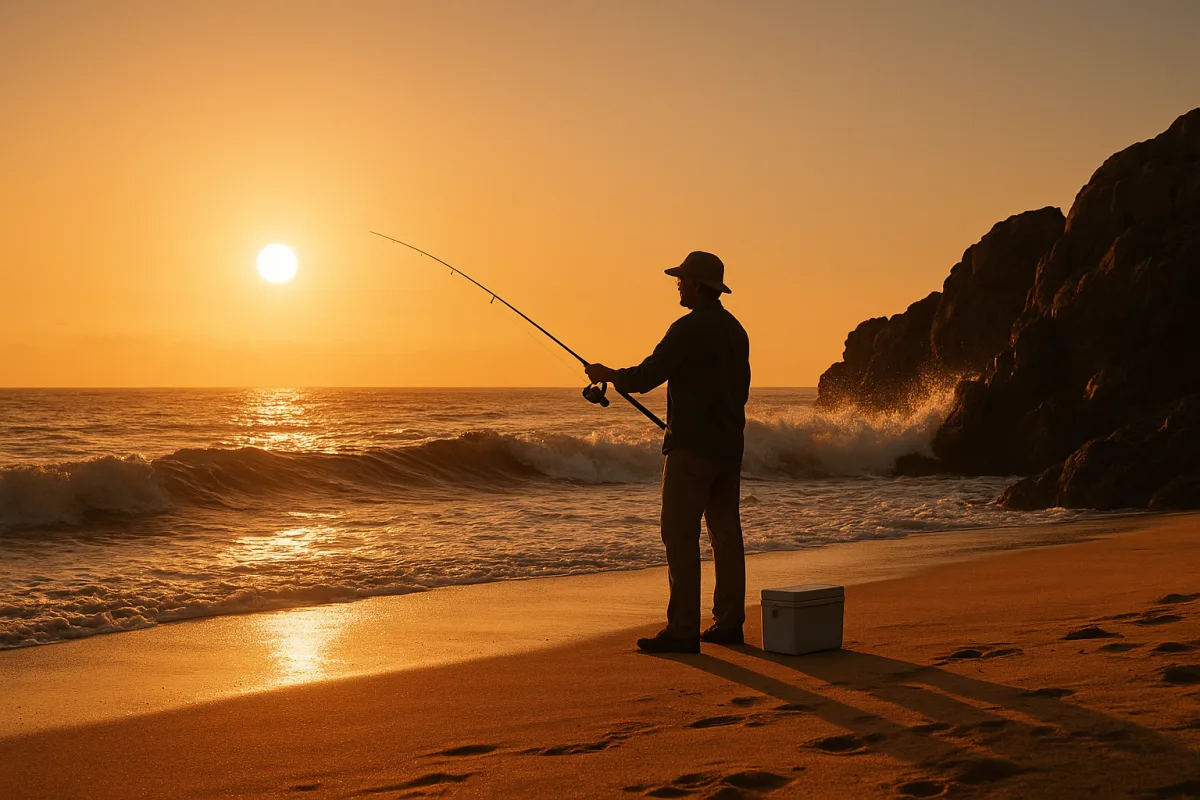
This matters because a beach session rarely behaves like an ordinary day outside. You may be standing still, casting repeatedly and facing the glare for four to eight hours. There is little shade, and the water keeps light in play even when the sun is not directly overhead.
Water-resistant does not mean waterproof, sweat-proof, or good for the entire tide. FDA water-resistance standards top out at 80 minutes under the labelled test conditions. That is useful protection, but it is not a license to apply once at dawn and forget it. [1]
A sensible surf-fishing system therefore has three clocks. There is the departure application, the two-hour reapplication alarm, and the immediate reset after swimming, a deep wade, or enough sweating to wet the shirt and run sunscreen off the face.
The exact point when an individual angler burns cannot be predicted from an SPF number alone. Skin tone, amount applied, sweat, reflected light and water exposure all change the outcome. The research does not establish a special safe duration for surf anglers beyond the standard reapplication guidance. [1][2]
That uncertainty is a reason to be conservative, not casual. If you have walked a long beach to reach a cut, fought a fish in the wash, or spent an hour casting into a headwind, assume the protection clock may have advanced faster than the watch says.
Why SPF 50+ is the practical starting point
The American Academy of Dermatology baseline is SPF 30 or higher, but the surf and water-sport guidance in the research brief consistently moves to SPF 50+ for prolonged exposure. SPF 50 blocks roughly 98 percent of UVB rays when applied properly. [1][2]
The important phrase is “when applied properly.” A thin smear on the nose and forearms does not produce the label performance. The common failure is not selecting an SPF that is too low. It is leaving skin uncovered, using too little product, then missing the second application. [1][5]
For beach fishing, choose a broad-spectrum, water-resistant SPF 50+ formula. Broad-spectrum is the relevant label because exposure is not limited to the direct midday sun. Light arrives from above, off the water, and off pale sand, so a fisherman faces more than one direction of exposure. [1][9]
Mineral formulas using zinc oxide or titanium dioxide are commonly preferred where reef safety is a concern. They can be more visible on skin than clear chemical formulas, which is a cosmetic trade-off rather than evidence that they are ineffective. [2]
A zinc oxide stick is particularly useful for the high-friction parts of the face: nose bridge, cheekbones, ears and the back of the neck. It is easy to carry in a plug bag and less likely to spill, although there is no direct surf-fishing evidence showing sticks outperform lotions overall. [3]
That distinction matters. A stick is not a complete substitute for lotion just because it is convenient. It is a good precision tool for areas that are routinely missed, while lotion remains the practical way to cover larger exposed areas such as arms, calves and neck.
The face deserves a separate routine because hats do not seal it from reflected light. Apply sunscreen before putting on glasses and a hat, then use the stick at reapplication time on the nose, ear rims, temples and any exposed scalp parting. [1][3]
The beach conditions that quietly defeat good intentions
A forecast can feel harmless when a southwest wind keeps the beach cool. Skin does not read comfort the way an angler does. Wind reduces the feeling of heat and can leave someone unaware of how long they have been exposed. [1]
Clouds present the same trap. A grey morning may change lure choice and water colour, but it does not remove the need for protection. Research cited in surf-safety guidance notes that up to 80 percent of UV can penetrate clouds. [1]
Water is the third problem. The surf face and wet sand reflect light upward, which is why anglers burn under the jawline, on the underside of the nose, around the ears and along the neck despite wearing a cap. [1][9]
These factors explain why fishing early and late is useful but not sufficient. Lower sun angles can make casting more pleasant and coincide with productive bait movement, yet a long dawn session can still become a significant exposure event if it stretches into late morning.
In September 2026, forecast services covering places including Laguna Beach and the Outer Banks identify the strongest daily UV period as broadly 10 a.m. through 4 p.m. Readings in key US beach regions can reach 6 to 10 during that window. [8][9]
That does not mean every productive tide before 4 p.m. should be abandoned. It means the decision has a cost. If the best water occurs at noon, wear the UPF layer, use the hat and gloves, carry sunscreen where it can be reached, and set the alarm.
There is no evidence that a particular rig or tide phase changes the biology of sun protection. A fish may feed best on a midday flood, but a fish does not make the UV index lower. Tackle selection and skin protection are separate decisions.
Use clothing to reduce dependence on sunscreen
Sunscreen is the resettable part of the system. UPF clothing is the passive part. A UPF 50+ sun shirt, hooded fishing shirt or lightweight gaiter keeps working while you are checking a bait, walking to another bar, or concentrating on a rod tip. [7][10]
For surf fishing, synthetic blends are usually the practical category. Recycled polyester with spandex, and nylon with elastane, are used in UPF garments because they combine sun coverage with moisture management and stretch for casting. [6][7]
The point is not to dress warmly. A loose, breathable long-sleeve UPF 50+ shirt can be more workable than repeatedly coating bare arms in sunscreen, particularly when handling bait, leader material and sand. It also keeps sunscreen off rod grips and reel knobs.
Price is not a reliable proxy for basic UV performance. Fishing sun shirts commonly begin around $40, while a premium example such as the Arc’teryx Ossa Hoody is listed at £160. The higher price may buy design details, but available research does not establish a clear protection-to-price advantage. [7]
Choose the lower-cost category if it is genuinely UPF rated, fits without binding through a cast, and will be worn consistently. Choose a premium garment only if its hood, ventilation, cut or durability addresses a real problem in your fishing, not because the price implies safer skin.
A hood helps cover ears, neck and scalp, but it does not remove the need for sunscreen on exposed facial areas. A neck gaiter can close the gap between collar and hat, although it should remain breathable enough that it will not be pulled down the moment the heat builds.
Build the coverage around the places anglers miss
Ears and neck are not minor details. They are the areas left exposed by the usual cap-and-sunglasses combination, and they receive direct and reflected light for the full time an angler is watching the water. [1][10]
Start with the shirt and hood or collar. Then decide what still remains outside it: face, ears, neck, hands, lower arms and possibly calves. Those areas get sunscreen, with extra attention to the backs of hands and the strip of skin above gloves.
For head coverage, the EINSKEY Wide Brim Bucket Hat costs about $14 and is water-repellent, making it the budget choice for a fisherman wanting broad shade without treating the hat as a technical garment. [12][13]
The Columbia Bora Bora Booney II is about $30 and carries a UPF 50 rating. It suits anglers who want a stated clothing protection rating along with a brimmed, packable fishing-hat format. Neither hat replaces sunscreen on ears, neck and face. [12][13]
For eyewear, the Oakley Flak 2.0 is listed around $45 with UV400 protection. It suits the angler prioritising a familiar sport-frame shape and UV filtration within a modest budget. [14]
The KastKing Speed Demon costs about $25 and is polarised. It suits the budget-conscious surf fisherman who needs glare control for reading trough edges, wash lines and incoming waves, alongside UV-blocking eye coverage. [14]
Polarisation is useful for seeing through surface glare, but it is not a complete facial sun strategy. The skin around the eyes, temples and upper cheeks remains exposed, particularly when light reflects off water beneath the lens line.
For hands, the Outwater Shaka and Shaka HD gloves are rated UPF 50+ and cost about $27.90 to $33.90. They suit anglers who spend long periods holding a rod in open sun and want coverage on the backs of their hands. [15]
The decision between those gloves is less important than using a pair that permits knot tying, bait work and reel operation. Gloves that get removed for every rig change will not solve the exposure problem, and uncovered wrists still need sunscreen. [15]
Put the routine into a fishing day
Before leaving, check the UV forecast beside the tide chart. If the bite window falls inside the 10 a.m. to 4 p.m. period, decide in advance that this is a full-protection trip, not a cap-and-T-shirt trip. [8][9]
Apply sunscreen before the drive or walk to the beach, rather than after rods are planted and bait is in the water. That gives the product time to settle and prevents the usual rushed application made while fishable water is already moving past.
Set a two-hour alarm labelled “sunblock,” not a vague alarm that is easy to dismiss. Keep the bottle or stick in the same pouch as spare leaders or sinkers, somewhere it is available without unpacking the entire bag. [1][2]
When the alarm goes, reapply even if the bite has been slow and you do not feel hot. If you have waded, swum, or sweated heavily before it rings, reset earlier. The system works only when the reset is treated as part of fishing.
That is the unsentimental answer: sunscreen is not a one-time product choice. It is a timed maintenance task, backed by clothing that covers the skin most likely to be forgotten.
Frequently Asked Questions
How can I avoid getting sunburned while fishing?
To avoid sunburn while fishing, apply a broad-spectrum, water-resistant sunscreen with SPF 50+ before you start and reapply every two hours or immediately after swimming or heavy sweating. Wearing UPF 50+ clothing, including hats, gloves, and sunglasses, helps reduce the amount of sunscreen needed and protects exposed skin. Also, plan your fishing around peak UV hours (10 a.m. to 4 p.m.) and do not rely on clouds or wind to reduce UV risk, as they can still allow significant UV exposure.
What is the best sunscreen for surf fishing?
The best sunscreen for surf fishing is a broad-spectrum, water-resistant formula with SPF 50+ to block roughly 98 percent of UVB rays when applied properly. Mineral sunscreens containing zinc oxide or titanium dioxide are commonly preferred for reef safety, although they may be more visible on the skin compared to chemical formulas. Proper application and regular reapplication are essential for effectiveness.
How often should I reapply sunscreen when fishing?
Sunscreen should be reapplied at least every two hours during fishing sessions. You must also reapply immediately after swimming, wading, or heavy sweating, as these activities can remove sunscreen from the skin. Water resistance typically lasts up to 80 minutes under test conditions, so assume protection may diminish sooner in real conditions.
Does wearing UPF clothing help prevent sunburn while fishing?
Yes, wearing UPF 50+ clothing such as shirts, hats, gloves, and sunglasses significantly reduces sun exposure and the need for sunscreen on covered areas. UPF clothing acts as a physical barrier to UV rays, making it an important part of a comprehensive sun protection system for surf fishing.
Can clouds and wind affect sunburn risk during fishing?
Yes, clouds and wind can affect sunburn risk but not always in obvious ways. Clouds can allow up to 80 percent of UV rays to penetrate, so they do not eliminate sunburn risk. Wind can make the sun feel less intense but does not reduce UV exposure, and water reflection can increase UV radiation, making sun protection necessary regardless of weather conditions.
How we researched this
This article was assembled from 15 cited references.
Nothing here is based on hands-on testing. Where a figure or finding appears, it belongs to the source cited beside it, and the writing says so rather than implying otherwise. Every source is listed below so you can check it.
Sources
- Sun Protection for Surfing: Your Complete Skin Safety Guide
- Best Sunscreen for Surfing: Top Reef-Safe Picks – Project Reef
- The Beach Is Beckoning-Choose One of These Editor-Recommended Sunscreen Sticks to Throw in Your Bag
- Freaks of Nature Daily Defender SPF30 Sunscreen – REVOLUTION
- Best Sunscreen for Surfers | Protect Your Skin Today — Browse Now — Surf Health Hub
- Surfing and Water-Sport Rashguards: A Grappler’s Crossover Guide for 2026 –
- Best Sun Shirts for Fishing 2026 (UPF 50+ Picks) - Bushwhack
- UV Index Laguna Beach Today — Current Forecast & Sun Protection
- Outer Banks Fishing Sun Protection: OBX Season Guide for Surf and Pier – WindRider
- Sun Protection for Anglers: Why UPF Gear Matters | CastRigWild
- Are Fishing Masks Needed? - Fishingfactor
- 10 Best Fishing Hats for Sun Protection (October 2026) Tested
- 7 Best Fishing Hats for Sun Protection That Serious Anglers Trust - Swimmer Living
- Best Fishing Sunglasses Under $50 (2026 Guide) - Wild Rods and Rifles
- Gloves/Hats - Clothing - Trolling - Fishing
Related Articles
Best Surf Fishing Reels for Beginners
Compare the best surf fishing reels for beginners, including Penn Battle IV 6000 and Pursuit V 5000, to find the right reel for your beach fishing needs.
How to Read Surf Conditions for Fishing: A Guide
Learn how to read surf conditions for fishing, including wave height, tides, wind, and water clarity for a successful outing.
How to Prepare for a Surf Fishing Tournament
Learn how to prepare for a surf fishing tournament with the right gear, rigs, rules, and beach reading strategies to improve your chances.
Best Surf Fishing Locations in Fall: Top Spots and Tips
Discover the best surf fishing locations in fall with tips on bait, tides, and regional hotspots for a successful autumn fishing trip.