
Best Surf Fishing Reels for Beginners
Compare the best surf fishing reels for beginners, including Penn Battle IV 6000 and Pursuit V 5000, to find the right reel for your beach fishing needs.
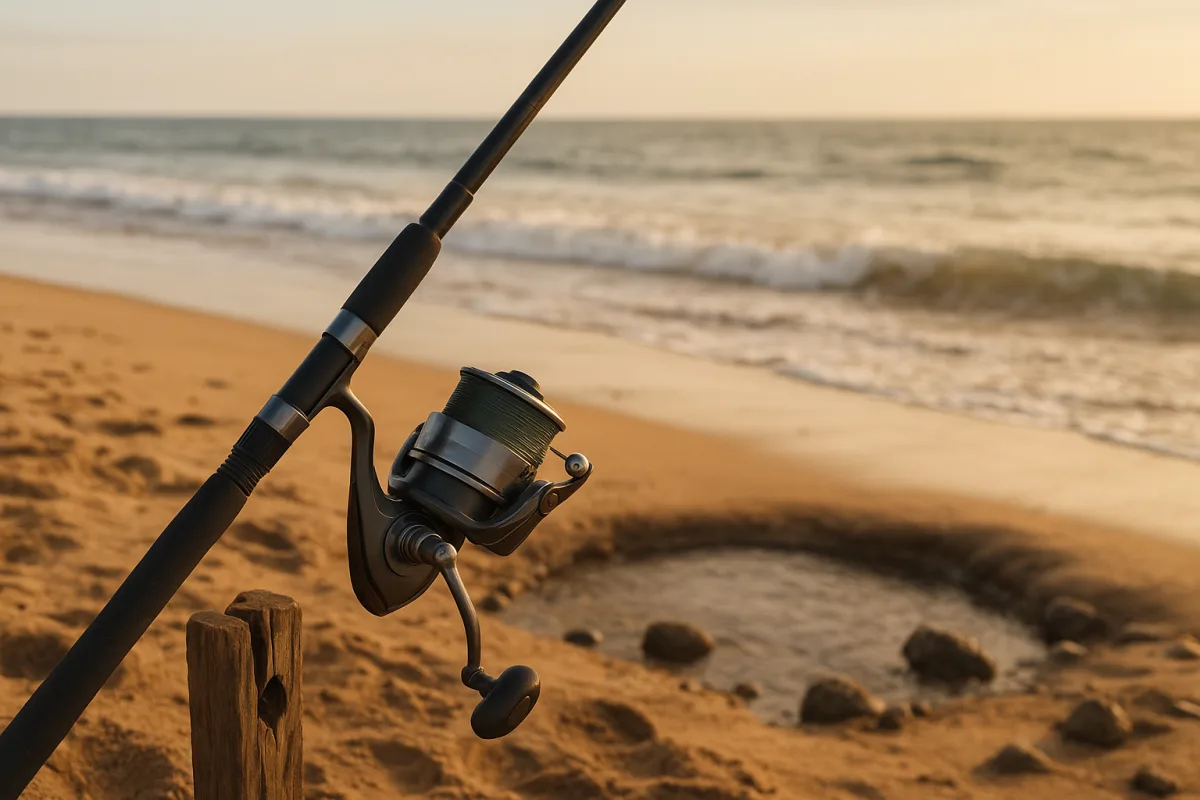
The decision: Penn Battle IV 6000 or Penn Pursuit V 5000?
For most new surf anglers pursuing striped bass or red drum, the Penn Battle IV 6000 is the better choice. It gives a beginner more line capacity margin, a stronger platform for rougher water, and less chance of immediately outgrowing the reel.
The Penn Pursuit V 5000 remains the sensible choice for someone who fishes gentler beaches, casts lighter rigs and wants to keep the first setup economical. It is not a bad reel, it is simply the narrower tool.
This is not a decision based on a reel making fish appear in empty water. Before choosing either, look at the beach and forecast. A rising tide pushing bait along a bar edge calls for different tackle demands than calm summer water over a shallow sandy flat.
Outdoor Life identifies the Penn Battle IV as a recommended surf reel, and reports a 5.6:1 gear ratio with 25 pounds of drag for the 6000 model. [1] Paddleroundthepier.com reports the same 5.6:1 ratio and 25-pound drag rating for the Penn Pursuit V 5000. [14]
Those identical headline numbers are why the comparison needs more than a specification list. A beginner buys the reel that fits the rod, the sinker weight, the beach and the fish likely to take the bait.
Head-to-head comparison
| Criterion | Penn Pursuit V 5000 Spinning Reel | Penn Battle IV 6000 |
|---|---|---|
| Place in the field | Entry-level option, positioned for a reliable, affordable first surf reel | Mid-range option, positioned for anglers wanting a durable surf reel and stronger drag system |
| Best surf role | Moderate surf, lighter bait rigs and general beach fishing | Striped bass, red drum, stronger sweep and heavier general-purpose surf work |
| Size and line margin | A 5000 size can suit lighter surf work, particularly where smaller species are common | A 6000 size better matches the usual beginner baseline for bass and drum, with more useful capacity margin |
| Drag | Reported 25-pound maximum drag, enough on paper for general surf fishing [14] | Reported 25-pound maximum drag, enough on paper for general surf fishing [[1]](https://www.outdoorlife.com/gear/best-surf-fishing-reels/?utm_source=openai "Best Surf Fishing Reels |
| Gear ratio | Reported 5.6:1 ratio, reasonably quick but above the lower-ratio range often preferred for torque [14] | Reported 5.6:1 ratio, similarly quick, with no ratio advantage over the Pursuit [[1]](https://www.outdoorlife.com/gear/best-surf-fishing-reels/?utm_source=openai "Best Surf Fishing Reels |
| Rod pairing | Best considered with a 9 to 10-foot medium or medium-heavy rod | Better suited to a 10 to 11-foot medium-heavy rod where casts, sinkers and fish may be larger |
| Beginner handling | Lighter-duty starting point, less overwhelming for anglers who will not regularly fish heavy conditions | More forgiving of beginner mistakes involving heavier rigs, stronger current and a larger fish |
| Value position | The less expensive route into a purpose-built surf reel | Costs more than the Pursuit, but is the stronger long-term choice if surf fishing becomes regular |
| Where it falls down | Less margin for heavy current, larger fish and the extra line needed after long casts | More reel than a light surf-perch or whiting angler needs, and can feel excessive on a light rod |
Run them against the beach, not the catalogue
1. Target fish and seasonal changes
The Penn Battle IV 6000 has the clearer case where fall striped bass or red drum are part of the plan. Those fish can use current, sweep around points and sandbars, and make a long first run after taking a bait beyond the outer trough.
A 5000 to 6000 spinning reel is generally the useful starting range for those species. Guidance commonly puts those sizes with approximately 250 to 300 yards of 20 to 25-pound braid, although line recommendations vary by region and source. [7][8]
The Penn Pursuit V 5000 makes more sense when the likely catch is smaller. Pompano, whiting and surf perch do not require the same capacity reserve or heavy-sinker routine, especially on a beach where the productive trough lies close to shore.
Do not buy either reel solely for a fish that appears for two weeks each year. If summer flounder, whiting and small panfish are your normal catch, a 6000 can be unnecessarily bulky. If autumn bass are the goal, the 5000 may feel limiting quickly.
2. Drag capacity and usable control
Both reels are reported with 25 pounds of maximum drag, so neither wins this category on the stated number. [1][14] That figure clears the usual 20 to 25-pound range recommended for general surf work.
Maximum drag is not the same as a setting to use. A novice who locks a drag down because the label says 25 pounds will lose fish, break line or pull hooks. Set drag for the line and terminal tackle, then let the reel give line under a hard run.
Drag smoothness matters more than a large printed number. Front-drag systems are generally associated with stronger, smoother performance, while rear drag is often easier to adjust during a fight but commonly offers less maximum pressure. [10][12]
The supplied reporting does not establish the detailed drag construction of either model, so there is no basis for declaring one smoother in use. On the available evidence, this category is a tie, not a manufactured Battle IV victory.
3. Retrieval speed and sinker work
Both reels carry a reported 5.6:1 gear ratio. [1][14] That is a fairly quick retrieve for surf fishing, useful when a bait has washed out of position or when a fish runs toward the beach.
General surf guidance often favours ratios around 4.4:1 to 5.2:1 because they provide more winding torque against current, sinkers and deep water. [10] Neither Penn is especially low-geared by that measure.
That does not make either unsuitable. It means a beginner should not expect a ratio alone to overcome a six-ounce sinker dragging through a hard lateral sweep. When the current dictates a heavy pyramid sinker, placement and timing matter before gear ratio does.
Fish a falling or rising tide where water funnels through a cut, and you may need to retrieve repeatedly to keep a bait out of snaggy water. On that job, either 5.6:1 reel is practical, with no meaningful separation.
4. Size, balance and casting
The Battle IV’s 6000 size is its real advantage. It gives room for the longer casts, heavier braid and larger fish that make up ordinary bass and drum surf fishing, without jumping immediately to oversized 8000-class equipment. [7][8]
The Pursuit V 5000 is easier to justify if the rod is a 9-foot medium or medium-heavy model and the fishing is moderate. A smaller setup is less tiring when repeatedly casting small bait rigs into the inside trough.
Balance is not cosmetic. A reel too small for the rod makes the outfit tip-heavy and awkward through the cast. A reel too large for a light rod adds fatigue and can make a beginner work harder than the conditions require.
Neither source establishes exact spool capacities for these two models, so do not assume either holds a particular yardage of braid. Fill according to the manufacturer’s spool marking, your line diameter and the casting distance actually needed at your beach.
The rest of the field, and why they are not the head-to-head choice
The KastKing Sharky III 3000 is another entry-level option, aimed at newcomers wanting an affordable, durable reel. Its reported waterproof drag system is useful in saltwater terms, but the 3000 size is the problem for general bass and drum surf fishing. [19]
The Okuma Rockaway Surf Fishing Reel is an entry-level, budget-friendly option for anglers wanting basic surf capability. Its corrosion-resistant frame and multi-disc drag make it more relevant to saltwater than a freshwater reel, though its exact size should decide whether it fits your fishery. [3]
The Daiwa BG MQ sits in the mid-range field for anglers moving beyond a first setup and seeking performance without premium pricing. CastandSpear reports a 22-pound drag and 5.7:1 ratio, which suggests useful general surf capability, but it is less clearly a beginner value choice than the two Penn reels. [15]
The Shimano Ultegra is also mid-range, aimed at anglers prioritising light weight and long-range casting. CastandSpear lists a 24-pound drag and 5.5:1 ratio, making it a plausible distance-focused option, though it is not the uncomplicated first-reel decision here. [15]
The Daiwa Sealine-X is a mid-range heavy-tackle option, but its reported 15-pound drag and fast 6.1:1 ratio make it a less obvious match for the general beginner baseline. It suits anglers with a specific casting or tackle plan, not a newcomer building a versatile beach outfit. [15]
The Van Staal VR is among the premium choices, aimed at experienced anglers who place a high value on waterproof performance. Its reported 25-pound drag and 5.3:1 ratio are appropriate for demanding surf work, but its premium position makes it hard to justify as a first purchase. [15]
The Daiwa Saltiga 20H is a premium reel for anglers prioritising distance casting and durability. TheTestedHub.com reports its one-piece MONOCOQUE body and Magsealed bearings, features that suit serious saltwater use rather than a beginner still learning to read a tide line. [18]
The Shimano Torium 20 is a premium choice for anglers fishing jetties and piers where accurate casting matters. Its X-Ship gearing and reported 22-pound maximum drag suit that specialised work, but it is not the straightforward spinning-reel route for beach beginners. [18]
The Abu Garcia Ambassadeur C3 6500 is a premium-level casting-reel option for anglers who specifically want a conventional reel. Its five-pin centrifugal brake system and aluminium frame suit anglers prepared to learn braking and spool control, not most first-time surf casters. [18]
The Okuma Convector 30 is listed in the premium field but is positioned as a budget-friendly option with generous line capacity. It suits anglers who need capacity without expensive refinement, although a larger-capacity reel is not automatically the easiest beginner surf tool. [18]
Maintenance matters more than the logo
A surf reel lives around salt spray, windblown sand and wet vehicle floors. Rinse it gently with fresh water after every trip, rather than blasting it with a high-pressure hose that can drive contaminants deeper into the reel. [16][17]
Dry the reel in a shaded, ventilated place before storage. Damp tackle boxes, direct sun and salt left around the line roller create problems that are often blamed on the reel, when the real issue is basic neglect. [16]
Inspect the line roller and drag operation regularly, and use only manufacturer-approved lubricants on moving parts. If grinding, stiffness or drag inconsistency develops, professional servicing is a better answer than adding oil blindly. [16]
Who each option suits
The Penn Pursuit V 5000 suits the beginner fishing moderate beaches for mixed smaller species, occasional school-sized bass, whiting, pompano or surf perch. It is the lower-cost choice and fits an angler who will use lighter rigs and a shorter 9 to 10-foot rod.
Its weakness is limited headroom. If the beach routinely needs heavier sinkers, if long casts cross strong current, or if red drum and larger striped bass are regular possibilities, start larger rather than buying twice.
The Penn Battle IV 6000 suits the beginner building one general-purpose surf outfit around striped bass and red drum. It is the better choice for a 10 to 11-foot medium-heavy rod, moderate current and beaches where the useful water may sit beyond the first bar.
Its weakness is that it is more than necessary for close-range light surf fishing. If your usual tide window is calm summer water and small baits in the inside gutter, the Pursuit V 5000 is closer to the actual job.
Frequently Asked Questions
Which surf fishing reels are best for beginners?
Top beginner surf fishing reels include the Penn Battle IV 6000 and the Penn Pursuit V 5000. The Battle IV 6000 suits anglers targeting larger species like striped bass and red drum, while the Pursuit V 5000 is better for moderate surf and smaller fish. Other recommended models include the KastKing Sharky III 3000 and Okuma Rockaway.
What size surf fishing reel should a beginner use?
Beginners generally benefit from a 5000 to 6000 size spinning reel. These sizes hold roughly 250 to 300 yards of 20 to 25-pound braided line and pair well with 9 to 11-foot medium to medium-heavy rods, providing enough line capacity and drag for common surf species.
How do Penn Battle IV 6000 and Penn Pursuit V 5000 compare for beginners?
Both reels have a 25-pound maximum drag and a 5.6:1 gear ratio, but the Battle IV 6000 offers more line capacity and durability for heavier surf and larger fish. The Pursuit V 5000 is lighter, more affordable, and better suited for gentler surf and smaller species. Choosing between them depends on the target fish, beach conditions, and rod pairing.
What drag capacity is suitable for beginner surf fishing reels?
A usable drag range of about 18 to 25 pounds is recommended for beginner surf fishing reels. Both the Penn Battle IV 6000 and Pursuit V 5000 provide 25 pounds of maximum drag, which is sufficient for general surf fishing targeting species like striped bass and red drum.
How to choose a surf fishing reel based on target fish and beach conditions?
Select a 6000-size reel like the Penn Battle IV for larger fish and rougher surf, as it offers greater line capacity and drag margin. For smaller species and moderate surf, a 5000-size reel like the Penn Pursuit V is more appropriate. Always consider the beach’s current, water clarity, and typical sinker weights, as well as the seasonal presence of target fish, before choosing a reel.
How we researched this
This article was assembled from 19 cited references.
Nothing here is based on hands-on testing. Where a figure or finding appears, it belongs to the source cited beside it, and the writing says so rather than implying otherwise. Every source is listed below so you can check it.
Sources
- Best Surf Fishing Reels | Outdoor Life
- Best Surf Fishing Reels of 2026 - Review & Guide by Perfect Captain
- Okuma Rockaway Surf Reel
- Best Reels for Surf Fishing - 2026 Reviews - Happy Camper Club
- KastKing Big Game Spinning Fishing Rod and Reel Combo
- PENN Spinfisher VI Surf Fishing Reel, Size 6500, IPX5 Sealed, HT-100 Drag, CNC Gear - Walmart.com
- Surf Fishing Reel Size | Match the Right Reel to Your Surf
- What Size Reel for Surf Fishing: Expert Guide to Perfect Match - Angler Vibe
- Ultimate Surf Fishing Combos for 2026 - Reel Gear Guide
- How to Choose a Spinning Reel: Size, Drag, Gear Ratio & More | West Marine
- 10 Best Surf Fishing Reels (September 2026) Expert Reviews
- Fishing Reel Drag — Tom's Fishing
- Fishing Reel Drag System Explained: How It Works and Why It Matters - Quorelynx
- Best Surf Fishing Reels 2026: 12 Tested Picks
- Surf Fishing for Beginners: The Essential Gear Checklist
- Rod and Reel Maintenance: Make Your Gear Last Years — The Fishing Manual
- What Should You Do After a Fishing Reel Gets Wet or Sandy - Laike
- Daiwa Saltiga 20H
- KASTKING(カストキング) KastKing Sharky III Fishing Reel 3000 スピニングリール シャーキー3 : Lynx Outdoor - 通販 - Yahoo!ショッピング
Related Articles
Best Surf Fishing Setup for Summer: Rods, Rigs & Tides
Discover the best surf fishing setup for summer, including rods, rigs, tides, and beach reading tips for successful fishing sessions.
Best Surf Fishing Lures: A Practical Comparison
Discover the best surf fishing lures with a practical comparison of Heddon Super Spook and Rapala X-Rap for effective fishing.
How to Read Surf Conditions for Fishing: A Guide
Learn how to read surf conditions for fishing, including wave height, tides, wind, and water clarity for a successful outing.
How to Choose a Surf Fishing Rod: A Practical Guide
Learn how to choose a surf fishing rod with our practical comparison of key features and considerations for your fishing needs.