
Spring Surf Fishing Lure Selection
Learn how to select surf fishing lures in spring by matching lure types and colors to fish species, tides, and water conditions for better catches.
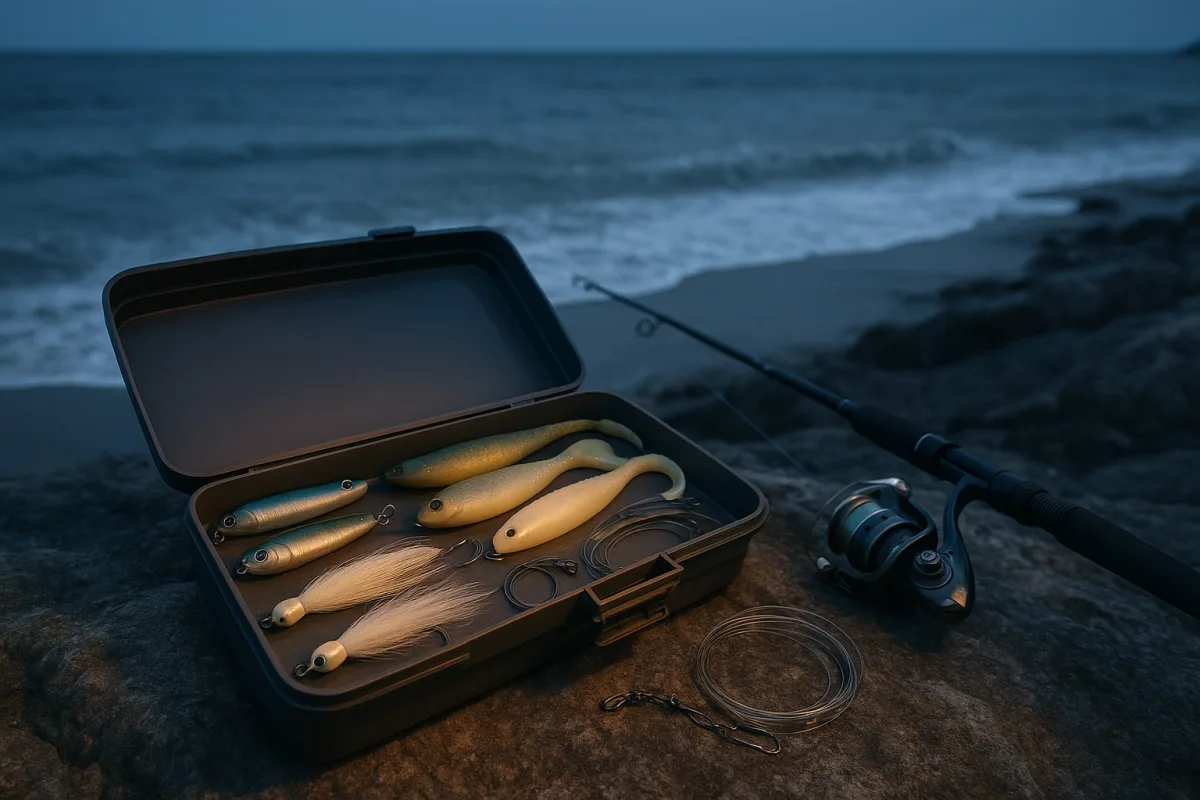
The spring shift is toward narrower, more deliberate lure selection
The change is plain: broad lists of “best spring surf lures” are giving way to species-led, region-led selections. That is the sensible direction, because spring does not arrive on every beach with the same water temperature, bait, tide stage or fish.
Several independent guides point the same way. Striped bass coverage from AnglersBooking and AnglerMind centers on plugs, bucktails and substantial soft plastics, while FishingHub’s bluefish guidance leans harder on metals, casting distance and bite-proof leaders. [1][2][3]
That difference matters more in spring than it does during a settled summer pattern. Early-season fish can be moving through cold, stained water one week, then feeding around newly arrived bait in clearer water the next. A lure that gets noticed is not necessarily one that gets eaten.
Regional reporting makes the point sharper. First Coast Fishing’s Northeast Florida bait guidance identifies the local redfish context, while Pacific Northwest surfperch anglers commonly use marine-worm-style soft plastics. Those are not interchangeable systems merely because both are called surf fishing. [10]
The evidence is not strong enough to declare one nationwide “best” spring lure. There are no useful comparative studies measuring spring surf-lure performance across regions, tides and species. Most recommendations remain guide-based, anecdotal and dependent on sensible matching of lure to conditions.
For a surf angler planning a spring season, that means beginning with a target list and a beach calendar. Check water temperature, tide height, wind direction, wave period and likely bait before deciding whether the bag needs metals, shallow plugs, bucktails or bottom-oriented soft plastics.
Match the lure to the fish that are actually available
Striped bass are the clearest case for a varied spring lure selection. AnglersBooking and AnglerMind both identify topwater plugs, bucktail jigs and soft-plastic swimbaits as core options, with 6 to 10-inch swimbaits suited to larger early-season meals. [1][2]
Topwater plugs in white-and-red or white-and-chartreuse patterns have a place when bass are feeding high. They are not an all-day answer. Use them in the first light, late evening, or under low, broken cloud when fish can comfortably hunt near the surface. [1]
If the sun is high, wind is pushing dirty water along the beach, or bait is holding below the wash, a bucktail or swimbait generally gives better control. It can be worked down a trough, along the face of a bar, or through the darker water beside a rip.
Bluefish change the calculation. FishingHub recommends topwaters and metal lures for surf bluefish, and the metal is especially useful when onshore wind or a wide outer bar makes casting distance the limiting factor. [3]
A roughly 4.3-inch lure is a practical middle ground for striped bass and bluefish, according to the available guidance. It is large enough to show up in moving water without demanding heavy tackle or becoming difficult to cast into a quartering wind. [3][6]
For redfish and pompano, the cited guidance trends slightly larger, around 4.5 inches, but that number should not become a rigid rule. In clear, shallow water, a bulky lure can be less important than placing a smaller offering quietly on a feeding lane. [6][10]
Flounder are where an honest spring list has to stop pretending certainty. West Marine notes that flounder become more active as water rises above 55 degrees Fahrenheit and often feed best around dawn, dusk and overcast conditions. [8]
There is, however, no direct evidence in the research brief identifying a specific surf lure as best for flounder. A bucktail jig or soft plastic worked close to bottom is a reasonable inference from bottom-fishing practice, not a proven spring surf recommendation. [8]
Read water and light before choosing color
Color is not a cosmetic decision in spring surf. Clear water and bright conditions favor natural, silver or baitfish finishes. They look less intrusive when fish have time to inspect a lure in the thin water between a bar and the beach. [5][6]
When rain runoff, wind or a building swell turns the water brown-green, shift toward contrast. Gold, orange and chartreuse patterns show up better against suspended sand and foam, particularly where a current seam is delivering food through a cut. [5][6]
Black and purple earn their space in low light. At dawn, dusk and under heavy cloud, silhouette can matter more than realistic paint. A dark lure worked steadily across a shallow trough can be easier for a hunting fish to track than a pale finish. [5]
Do not read that as an instruction to accumulate every color offered. Carry one natural option, one high-contrast option and one dark option in each lure category you genuinely expect to use. The beach, not a color chart, decides which comes out first.
Retrieval is part of the lure, not an afterthought
The most useful trend in spring lure advice is the growing attention to retrieve pace and action. Red Sky Surf Hunters’ jerkbait guidance and Smooch and Release’s list of surf-casting mistakes both stress a point that basic lure lists often miss: constant speed is often wrong. [4][12]
A lure should move at a pace that fits the water and the prey. In cold or recently warmed spring water, an erratic plug raced across the surface may look less like vulnerable bait than something escaping far too quickly to catch.
For a soft plastic or bucktail, cast beyond the likely feeding lane, let it settle as required, then work it with short lifts and controlled pauses. The pause is where a lure can hover or drop near the bottom contour fish are using.
Metal lures need similar restraint. A metal spoon or casting jig can be retrieved briskly when bluefish are visibly chopping bait, but a straight burn through empty water is simply covering ground fast. Vary the retrieve before changing lures.
The available support for exact retrieve patterns is mostly expert and angler opinion, not quantified testing. Still, the practical conclusion holds: work a lure with an intentional change of speed, depth or direction, then pay attention to where the strike occurred.
Tide and beach structure decide whether the lure has a chance
Spring fish do not distribute themselves evenly across a beach. A trough inside the first bar, a break in the outer bar, a rip mouth, a point of darker water, or a current seam is more useful than a hundred yards of featureless foam.
For Mid-Atlantic and Northeast spring fishing, April through June is the established broad window, with the two hours before and after high tide commonly favored. Slack water is generally less productive because it reduces the current that concentrates bait. [16]
That does not mean high tide is automatically good. If high water floods a flat beach without exposing a defined trough or cut, there may be no practical lane to fish. Conversely, a lower tide can reveal the bar gaps worth returning to later.
Use the lower stage to learn the ground. Note where water drains off the beach, where an outer bar softens into a cut, and where wave lines break unevenly. Then return as the tide builds and put the lure through the moving water.
Wind decides whether lure fishing is efficient at all. A modest crosswind can improve a current seam and help a metal reach it. Heavy onshore surf can make a light soft plastic impossible to control, burying it in sand before it reaches the zone.
That is the condition where metal earns its place, particularly for bluefish. It casts farther, holds a straighter line under pressure and can reach water beyond the nearest breakers. That is a functional advantage, not a claim that metal always outfishes plugs. [3]
Build a small spring selection by function and budget
The research places quality surf lures broadly between $5 and $30 in 2026. [7][14] That is enough range to build a useful, compact selection, but the available information does not provide a comparable current price for every individual model.
Tsunami, SPRO, Yo-Zuri, Storm and Hogy are the named lure brands in the research field. [7][14] They should be treated as shopping categories rather than a definitive ranking, because there is no head-to-head spring surf data proving one brand consistently superior.
A Tsunami or SPRO bucktail category suits anglers working troughs and bar edges for striped bass, or cautiously probing likely flounder water near bottom. A Yo-Zuri plug category suits low-light or surface-feeding situations, where profile and action matter more than maximum casting weight.
A Storm soft-plastic category suits anglers wanting a baitfish profile at controlled depth. Walmart lists the Storm WildEye Swim Shad 6-inch, 7/8-ounce Bunker package as a three-piece product, a size that fits the larger soft-plastic approach described for striped bass. [13]
A Hogy soft-plastic category also suits striped bass when a larger, flexible baitfish profile is needed. The brief does not give a current individual price for Hogy, Tsunami, SPRO, Yo-Zuri, or the Storm package, so assigning exact prices would be invented precision.
Spend the money on categories that solve a real beach problem. Buy a casting metal for wind, a bucktail for depth and contour, a soft plastic for a slower baitfish presentation, and a plug for low-light or surface activity.
Rig the lure for teeth, current and abrasion
For striped bass, the established starting point is 20 to 30-pound braid with a 15 to 30-pound fluorocarbon leader. [15][16] Leader lengths vary among sources, but 24 to 36 inches is a sensible working range for most plug and jig applications.
That fluorocarbon setup is about abrasion resistance and a less obvious connection near the lure. It is not a bluefish solution. If bluefish are present, use a wire leader, because their teeth can cut fluorocarbon before the angler has time to react. [3][15]
A fish-finder rig, using a sliding sinker, 24 to 36-inch leader and circle hook, is better suited to bait fishing for striped bass or bluefish than to casting artificial lures. [15] Keep that distinction clear when packing for a spring trip.
High-low rigs remain practical for smaller surf species, but they are also bait rigs rather than lure rigs. [15][16] The mistake is not using them, it is carrying an unfocused assortment of terminal tackle while ignoring the species and feeding level in front of you.
The spring angler who does best is not necessarily carrying the most plugs. It is the one checking the tide chart, looking for a cut at low water, matching lure depth to the structure, and admitting when a flat, slack, featureless beach is unlikely to produce.
Frequently Asked Questions
How do I select the right surf fishing lures for spring?
Selecting spring surf fishing lures depends on the target species and the specific coastline. Start with a target list and beach calendar, then consider local water temperature, tide, wind, and bait presence. Choose lures that match these conditions rather than relying on universal “best” lists.
What factors affect surf fishing lure choice in spring?
Key factors include species targeted, regional differences, water clarity, tide stage, and weather conditions like wind and light. Also important are beach structure and bait availability, as well as proper rigging and leader setup tailored to the fish species.
Which lure colors work best for spring surf fishing?
Lure color should be matched to water clarity and light conditions: natural or silver colors suit clear water, high-contrast colors like gold, orange, or chartreuse work better in murky water, and dark colors such as black or purple are preferred in low-light situations.
How does fish species influence spring surf lure selection?
Species strongly influence lure choice. For example, striped bass respond well to topwater plugs, bucktail jigs, and large soft plastics, while bluefish favor metals and topwater plugs with wire leaders. Redfish and pompano often require slightly larger lures and different presentations, reflecting their feeding habits and habitat.
When is the best time to use different lures in spring surf fishing?
Topwater plugs are most effective early in the morning, late evening, or under low, broken cloud cover when fish feed near the surface. Metals and bucktails are better during high sun, windy conditions, or when bait is deeper, as they allow better control and casting distance. The two hours before and after high tide are generally the most productive fishing times.
How we researched this
This article was assembled from 16 cited references.
Nothing here is based on hands-on testing. Where a figure or finding appears, it belongs to the source cited beside it, and the writing says so rather than implying otherwise. Every source is listed below so you can check it.
Sources
- Best Striped Bass Lures: The Angler's Guide (Updated 2026) | Blog
- Best Lures for Striped Bass: Coastal and Landlocked | AnglerMind
- How to Catch Bluefish Surf Fishing
- Choosing the Right Jerkbaits / Surf Fishing Tips / Surf Fishing | Red Sky Surf Hunters
- Sea Fishing Lures for Beginners | Down The Cove
- Best Lures for Beach Fishing: Professional Guide & Tips - Battlbox.com
- Striped Bass Lures Under $25: Surf and Jetty · AnglerLeague
- How to Catch Flounder: Complete Fishing Guide | West Marine
- Best Bait for Surf Fishing in Spring
- First Coast Bait Guide | Northeast Florida Fishing
- Can You Use Lures For Surf Fishing? Your Guide - Fishingfactor
- Top 5 Mistakes Surf Casters Make — And How to Fix Them
- Storm WildEye Swim Shad 6" Fishing Lure 7/8oz Bunker 3 pcs - Walmart.com
- Fishing Lures — New Surfcasting Gear — The Surfcaster - Superior Saltwater Gear Since 1973
- How to Rig for Surf Fishing - Rigging Tutorial | knots.fish
- Surf Fishing Guide: Rigs, Baits, Best Beaches & Techniques | One…
Related Articles
How to Choose Surf Fishing Bait for Summer
Learn how to choose the best surf fishing bait for summer, comparing live and artificial sand fleas for pompano and whiting.
Best Times to Surf Fish in Spring: Tide and Temperature Tips
Discover the best times to surf fish in spring based on tides, water temperature, and weather for more successful fishing trips.
Seasonal Surf Fishing Strategies: A Year-Round Guide
Learn seasonal surf fishing strategies to target fish effectively throughout the year. Discover what species to catch and when.
Surf Fishing in Murky Water: Tips for Catching Fish
Learn how to catch fish surf fishing in murky water with rigs, bait, and beach reading tips for low-visibility conditions.